
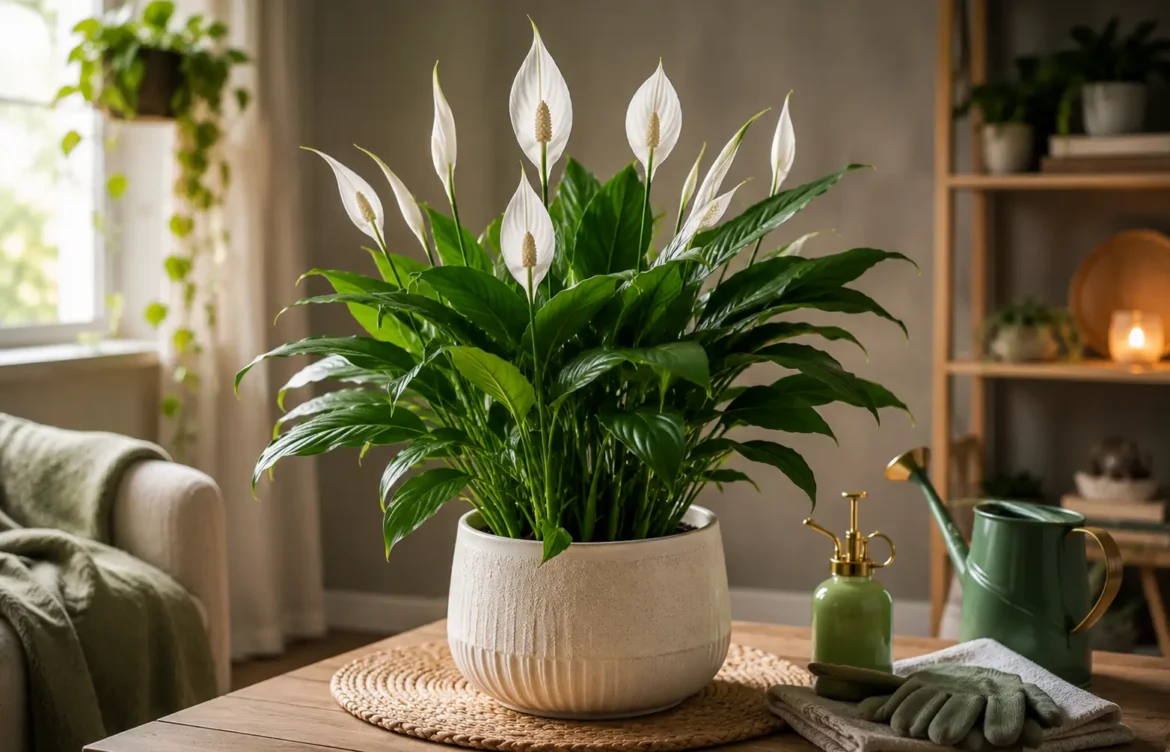
Peace Lily Care Guide
This guide brings together everything a Peace Lily needs in one place, so you don’t have to piece it together from several pages. Each section gives you the core facts, with a link to a more detailed guide if you want to go further into any one topic.
Light
A Peace Lily tolerates low to medium indirect light and will stay green and healthy there, but it needs brighter indirect light to produce flowers regularly. Direct sun should be avoided, since it can scorch the leaves.
Water
Keep the soil lightly moist rather than letting it dry out completely, watering roughly once a week in the growing season and less often in fall and winter. Full seasonal schedule and water quality tips: Peace Lily Watering Guide.
Soil and Pot
Use a rich, well-draining potting mix with good moisture retention, in a pot only slightly larger than the current root ball. This plant tends to bloom better when a little snug in its pot rather than in an oversized container.
Humidity and Temperature
Peace Lilies prefer higher humidity than many common houseplants and appreciate a pebble tray, nearby humidifier, or grouping with other plants, especially in dry, heated rooms during winter. Normal room temperature, roughly 65–80°F (18–27°C), works well, and the plant should be kept away from cold drafts and air conditioning vents.
Fertilizing
A light, balanced liquid fertilizer every 4 to 6 weeks during spring and summer supports healthy growth and blooming. Skip fertilizing in fall and winter, when the plant is naturally growing more slowly.
Getting It to Bloom
Blooming is driven primarily by light, not water a plant kept too far from any light source may stay healthy and green but rarely or never flower. For the fuller explanation of bloom timing and how long individual flowers last, see the blooming section on the main Peace Lily category page.
Common Problems, at a Glance
- Drooping — most often simple thirst, but can also mean overwatering, transplant shock, or a rootbound pot. Full guide: Peace Lily Plant Drooping.
- Yellow leaves — usually overwatering, though natural aging, too much light, or nutrient deficiency are also possible. Full guide: Peace Lily Yellow Leaves.
- Brown leaves or tips — commonly tap water sensitivity or low humidity, sometimes sun scorch. Full guide: Peace Lily Brown Leaves.
Growing More Plants
A Peace Lily is propagated by dividing its root system into sections, not by leaf cuttings, and it can be repotted roughly every 1 to 2 years as it fills out its pot. Full steps: Peace Lily Propagation and Repotting Peace Lily.
A Simple Monthly Habit
Beyond your regular watering checks, take a moment once a month to look over the whole plant: check for any leaves that need trimming, glance at the roots through the drainage holes for early signs of crowding, and confirm the plant still has enough light to support blooming if that’s a priority for you. This light monthly check tends to catch small issues before they become bigger ones.
How Peace Lily Care Differs From Other Low Light Plants
Compared to a Snake Plant or Cast Iron Plant, a Peace Lily sits at the more attentive end of the low light plant spectrum. It wants noticeably more frequent watering, prefers higher humidity, and is fussier about water quality, all in exchange for something those tougher plants don’t offer: reliable, repeated flowers, plus a built-in way of telling you exactly when it’s thirsty. If you’re used to caring for a Snake Plant and picking up a Peace Lily for the first time, expect to check on it more often, not less, even though both are commonly grouped together as easy low light options.
The First 30 Days With a New Peace Lily
When you bring a new Peace Lily home, give it a stable spot with medium, indirect light and hold off on repotting or fertilizing right away. Water it once the top inch of soil feels dry rather than immediately, and expect a small amount of drooping or a dropped leaf or two as it adjusts to your home’s light and humidity, which is different from where it was grown commercially. After the first month, once it’s settled and showing steady new growth, it’s safe to start a light fertilizing routine if it’s the growing season.
FAQs
What’s the single biggest mistake to avoid with a Peace Lily?
Letting the watering habits swing between two extremes — either consistently overwatering because the plant looks tropical and “thirsty,” or under-watering because a past drooping episode recovered fine so it seems forgiving. A steady, checked-before-each-watering routine avoids both problems.
Is a Peace Lily a good choice for a first-time plant owner?
It’s a reasonable choice, particularly because its dramatic drooping response makes it harder to accidentally let it go too long without water compared to plants that don’t show clear thirst signals. It does need slightly more attentive watering than a Snake Plant, so it suits a beginner who’s willing to check on it somewhat regularly.
How long does a Peace Lily typically live?
With reasonable care, a Peace Lily can live for many years, often a decade or more, especially if it’s occasionally divided and repotted into fresh soil as it matures rather than left indefinitely in the same crowded pot.
Does a Peace Lily need to be near a humidifier to stay healthy?
Not strictly required, since it can tolerate average home humidity, but it does noticeably better with above-average humidity, and dry winter air is one of the more common contributors to brown leaf tips on this plant.
What’s the very first thing to check if a Peace Lily looks unhealthy?
Start with the soil moisture and the pattern of the symptom. A drooping plant with dry soil almost always just needs water, while yellowing or browning leaves point toward checking watering consistency, water quality, or light exposure, depending on exactly which symptom you’re seeing.