
Repotting a Peace Lily: When and How to Do It
A Peace Lily grows faster and fills its pot more quickly than a Snake Plant or Cast Iron Plant, so it tends to need repotting more often. This guide covers the clear signs it’s time, how to choose a pot and soil, and the full step-by-step process.
Signs It’s Time to Repot
- Roots visibly circling the pot or pushing out of the drainage holes — a clear sign the current pot has run out of room.
- Water runs straight through without being absorbed — often means there’s more root than soil left in the pot.
- The plant needs watering much more often than it used to — a rootbound plant has less soil to hold moisture, so it dries out faster than before.
- Fewer blooms than in previous seasons, despite good light — can be a sign the plant has outgrown its space and needs more room to keep producing flowers.
- It’s been about 1 to 2 years since the last repot — Peace Lilies generally grow faster than many other low light plants and often need repotting on a shorter cycle.
A Peace Lily Actually Blooms Better Slightly Snug
Unlike plants that need repotting the moment roots reach the edge of the pot, a Peace Lily is one of several flowering houseplants that tends to bloom more reliably when its roots have some room to fill the pot, rather than swimming in a container that’s much too big. A pot that’s slightly too large encourages the plant to focus on root growth rather than flowers. This is worth keeping in mind so you don’t size up more aggressively than necessary.
Choosing a Pot and Soil
Choose a new pot only 1 to 2 inches larger in diameter than the current one, with at least one drainage hole. For soil, use a rich, well-draining potting mix; Peace Lilies prefer soil with more organic matter and moisture retention than the fast-draining succulent mix used for a Snake Plant, since this plant likes staying lightly moist rather than drying out fully between waterings.
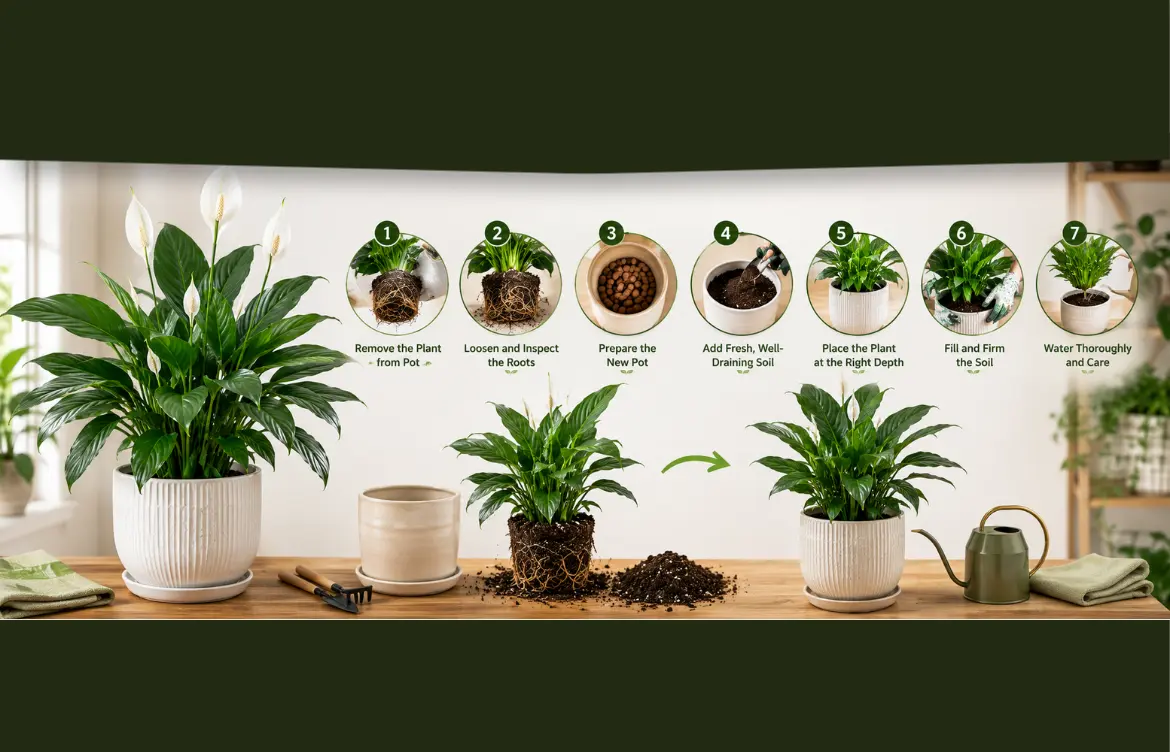
Step-by-Step: How to Repot
- Water the plant a day or two before repotting, which makes it easier to remove from its current pot without damaging the roots.
- Gently tip the pot on its side and ease the plant out, rather than pulling straight up by the leaves.
- Loosen the outer roots slightly with your fingers, and trim away any that are dark, soft, or clearly dead.
- If you’d like to create new plants at the same time, this is the easiest point to divide the root ball; see the Peace Lily Propagation guide for the full steps.
- Add a layer of fresh potting mix to the bottom of the new pot, set the plant in at the same depth it was growing before, and fill in around it.
- Water thoroughly after repotting and keep the plant out of direct sun for the first week or two while it settles in.
What to Expect Afterward
It’s common for a Peace Lily to droop more than usual for several days to a week after repotting, even with the soil properly moist. This is a normal stress response to root disturbance, sometimes called transplant shock, and it typically resolves on its own as the roots settle into the new soil. If drooping continues well beyond a week or two, or the leaves start turning soft and yellow rather than just looking a little tired, it’s worth checking that the plant isn’t sitting in overly wet soil.
Repotting a Rootbound Peace Lily That’s Hard to Remove
A Peace Lily that’s been in the same pot for several years can develop a very dense, tightly packed root ball that doesn’t come out easily. If gentle tipping and pulling doesn’t work, try running a thin knife around the inside edge of the pot to loosen the soil from the sides, or, for a plastic pot, squeezing the sides to loosen the root ball before trying again.
Refreshing Soil Without Sizing Up
If your Peace Lily isn’t actually rootbound but the soil looks old, compacted, or has developed a crusty white buildup on the surface from minerals and fertilizer salts, you don’t need to move to a larger pot to fix that. Simply remove the plant, gently knock away as much of the old soil as you comfortably can without damaging the roots, and repot it into fresh mix in the same container. This kind of soil refresh is worth doing every couple of years even between full repottings into larger pots.
FAQs
Can I repot a Peace Lily while it’s actively flowering?
It’s better to wait until the current blooms have finished if possible, since repotting while flowering adds extra stress on top of the energy the plant is already putting into its blooms. If the plant urgently needs repotting due to being severely rootbound, it’s fine to go ahead, but expect the current blooms to fade a little faster than usual.
Does repotting affect how soon a Peace Lily blooms again?
Yes, often temporarily. A plant that’s just been repotted usually redirects its energy toward re-establishing roots rather than producing flowers, so it’s common to see a pause in blooming for a few months after repotting before it resumes its normal flowering pattern.
What pot material works best for a Peace Lily?
Plastic or glazed ceramic pots hold moisture longer than unglazed terracotta, which suits a Peace Lily’s preference for consistently moist soil better than the fast-drying terracotta pots often recommended for succulents and Snake Plants.
Can I split a very large, overgrown Peace Lily into more than two pots at once?
Yes, as long as each resulting section still has a reasonable number of leaves and roots. Splitting an overgrown plant into three or four smaller, healthy sections is usually a better outcome than leaving it as one enormous, crowded pot that struggles to get enough light and airflow to its inner leaves.
How long should I wait after bringing home a new Peace Lily before repotting it?
Unless it’s visibly rootbound in its nursery pot, it’s fine to wait several months and let the plant adjust to your home’s light and humidity first, rather than repotting immediately. Repotting a newly acquired plant right away adds an additional adjustment on top of the move to a new environment.