
Peace Lily Propagation: How to Grow New Plants
A Peace Lily doesn’t grow from a single central stem the way many houseplants do. It grows as a cluster of individual stems that all share one root system, which means propagating it works differently than propagating a Pothos or Snake Plant. This guide covers the one method that reliably works, why some commonly suggested methods don’t, and how to care for a new division afterward.
Why Leaf Cuttings Don’t Work on a Peace Lily
Unlike a Pothos or Snake Plant, a Peace Lily leaf cut from the plant and placed in water or soil will not grow roots or become a new plant. Each leaf grows directly from the shared root system rather than having its own capacity to root independently. This is a common mistake for anyone used to propagating other houseplants, so it’s worth knowing upfront: division, not cuttings, is the method to use here.
Division: The Method That Works
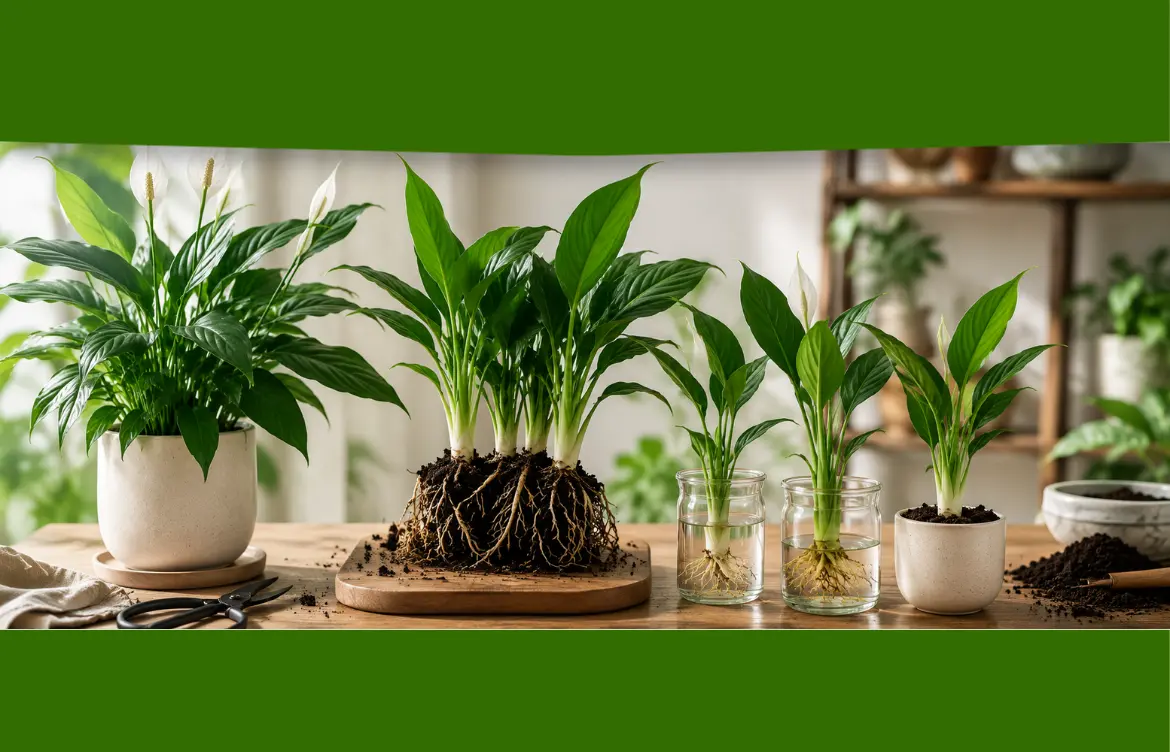
Division means separating the plant’s root system into two or more sections, each with its own set of leaves and roots attached, rather than growing a new plant from scratch. Because a mature Peace Lily is really a cluster of multiple smaller plants sharing one pot, dividing it doesn’t harm the plant the way cutting into a single-stemmed plant would.
What You’ll Need
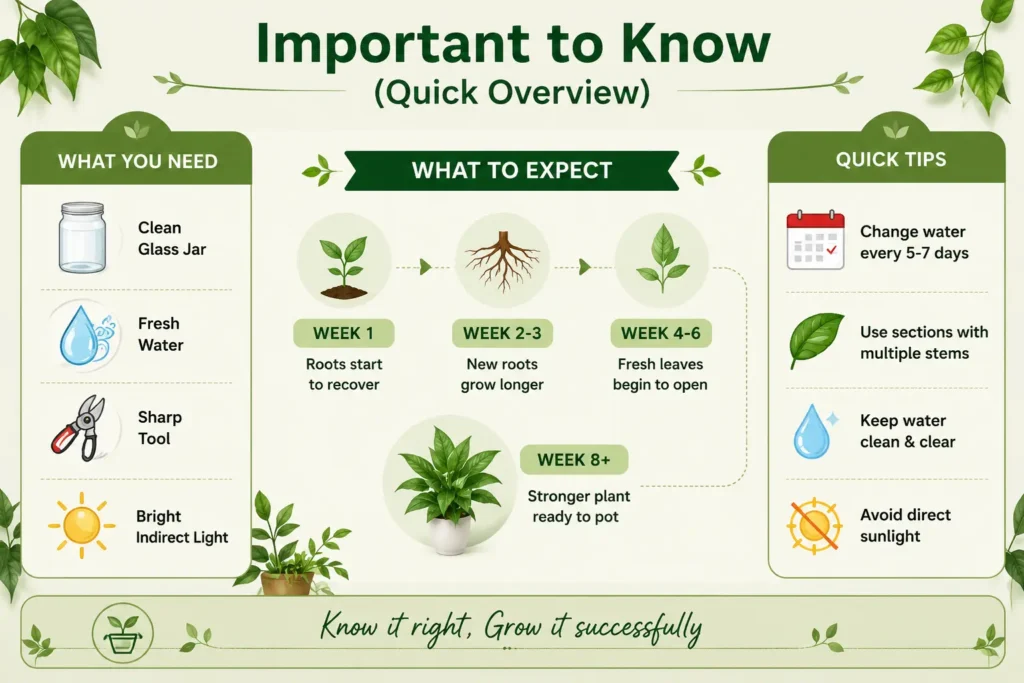
- A clean, sharp knife, or simply your hands for gently pulling sections apart
- A couple of new pots with drainage holes, sized appropriately for each division
- Fresh, well-draining potting mix
- A towel or newspaper to protect your work surface
Step-by-Step: How to Divide a Peace Lily
- Remove the entire plant from its pot and gently shake or rinse off excess soil so you can see the root system clearly.
- Look for natural separations between clusters of stems, where you can see distinct groups each with their own roots.
- Gently pull or cut these sections apart, making sure each division has at least 3 to 5 leaves and a reasonable amount of root attached. A division with too few roots relative to leaves will struggle to support itself.
- Trim away any roots that are dark, mushy, or clearly dead before repotting.
- Pot each division into fresh soil in its own container, at the same depth it was growing before.
- Water thoroughly after potting, then keep the new divisions out of direct sun while they settle in.
When to Divide
Spring is the best time, when the plant is naturally entering its most active growth period and will recover fastest from the disturbance. Division is also commonly done at the same time as repotting, since the roots are already exposed at that point see the Repotting Peace Lily guide for the full repotting process if you’d rather divide as part of that routine.
Aftercare for New Divisions
It’s normal for a newly divided Peace Lily to droop or look a little sad for the first week or two; this is a stress response to having its root system disturbed, not a sign the division failed. Keep the soil lightly moist during this period, avoid direct sun, and resist the urge to fertilize right away wait until you see clear signs of new growth, usually within a month or so, before feeding it.
How Big Should Each Division Be?
A division with only one or two leaves and a small amount of root will often survive, but it takes considerably longer to establish and fill out than a division with a fuller cluster of leaves and roots. If your goal is a good-looking new plant within a reasonable timeframe, it’s better to divide a large, mature Peace Lily into two or three generous sections rather than many small ones.
What to Do With a Division That Won’t Stand Up on Its Own
A smaller division sometimes flops over in its new pot simply because its root system isn’t yet developed enough to anchor it firmly, even though the plant itself is healthy. A thin stake or even a couple of small sticks pushed into the soil around the base can offer temporary support while new roots establish, and this support can be removed after a few weeks once the division is holding itself upright on its own.
FAQs
Can I propagate a Peace Lily from a single leaf, like I can with a Pothos?
No. A Peace Lily leaf has no independent root-growing capacity of its own, so a leaf cutting placed in water or soil will not root or become a new plant, no matter how long you wait. Division is the only method that produces a new, independent plant.
Will a newly divided Peace Lily flower right away?
Usually not in the first few months. A new division typically puts its energy into establishing roots and settling into its new pot before it has the resources to produce a flower, so it’s normal to wait a season or more before seeing the first bloom from a divided section.
Can I propagate a Peace Lily in water instead of soil, using a whole small division?
A small division with roots already attached can sit in water briefly, but it’s not a long-term solution the way it is for water-friendly plants like Pothos. Peace Lilies do better moved into soil promptly after division rather than being kept in water indefinitely.
How do I know if a division is too small to survive?
A division with only a single leaf and very few roots has a much lower success rate than one with several leaves and a proportional amount of root. If you’re unsure, it’s safer to keep sections generous rather than trying to maximize the number of new plants from one division session.
Is it normal for a Peace Lily to naturally produce new offshoots on its own, without dividing it?
Yes, a healthy, mature Peace Lily will often produce new stems at its base over time on its own, gradually filling out the pot. These aren’t separate plants until they’re divided, but their presence is a sign the plant is growing well and will eventually be ready to divide if you want to create new plants.