
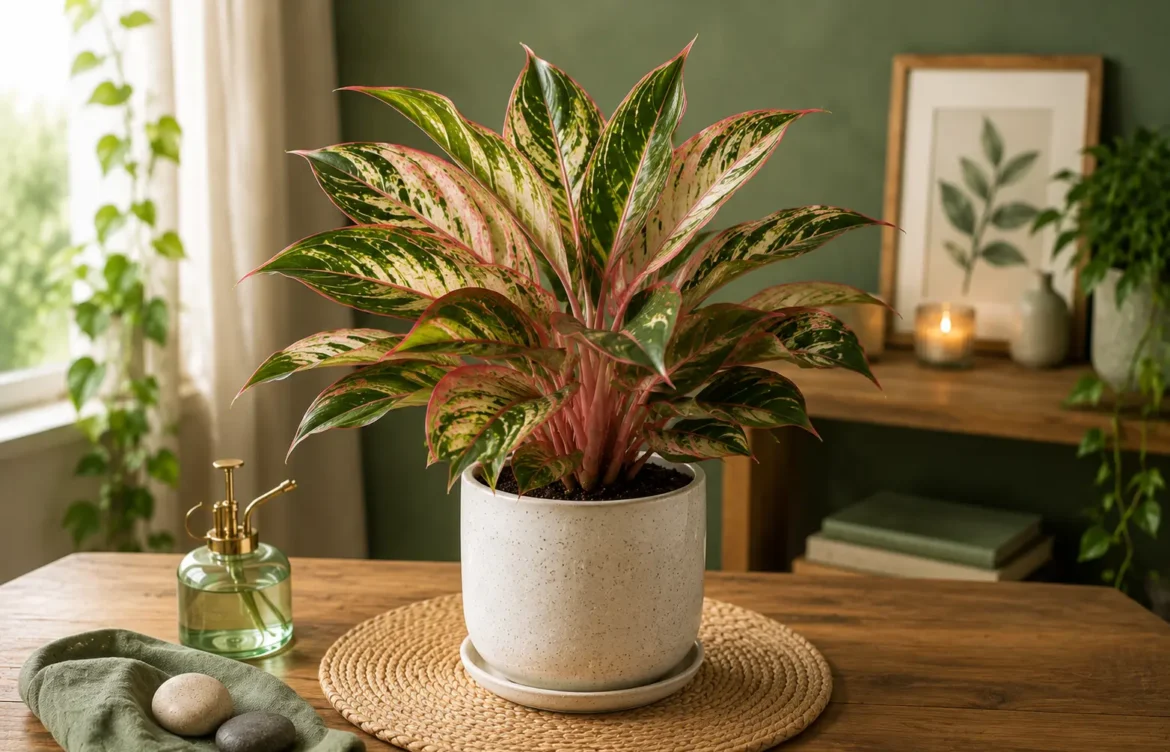
Chinese Evergreen (Aglaonema) Care Guide: Light, Water & More
Chinese evergreen, botanically known as Aglaonema, is a popular low light houseplant prized for its patterned, often silver- or pink-tinged foliage. Native to the tropical understories of Southeast Asia, it has adapted to thrive with minimal light, which is exactly what makes it such a dependable indoor plant. This guide covers everything needed to keep a Chinese evergreen healthy, from light and watering through to common problems.
Light Requirements
Chinese evergreen is one of the more shade-tolerant houseplants available, able to survive in low light conditions that would stunt many other species. That said, the amount of light it receives directly affects its leaf coloring: varieties with more green in their leaves tolerate lower light well, while those with more silver, pink, or cream variegation generally need slightly brighter, indirect light to maintain their coloring.
- Low light: Solid green varieties will survive and grow slowly, though growth will be noticeably reduced.
- Medium, indirect light: This is the sweet spot for most varieties, supporting steady growth and good leaf color.
- Direct sunlight: Avoid this entirely, since direct sun can scorch the leaves and fade or bleach their patterning.
Watering
Chinese evergreen prefers consistently moist soil, but it does not tolerate sitting in waterlogged conditions. Water when the top two to three centimeters of soil feel dry to the touch, and always allow excess water to drain away fully rather than letting the pot sit in standing water.
- Overwatering signs: Yellowing lower leaves, soft or mushy stems, and a persistently soggy soil surface.
- Underwatering signs: Curling or drooping leaves, dry and crispy leaf edges.
Watering frequency should be reduced during the cooler months when growth naturally slows, similar to most tropical houseplants.
Soil and Potting
A well-draining, peat-based potting mix works well for Chinese evergreen. Adding perlite or orchid bark to a standard houseplant mix improves aeration and helps prevent the soggy conditions that can lead to root rot. Choose a pot with drainage holes, and repot only every two to three years, since this plant does not mind being slightly root-bound.
Humidity and Temperature
As a plant native to tropical rainforest understories, Chinese evergreen appreciates higher humidity, though it will tolerate average household conditions reasonably well. In very dry indoor air, brown leaf tips can develop over time. A room humidifier, a pebble tray, or grouping it near other plants can help maintain more comfortable humidity levels.
Ideal temperatures range between 18 and 27 degrees Celsius (65 to 80 degrees Fahrenheit). Keep the plant away from cold drafts, air conditioning vents, and windows during winter, since Chinese evergreen is sensitive to sudden temperature drops.
Fertilizing
Feed Chinese evergreen with a balanced, water-soluble houseplant fertilizer diluted to half strength, applied once every four to six weeks during spring and summer. Stop fertilizing entirely in fall and winter, when the plant’s growth naturally slows and excess nutrients are more likely to build up in the soil rather than being used.
Propagation Overview
Chinese evergreen can be propagated through stem cuttings or division, both of which are relatively straightforward. To propagate from a stem cutting, cut a healthy stem section with at least one or two nodes, and place it in water or moist soil until roots develop, which typically takes several weeks. Division involves separating a mature plant with multiple stems into two or more sections at the root ball, each with its own roots and stems, and repotting them individually.
Choosing a Chinese Evergreen Variety
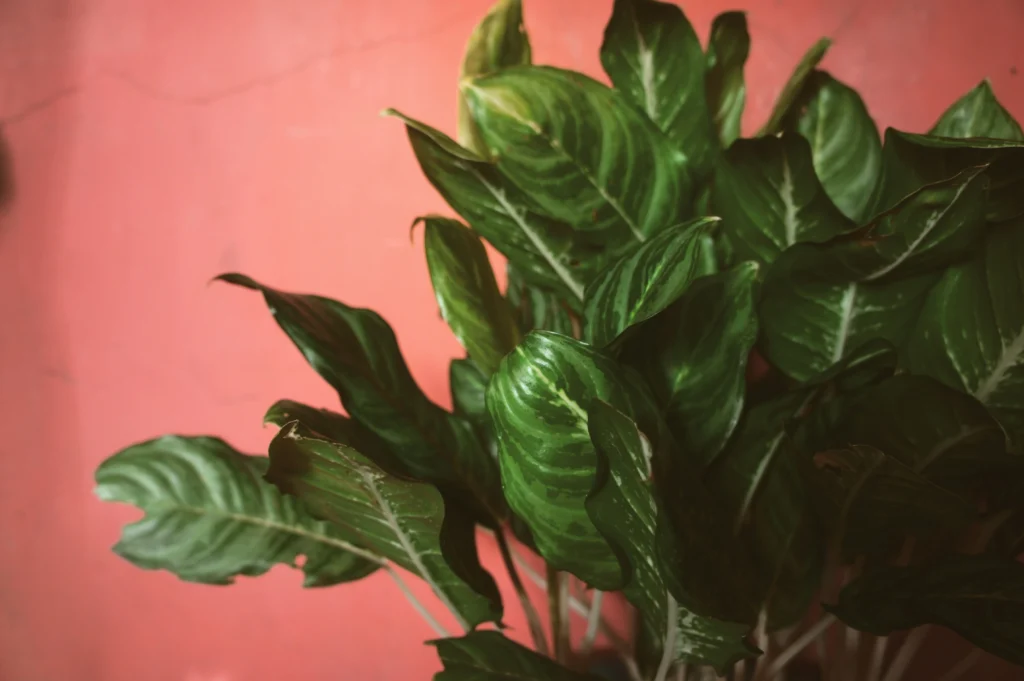
Aglaonema includes dozens of named cultivars, and matching a variety to your available light makes a noticeable difference in how it performs over time.
Low Light Varieties
Deep green cultivars, such as ‘Maria’ or ‘Emerald Beauty’, hold up best in genuinely low light spots, since their leaves rely less on light-driven pigment production to look their best.
Brighter Light Varieties
Varieties with heavier pink, red, or silver variegation, such as ‘Red Valentine’ or ‘Silver Bay’, are more rewarding in medium indirect light, where their coloring stays vivid rather than fading toward plain green over time.
Common Problems at a Glance
| Problem | Likely Cause | What to Do |
| Yellow leaves | Overwatering or natural aging of older leaves | Check soil moisture and adjust watering; remove old yellow leaves |
| Brown leaf tips | Low humidity or mineral buildup from tap water | Increase humidity; consider filtered water |
| Leggy growth | Insufficient light | Move to a brighter, indirect light location |
| Curling leaves | Underwatering or low humidity | Water thoroughly and check humidity levels |
| Fading variegation | Too little light for a variegated variety | Move to a slightly brighter spot, avoiding direct sun |
Toxicity Note
Chinese evergreen contains calcium oxalate crystals and is considered toxic to both cats and dogs if chewed or ingested, potentially causing mouth irritation, drooling, or digestive upset. It is best kept out of reach of curious pets and small children.
Frequently Asked Questions
Why is my Chinese evergreen losing its variegation and turning more green?
This typically happens when a variegated variety is not receiving enough light. While Chinese evergreen tolerates low light well overall, the more colorful varieties need brighter, indirect light to maintain their pink, silver, or cream patterning. Moving the plant closer to a light source usually helps restore more vivid coloring in new growth.
Is Chinese evergreen safe to have around cats and dogs?
No, Chinese evergreen is considered toxic to both cats and dogs due to calcium oxalate crystals in its leaves and stems. If ingested, it can cause mouth irritation, drooling, and digestive discomfort, so it is best placed somewhere pets cannot easily reach.
Why is my Chinese evergreen growing so slowly?
Slow growth is often completely normal for this species, especially in lower light conditions, since it naturally grows at a measured pace even in ideal conditions. If growth stalls entirely or looks unhealthy, check that watering, light, and temperature all fall within the ranges described in this guide.
Does Chinese evergreen ever flower indoors?
Yes, mature Chinese evergreen plants can occasionally produce a small, calla-lily-like flower, usually pale green or cream in color, though this is uncommon indoors and considered a bonus rather than something to expect regularly. Most growers keep this plant for its foliage rather than its blooms.
How long does a Chinese evergreen typically live?
With reasonably consistent care, Chinese evergreen can live for many years indoors, often a decade or longer, and older plants tend to develop a fuller, bushier shape over time as new stems emerge from the base.