
Peace Lily Drooping: Causes and Fixes
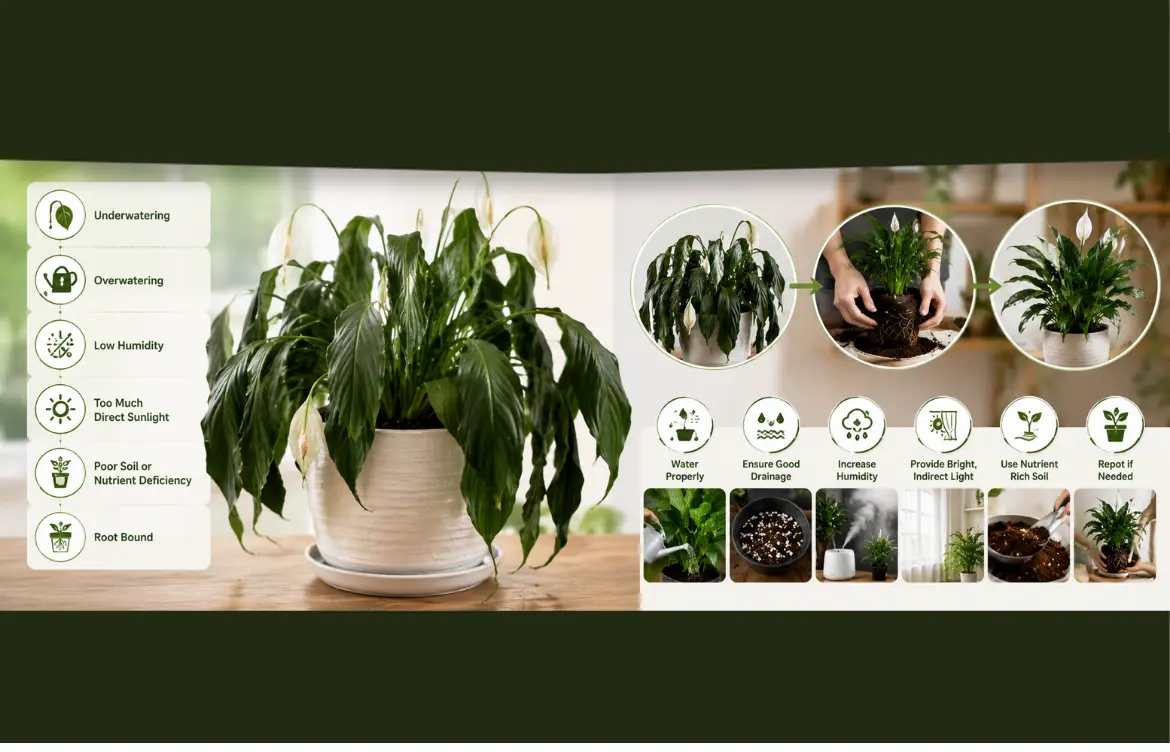
A Peace Lily drooping is often a good thing, in a strange way it’s one of the few houseplants that gives you a clear physical signal when it needs water, well before any real damage happens. But drooping can occasionally mean something other than simple thirst. This guide is a deeper dive into all the reasons a Peace Lily droops, and how to tell them apart.
The Most Common Reason: The Plant Is Thirsty
A Peace Lily’s leaves and stems rely on water pressure inside their cells to stay upright, a property called turgor. As the soil dries out and the plant takes up less water, that pressure drops and the leaves droop noticeably, often all at once and fairly dramatically compared to how subtly most other houseplants show thirst. This is completely normal and, once you water thoroughly, the leaves typically firm back up within a few hours.
How to Tell Thirst-Drooping From Other Causes
The fastest way to tell whether drooping is simple thirst is to check the soil. If it’s dry a couple of inches down, thirst is almost certainly the answer, and a thorough watering should resolve it within the same day. If the soil is still moist or wet and the plant is drooping anyway, thirst isn’t the explanation, and one of the causes below is more likely.
Overwatering: Drooping Without Recovery
Counterintuitively, too much water can cause drooping that looks similar to thirst at first glance. Waterlogged soil damages the roots’ ability to actually take up water and support the plant, so the leaves droop even though there’s plenty of moisture in the pot. The key difference is recovery: overwatering-related drooping does not bounce back within a few hours after you add more water, and it’s often accompanied by yellowing leaves or a soft, mushy feeling at the base of the plant.
Transplant Shock
A Peace Lily that’s recently been repotted or divided commonly droops for several days to a week afterward, even with correct watering, simply because its root system has been disturbed and needs time to settle back in. This is a normal, temporary response covered in more detail in the Repotting Peace Lily guide, and it typically resolves on its own without any specific fix beyond patience and consistent, moderate watering.
Being Rootbound
A plant that has badly outgrown its pot can droop even when watered on a normal schedule, because there’s no longer enough soil relative to the root mass to actually hold the moisture the plant needs between waterings. If your Peace Lily seems to need watering unusually often and still droops shortly after, checking whether it’s rootbound and needs repotting is worth doing.
Too Much Heat or Direct Sun
A Peace Lily exposed to intense heat or direct sun, even briefly, can droop as a heat-stress response, similar to how many plants wilt on an especially hot day regardless of soil moisture. This kind of drooping often recovers once the plant is moved to a cooler spot with indirect light, even without additional watering.
Cold Shock
Less commonly, a sudden drop in temperature, such as being left near a drafty window during a cold snap, can also cause drooping. This is usually accompanied by other signs of cold stress, like dark or water-soaked-looking patches on the leaves, rather than occurring on its own.
Drooping After a Big Environmental Change
Beyond repotting specifically, any significant change to a Peace Lily’s environment, like moving house, a big shift in room temperature, or even a long car ride from the garden center, can cause temporary drooping as the plant adjusts. This general adjustment drooping behaves much like transplant shock: it typically resolves within a week or two of settling into a stable spot with consistent light and a normal watering routine, without needing any specific intervention.
A Simple Way to Diagnose Drooping
Recently exposed to intense heat, sun, or cold — likely a temperature stress response; adjust its location.
Soil is dry — water thoroughly; expect recovery within a few hours.
Soil is wet and leaves are also yellowing or soft — suspect overwatering or root rot; hold off on watering and check the roots.
Recently repotted or divided — likely transplant shock; give it a week or two.
Watered normally but still droops quickly — check whether the plant is rootbound.
Quick reference
| Behavior after watering | Most likely cause |
| Perks up within hours | Underwatering |
| Stays droopy, soil was already damp | Overwatering / root rot |
| Sudden droop after repotting or a move | Transplant/environmental shock |
| Gradual droop + stalled growth, old pot | Root-bound |
| Droop coincides with cold or drafts | Temperature stress |
More resources about peace lily:
Frequently Asked Questions
How long should it take for a Peace Lily to recover after watering, if it’s simple thirst?
Typically within a few hours, and often noticeably improved within just one or two hours in a warm room. If a full day passes with no improvement at all after a thorough watering, thirst likely isn’t the actual cause, and it’s worth checking the soil moisture and roots for signs of overwatering instead.
Is it harmful to let a Peace Lily droop regularly before every watering?
Occasional drooping right before watering isn’t harmful and is actually how many people use this plant as a natural reminder to water it. That said, letting it droop severely and repeatedly over a long period can eventually stress the plant and affect leaf health, so it’s better used as an occasional signal than a routine practice.
Why does my Peace Lily droop even though I just watered it?
If drooping continues shortly after a thorough watering, the most likely explanations are that the plant is rootbound and the water isn’t reaching enough of the root system, or that the soil was already overly wet before you added more water, which can cause drooping from root stress rather than thirst.
Can a Peace Lily die from drooping too often?
An occasional droop-and-recover cycle isn’t dangerous on its own, but repeatedly letting the plant go completely limp for extended periods before watering puts ongoing stress on the plant and can eventually lead to leaf damage or dieback, even if it recovers each individual time.
Does misting help a drooping Peace Lily recover faster?
Misting doesn’t meaningfully speed up recovery from thirst-related drooping, since the plant needs water at the roots, not on the leaves, to restore the internal water pressure that keeps it upright. A thorough soil watering is what actually resolves this type of drooping.