
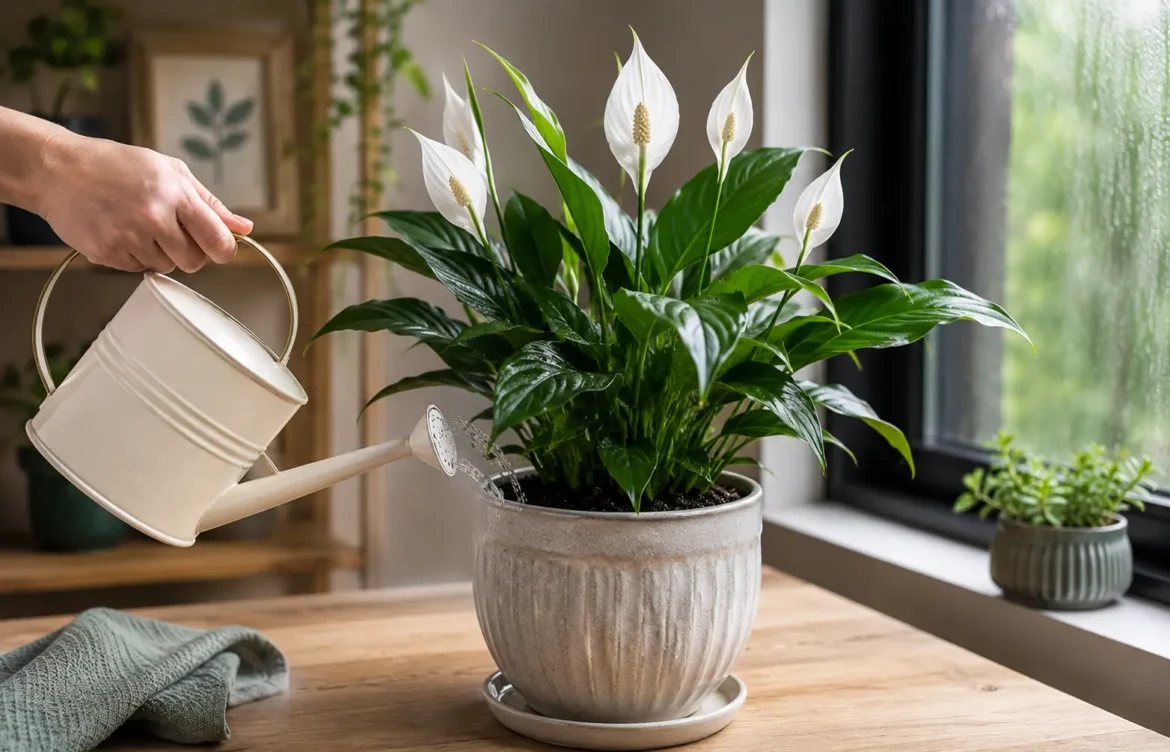
Peace Lily Watering Guide: How Much and How Often
A Peace Lily has different watering preferences than many of the other low light plants on this site. Where a Snake Plant wants to dry out completely, a Peace Lily prefers to stay lightly moist and will let you know clearly when it’s thirsty. This guide covers exactly how much and how often, what kind of water to use, and how that changes through the year.
The Simple Test: Check the Top Inch of Soil
Rather than watering on a fixed schedule, check the soil before each watering. Push a finger about an inch into the soil near the edge of the pot. If it feels dry at that depth, it’s time to water. If it’s still slightly damp, wait a day or two and check again. This plant is more sensitive to letting soil dry out completely than a Snake Plant is, so checking a little more frequently, roughly every few days, helps you catch the right moment.
How Much Water to Use
Water thoroughly until it runs out of the drainage holes at the bottom of the pot, then let any excess drain away and empty the saucer so the plant isn’t left sitting in standing water. This ensures the entire root ball gets moisture rather than just the surface layer, which is especially important for a plant that dries out and needs re-watering more frequently than a succulent-type plant.
A Seasonal Watering Schedule
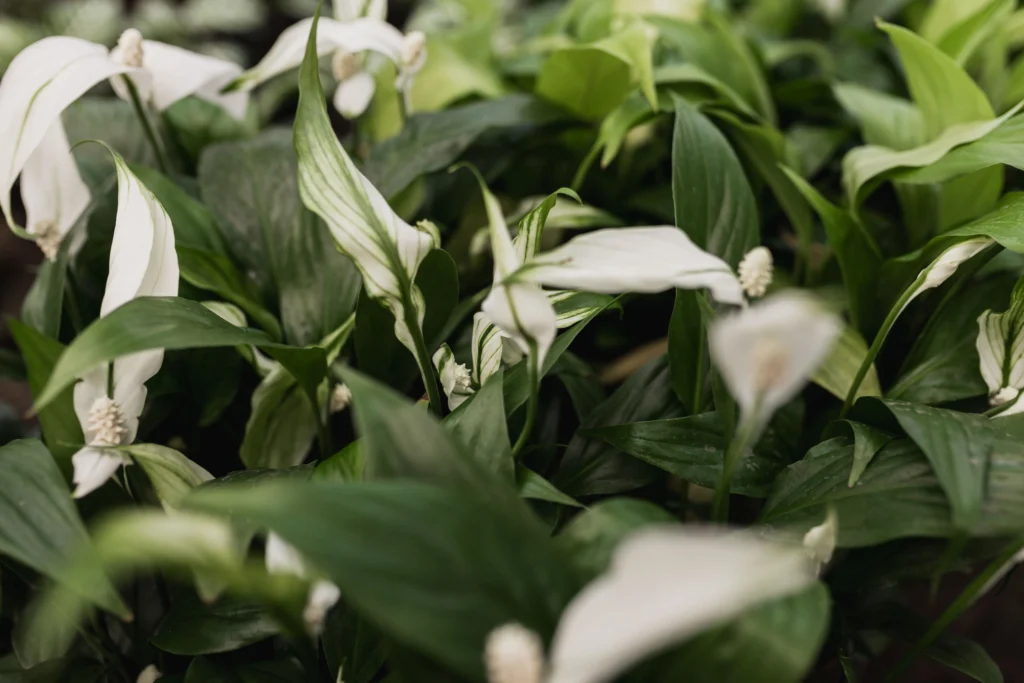
- Spring and summer — roughly once a week in most homes, though this varies with light, pot size, and room temperature. A plant in brighter light or a smaller pot will need water more often.
- Fall and winter — roughly every 10 days to 2 weeks, since growth slows and the plant uses less water during shorter, cooler days.
These figures are a starting point, not a fixed rule. Always confirm with the soil check above, since factors like indoor heating, pot material, and light level all shift how quickly the soil actually dries.
Water Quality Matters More for This Plant
Peace Lilies are notably more sensitive to tap water than many common houseplants, particularly to the fluoride and chlorine found in most municipal water supplies. This sensitivity shows up most often as brown, crispy leaf tips over time; see the Peace Lily Brown Leaves guide for more detail on that specific symptom. Using filtered or distilled water, or letting tap water sit out uncovered overnight before using it, is a simple habit that noticeably reduces this issue for a lot of Peace Lily owners.
Is a Peace Lily a Good Fit for a Self-Watering Pot?
Yes, more so than many of the low light plants on this site. Because it prefers consistently moist (not soggy) soil rather than the fully dry-between-waterings approach a Snake Plant needs, a self-watering pot, which maintains a steady moisture level through a reservoir, suits a Peace Lily’s natural preference well. This is worth considering if you tend to forget regular watering, since it removes some of the guesswork.
Signs You’re Watering Correctly
A well-watered Peace Lily has firm, upright leaves most of the time, with only occasional light drooping right before a scheduled watering, rather than constant or severe wilting. The soil should feel lightly moist, not wet or muddy, a day or two after watering. If you’re consistently watering and the plant still droops dramatically and often, it’s worth revisiting your schedule or checking for a rootbound pot rather than assuming you’re simply not watering enough.
Adjusting for Pot Size and Material
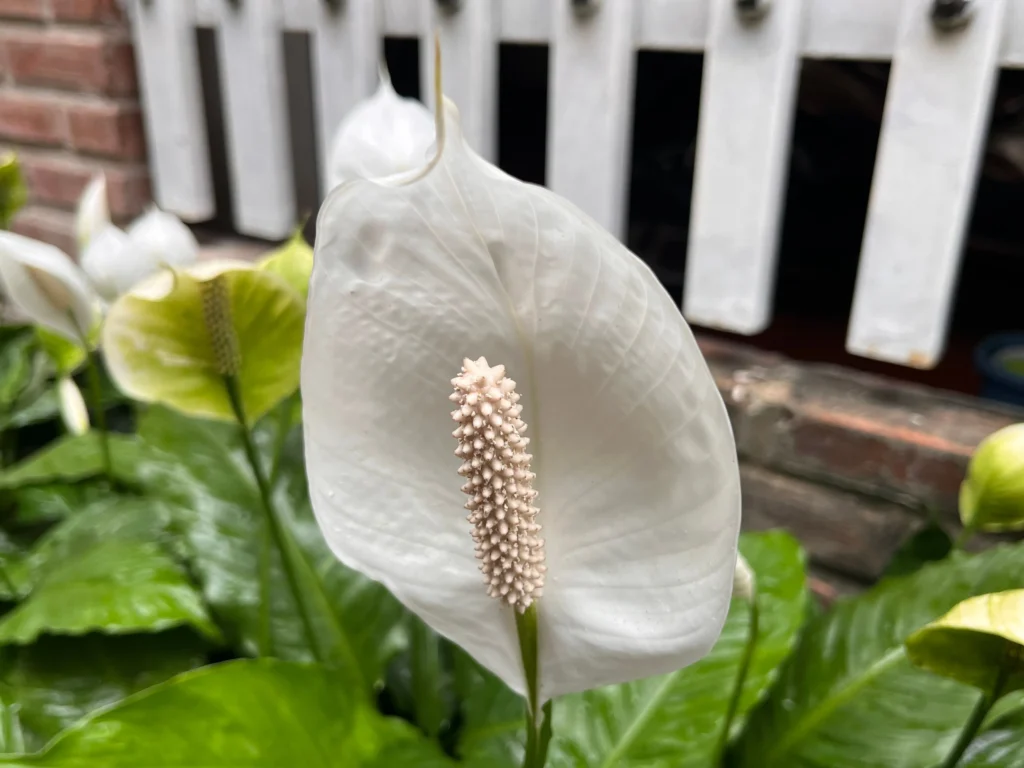
A larger pot holds more soil and takes longer to dry out than a small one, so a Peace Lily recently moved into a bigger container after repotting will typically need watering less often than it did in its previous pot, at least until its roots grow to fill the new space. Pot material matters too: an unglazed terracotta pot lets moisture evaporate through its sides, so soil dries faster than in plastic or glazed ceramic, which usually means slightly more frequent watering if you’re using terracotta for this particular plant.
FAQs
Is it better to water a Peace Lily lightly and often, or thoroughly and less often?
Thoroughly and less often is better. A deep watering that reaches the full root ball, followed by checking the soil again in a few days, keeps the roots consistently healthy, whereas frequent shallow watering only dampens the top layer of soil and can leave the lower roots too dry.
Can I water a Peace Lily from the bottom instead of the top?
Yes, bottom watering, where the pot sits in a basin of water for 15 to 20 minutes so the soil draws moisture up through the drainage holes, works well for this plant and is a good option if you want to avoid getting water on the leaves or crown.
Does a bigger Peace Lily need more water than a smaller one?
Generally yes, since a larger plant in a bigger pot has more soil volume and a larger leaf surface using up water through the plant, so it typically needs watering somewhat more often, or with more water each time, compared to a small, young plant in a small pot.
How can I tell if I’m overwatering rather than watering correctly?
Overwatering usually shows up as yellowing leaves, a musty smell from the soil, or drooping that doesn’t recover even though the soil is clearly moist. Correct watering results in firm leaves most of the time with only mild, brief drooping right before the next watering is due.
Should I change how I water a Peace Lily kept in a bathroom versus a living room?
A bathroom’s typically higher humidity can slightly slow how quickly the soil dries out compared to a drier living room, so it’s worth checking the soil a little less frequently in a humid bathroom rather than assuming the same schedule applies everywhere in the house.