
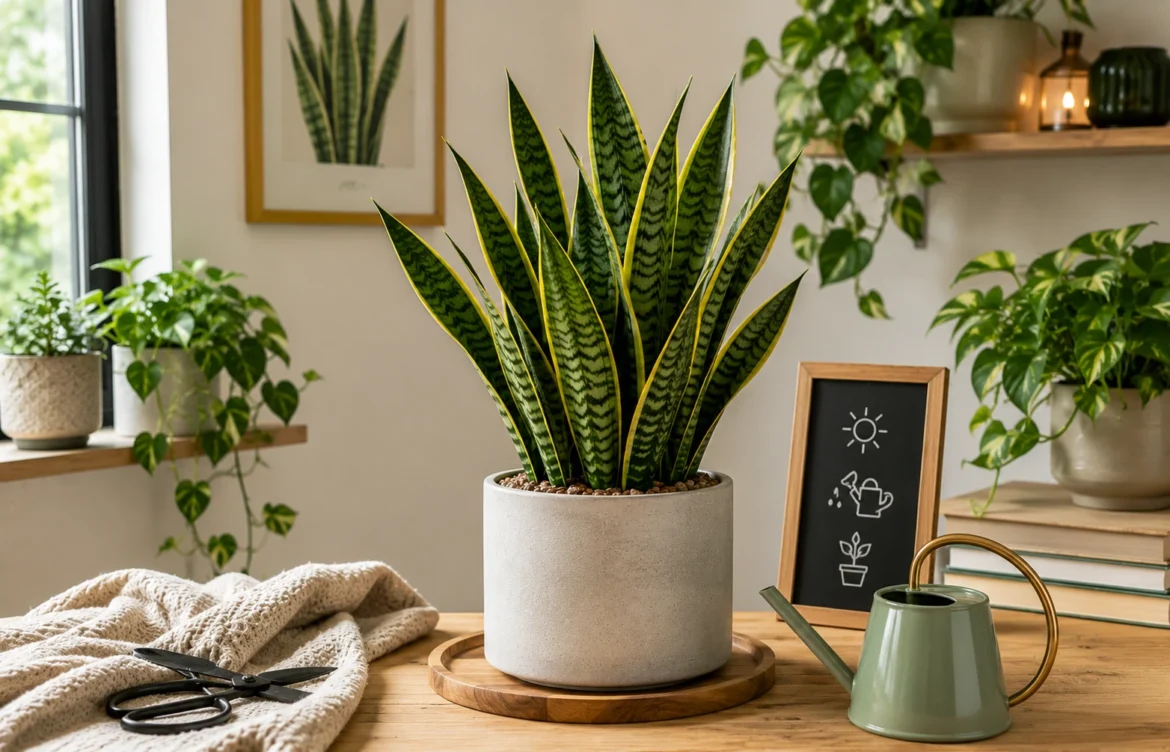
Snake Plant Care Guide
This guide brings together everything a Snake Plant needs in one place, so you don’t have to piece it together from several pages. Each section gives you the core facts, and links to a more detailed guide if you want to go further into any one topic.
Light
Snake Plants tolerate low light and survive there for a long time, but they grow fastest and healthiest in bright, indirect light. Direct sun for a few hours is generally tolerated, though intense afternoon sun can cause scorching over time. Full details, including which window direction works best: Snake Plant Light Requirements.
Water
Water only once the soil is completely dry, roughly every 2 to 4 weeks depending on the season, light, and pot size. Overwatering, not underwatering, is the most common cause of problems with this plant. Full seasonal schedule: Snake Plant Watering Guide.
Soil and Pot
Use a fast-draining mix made for succulents or cacti, and always choose a pot with a drainage hole. A pot only slightly larger than the current root ball is better than a big jump in size, since oversized pots hold excess moisture the roots can’t use.
Temperature and Humidity
Normal room temperature, roughly 60–85°F (15–29°C), works well, and average home humidity is fine without any extra misting. Keep the plant away from cold drafts and temperatures below about 50°F (10°C), which can damage the leaves.
Fertilizing
A light, diluted houseplant fertilizer once or twice during spring and summer is enough. Skip fertilizing in fall and winter, when the plant is naturally growing more slowly and won’t use the extra nutrients.
Snake Plant Care at a Glance
| Care Factor | Recommendation |
| Light | Bright indirect light; tolerates low light |
| Water | Water only when soil is completely dry |
| Soil | Well-draining cactus or succulent mix |
| Humidity | Average indoor humidity |
| Temperature | 60–85°F (16–29°C) |
| Fertilizer | Once a month during spring and summer |
| Growth Rate | Slow to moderate |
| Difficulty | Very easy |
The First 30 Days With a New Snake Plant
When you bring a new Snake Plant home, resist the urge to repot, fertilize, or move it around too much right away. Place it in a spot with bright, indirect light, check the soil before watering rather than watering immediately, and give it a few weeks to adjust to your home’s light and humidity before making any other changes. Plants often go through a short adjustment period after a change of environment, and a few slightly less upright leaves during this time are usually nothing to worry about.
Tools and Supplies Worth Having
- A moisture meter or a simple wooden skewer, for checking soil dryness without guessing
- A pot with a drainage hole, or a plastic grow pot to place inside a decorative one
- A fast-draining cactus or succulent soil mix
- A light, balanced liquid fertilizer for occasional use in spring and summer
Common Problems, at a Glance
- Yellow leaves — usually overwatering. Full guide: Snake Plant Yellow Leaves.
- No new growth — often normal in winter, or a sign of low light or a rootbound pot. Full guide: Snake Plant Not Growing.
- Soft, mushy base — a sign of root rot from consistently wet soil; needs prompt repotting into dry soil.
Growing More Plants
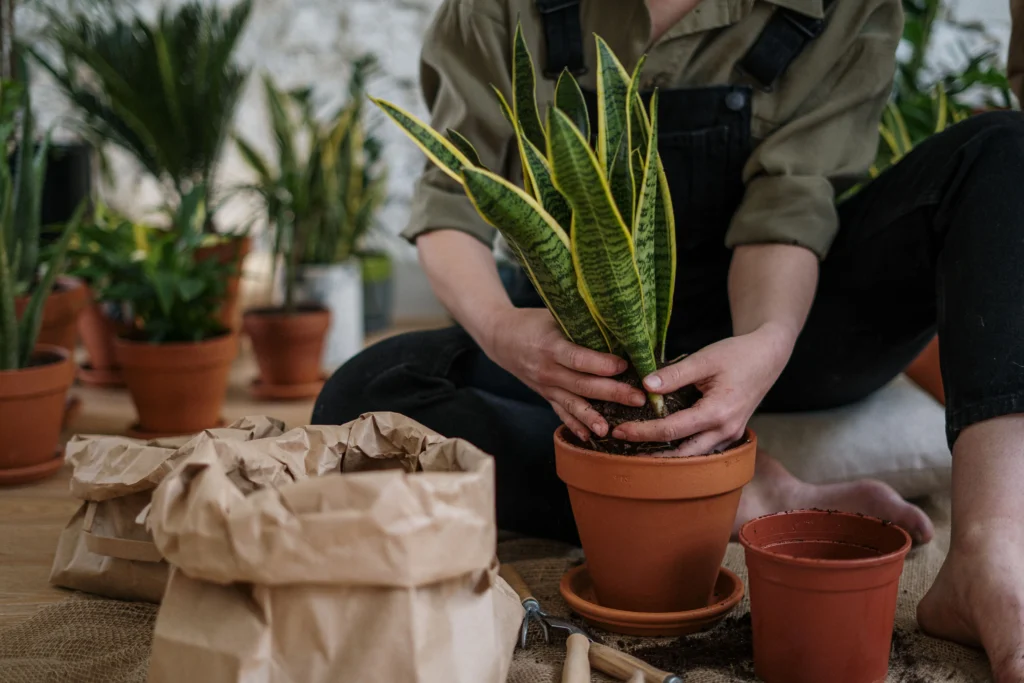
A Snake Plant can be propagated through division or leaf cuttings, and repotted every 3 to 5 years or once it becomes rootbound. Full steps: Snake Plant Propagation and Repotting Snake Plant.
Choosing a Variety
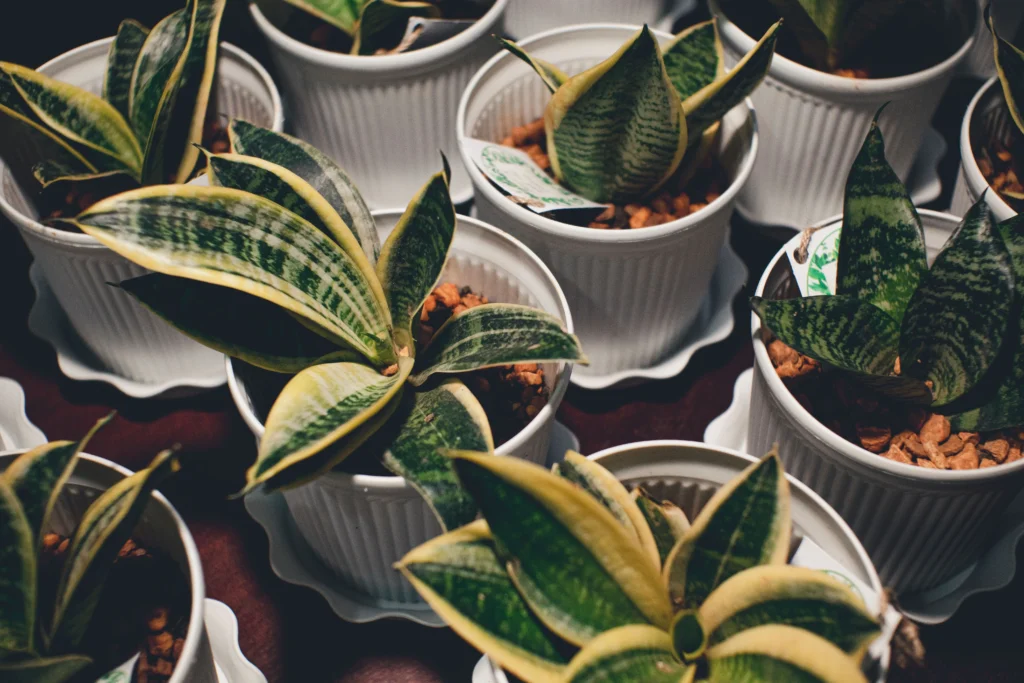
Care stays largely the same across the many available Snake Plant varieties, from tall striped types to compact rosettes. See Snake Plant Varieties to compare the most common options.
A Quick Troubleshooting Checklist
Brown, crispy tips: usually underwatering, dry air, or tap water sensitivity, not overwatering.
Plant looks fine but hasn’t grown in months: check the season first, then light, then pot size.
Leaves turning yellow: check the soil for excess moisture before anything else.
Base feels soft or mushy: this is likely root rot; act quickly and see the Yellow Leaves guide for the repotting steps.
How Snake Plant Care Compares to Other Low Light Plants
Compared to other popular low light options like Pothos or Peace Lily, a Snake Plant sits at the low-maintenance end of the spectrum on nearly every front. It needs less frequent watering than either, tolerates a wider swing in light levels, and doesn’t require the higher humidity a Peace Lily prefers. The trade-off is pace and drama: Pothos grows visibly week to week and a Peace Lily gives a clear wilting signal when thirsty, while a Snake Plant offers neither of those feedback loops, which is part of why watering by a fixed schedule causes more problems here than with those other two.
A Simple Monthly Habit
Rather than a strict weekly routine, a once-a-month check works well for this plant: look at the soil, glance at the base of the leaves for pests, and check whether the pot still has enough room for the roots. This lighter-touch rhythm matches how slowly the plant actually operates, and it avoids the temptation to intervene more often than the plant actually needs.
FAQs
What’s the single biggest mistake to avoid with a Snake Plant?
Watering too often. Because it looks tough and low-maintenance, new owners often assume it wants regular weekly watering like many other houseplants, when in reality it needs much less. Checking the soil before watering, rather than following a fixed schedule, prevents most common problems.
Is a Snake Plant a good choice for a first-time plant owner?
Yes, it’s commonly recommended for exactly that reason. It tolerates a wide range of light conditions and forgives inconsistent watering better than most houseplants, which gives a new owner more room for small mistakes while they’re still learning.
How long does a Snake Plant typically live?
With reasonable care, a Snake Plant can live for many years, often a decade or more, since it’s a slow-growing, long-lived perennial rather than a plant with a short natural lifespan.
Does a Snake Plant need to be near a window at all times?
Not strictly, since it tolerates low light for extended periods, but keeping it near a light source, natural or artificial, will noticeably improve its growth rate compared to a spot with very little light at all.
What’s the very first thing to check if a Snake Plant looks unhealthy?
Start with the soil. Since the large majority of Snake Plant problems trace back to too much water, checking whether the soil has been staying consistently damp is usually the fastest way to narrow down what’s actually going wrong.