
Snake Plant Yellow Leaves: Causes, Solutions, and How to Restore Healthy Green Growth
Yellowing on a Snake Plant is a color and health symptom, not the same thing as slow growth. A plant can be actively growing new leaves while an older leaf turns yellow, or it can stop growing without ever showing any yellow at all. This article focuses specifically on why leaves change color, and what each pattern usually means.
Why Where the Yellowing Starts Matters
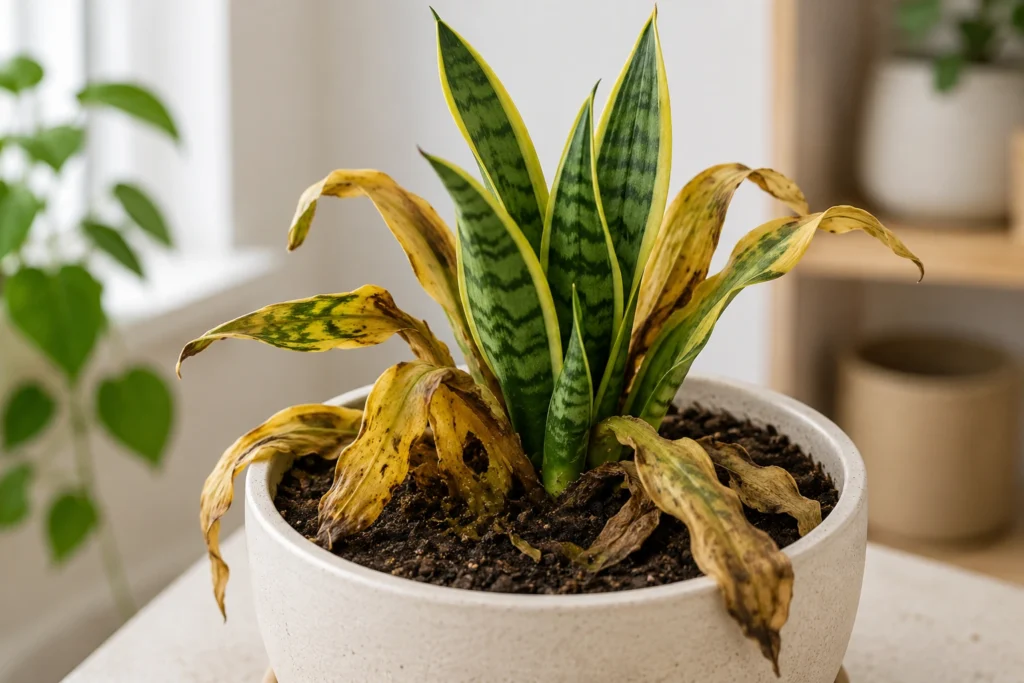
Before looking at causes, take note of exactly where the yellow color is showing up. Yellowing that starts at the base of the plant and moves upward across several leaves usually points to a root-level issue, most often overwatering. Yellowing that appears only at the very tip of a leaf, while the rest of the leaf stays green, points more often to a different cause, like dry air or water quality. And a single leaf turning yellow from the base while every other leaf stays completely green is frequently just natural aging, not a wider problem.
The Most Common Cause: Overwatering
If several leaves are yellowing at once, especially starting from the base, and the soil has been consistently moist, overwatering is the most likely cause. Waterlogged soil keeps oxygen away from the roots, which then struggle to function properly and the leaves lose their color as a result. Left unaddressed, this can progress into root rot, where the base of the plant turns soft and mushy.
How to Tell Overwatering From Root Rot
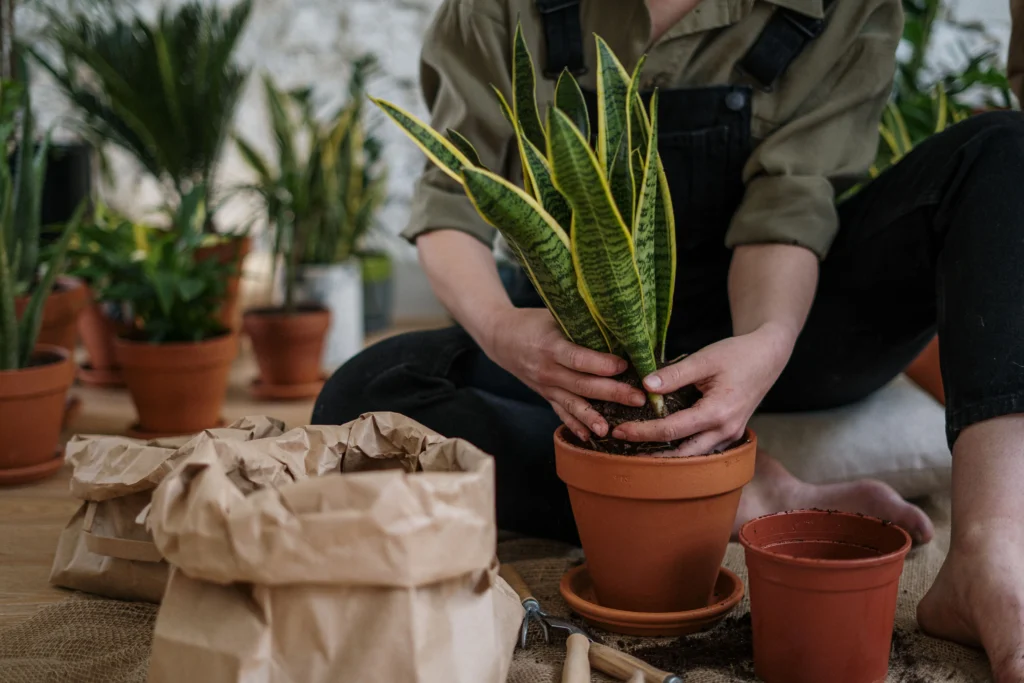
Overwatering on its own usually just causes yellowing. Root rot is further along and comes with a soft, discolored base and a plant that feels loose or wobbly in the pot. If you gently remove the plant and the roots are dark, mushy, and smell unpleasant, rather than firm and pale, you’re dealing with root rot, which requires trimming the affected roots and repotting into fresh, dry soil.
How to Treat Root Rot, Step by Step
- Remove the plant from its pot and gently rinse the soil off the roots so you can see them clearly.
- Trim away any roots that are dark, soft, or mushy, using a clean, sharp blade, cutting back to firm, healthy tissue.
- If the base of the plant itself is soft, cut it back to solid, healthy tissue as well a partially affected plant can often be saved this way.
- Let the trimmed plant air dry for several hours before repotting, which helps the cut areas callous over and reduces the risk of reinfection.
- Repot into a clean pot with fresh, fast-draining soil, and hold off on watering for about a week to give the roots time to settle.
Other Causes of Yellow Leaves
Over-fertilizing — a buildup of fertilizer salts in the soil can show up as yellowing, often along with a white, crusty residue on the soil surface or pot edges.
Natural aging — it’s normal for a single older leaf at the base of the plant to slowly turn yellow and eventually die back as the plant redirects energy to new growth. This is not a problem if it’s just one leaf and the rest of the plant looks healthy.
Too much direct sun — intense, direct sunlight can bleach or yellow leaves, especially on a plant recently moved to a much brighter spot without time to adjust.
Cold exposure — a plant sitting near a cold windowsill or an air conditioning vent can develop yellow or discolored patches from temperature stress.
How to Fix It
Start by checking the soil. If it’s wet, hold off on watering and confirm the pot has proper drainage. If it’s a single lower leaf and the rest of the plant looks healthy, simply trim off the yellow leaf at the base once it’s mostly discolored this is normal upkeep, not a sign of a bigger issue. For suspected over-fertilizing, flush the soil thoroughly with plain water a few times to help clear excess salts, letting the water run through the drainage holes each time.
Preventing Yellow Leaves Going Forward
Most future yellowing can be avoided with three habits: check the soil before every watering rather than following a fixed schedule, make sure the pot always has proper drainage, and avoid moving the plant suddenly from low light into intense direct sun. Trimming off a naturally aging leaf occasionally is normal maintenance and nothing to worry about the goal isn’t zero yellow leaves ever, it’s catching the difference between one old leaf and a wider pattern early.
FAQs
Will a yellow leaf turn green again once I fix the problem?
No. Once a section of leaf has turned yellow, that discoloration is permanent for that leaf. Fixing the underlying cause stops further yellowing and protects new growth, but the already-yellow leaf usually needs to be trimmed off rather than expected to recover its color.
Is it normal for just the tip of a leaf to turn yellow, rather than the whole leaf?
Yes, and this pattern often points to a different cause than whole-leaf yellowing — tip discoloration is frequently linked to dry air, underwatering, or sensitivity to minerals in tap water, rather than the overwatering that typically causes broader yellowing.
Should I cut off a yellow leaf immediately, or wait?
If it’s clearly a single aging leaf, you can wait until it’s mostly yellow or brown before trimming, since the plant may still be pulling some nutrients from it. If yellowing is spreading to multiple leaves and you suspect overwatering, address the watering issue first rather than focusing on removal.
Can too little light cause yellow leaves, not just slow growth?
It’s less common, but a plant kept in very low light for a long time can occasionally show pale or yellowish new growth, since it isn’t producing enough chlorophyll. This is different from established leaves turning yellow, which points more often to a watering issue.
How many yellow leaves is too many to save the plant?
There’s no exact number, but if more than half the leaves are yellow or the base of the plant feels soft, focus on checking the roots for rot rather than treating each leaf individually. A plant with firm, healthy roots and just a few yellow leaves has a good chance of recovering fully.
Read More Articles: