
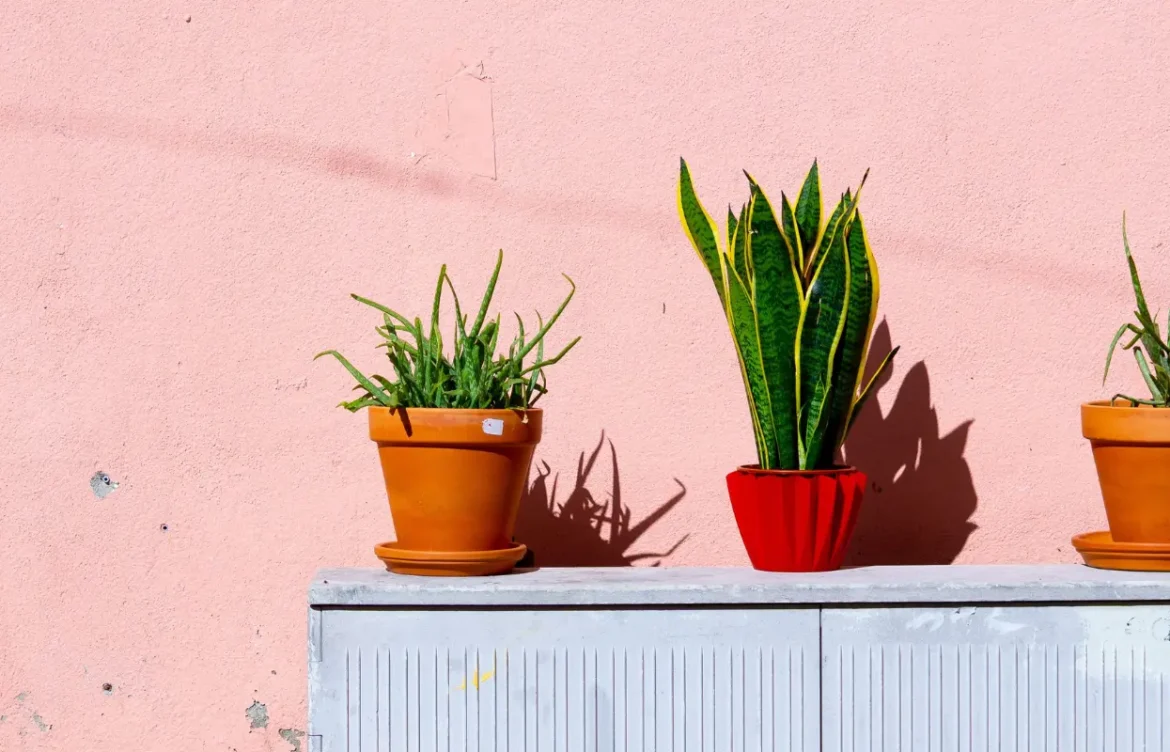
Snake Plant Light Requirements Explained
Snake Plants are often sold as a “low light plant,” and while that’s true in the sense that they can survive in dim rooms, survive and grow well are two different things. This guide breaks down exactly what different light levels mean for this plant, how to test your own room, and how to match your space to what it actually needs.
The Three Light Levels, in Plain Terms
Low light a spot several feet from any window, or a room with only a small, indirect light source. A Snake Plant will survive here for a long time, but will grow very slowly, if at all. Bright, indirect light a spot near a window where light reaches the plant but the sun itself isn’t hitting the leaves directly. This is the range where a Snake Plant grows fastest and produces the most new leaves. Direct sun sunlight falling straight onto the leaves for extended periods, most common in south-facing windows. Snake Plants tolerate some direct sun better than many houseplants, but hours of intense afternoon sun can still cause pale or scorched patches.
A Simple Way to Test Your Room’s Light Level
Around midday, hold your hand about a foot above the spot where the plant sits. A sharp, clearly defined shadow usually means the spot is getting close to direct sun. A soft, blurry shadow with visible edges usually means bright, indirect light, which is the ideal range. Almost no shadow at all, or a very faint one, usually means the spot is low light. This simple test only takes a moment and gives a much more accurate read on a room’s actual light than guessing based on how bright it feels to your eyes.
Best Window Directions (Northern Hemisphere)
East-facing gentle morning sun; usually an ideal spot with minimal risk of leaf scorch. South-facing the brightest option; fine a few feet back from the window, but intense midday sun directly on the leaves can cause scorching. West-facing strong afternoon sun; similar caution to south-facing, especially in summer. North-facing the dimmest option; the plant will survive but growth will be noticeably slower than in brighter spots. If you’re in the Southern Hemisphere, these directions are reversed: north-facing windows get the strongest light and south-facing windows get the least.
How Light Level Affects Leaf Appearance
Beyond just growth speed, light level noticeably changes how a Snake Plant looks. In lower light, leaves tend to grow thinner, a bit more pale, and lean toward whatever light source is available. In bright, indirect light, leaves grow thicker, hold a richer, more saturated green color, and stand more upright. Variegated varieties, like Laurentii, show this most clearly their yellow edging tends to look sharper and more defined in good light and can look muted or washed out in low light.
Signs the Light Level Needs to Change
Too little light no new growth for a long stretch outside of winter, or leaves that lean and stretch toward a light source. Too much direct light pale, bleached, or brown scorched patches, usually on the side of the leaf facing the window.
How Light Needs Change Through the Year
The amount of natural daylight a room receives shifts noticeably between summer and winter, especially the further you live from the equator. A spot that qualifies as bright, indirect light in summer can drop closer to low light in winter, simply because the sun sits lower in the sky and days are shorter. If you notice slower growth every winter even without changing the plant’s location, this seasonal shift in available light, combined with the plant’s natural winter rest period, is the most likely explanation.
Using a Grow Light
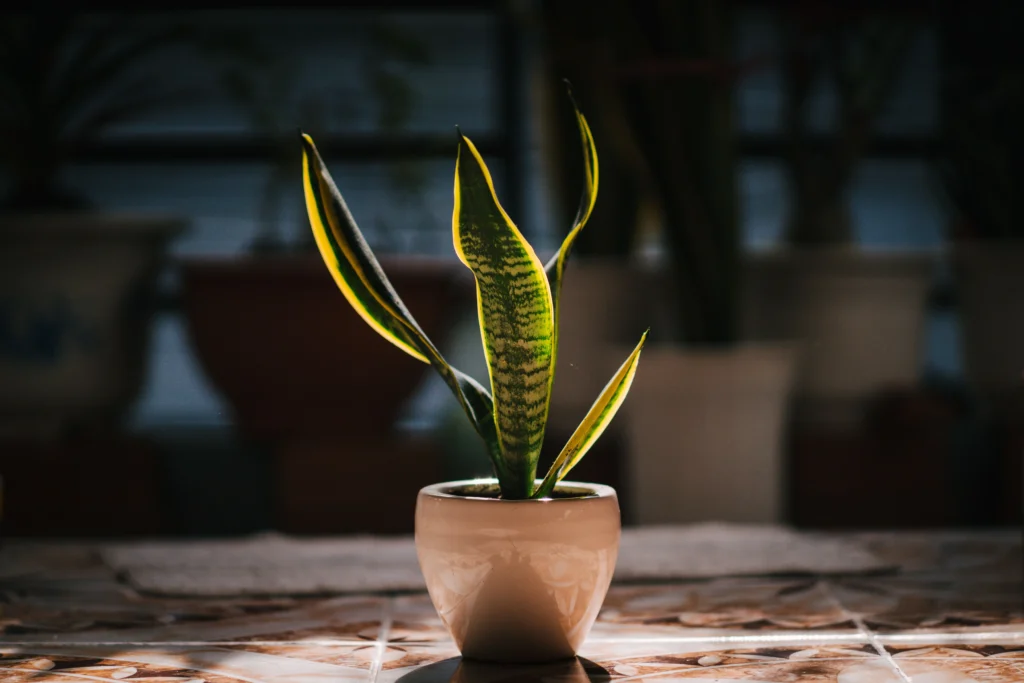
For a room with no natural light, a basic full-spectrum LED grow light positioned 12 to 24 inches above the plant and run for 8 to 10 hours a day can fully substitute for a window. This is a practical option for interior offices, windowless bathrooms, or desks tucked away from any natural light source. A simple plug-in timer makes this easier to keep consistent, since manually turning a grow light on and off every day is easy to forget.
FAQs
Can a Snake Plant really survive with no natural light at all?
For a short period, yes, but not indefinitely. Without any light source, natural or artificial, the plant cannot photosynthesize and will slowly decline over time, even though it may take months for that decline to become visible.
Does a Snake Plant need less light in winter?
The plant’s light needs don’t change, but the amount of natural daylight available usually does, especially further from the equator. It’s common for a Snake Plant kept in the same spot to grow more slowly in winter simply because the days are shorter and the sun is weaker.
How can I tell if my grow light is strong enough?
If the plant produces no new growth over several months despite 8 or more hours of light a day, the light may be too weak or positioned too far away. Moving the light closer, within the 12 to 24 inch range, is usually the first thing to try before assuming the plant needs a stronger fixture.
Should I rotate my Snake Plant so it grows evenly?
Yes, giving the pot a quarter turn every couple of weeks helps all sides of the plant get similar light exposure, which keeps growth more even instead of leaning toward one side, especially if the plant sits close to a single window.
Is artificial light as effective as sunlight for this plant?
A good full-spectrum grow light can support healthy growth just as well as a window in most home settings. The main difference is convenience and consistency — a grow light delivers the same light level every day, while natural light changes with the seasons and the weather.