
Peace Lily Yellow Leaves: Causes and Fixes
Yellowing is a different symptom than drooping or browning, even though a struggling Peace Lily can sometimes show more than one at once. This article focuses specifically on leaves changing color to yellow. For wilting leaves, see Peace Lily Plant Drooping; for brown tips or spots, see Peace Lily Brown Leaves.
The Most Common Cause: Overwatering
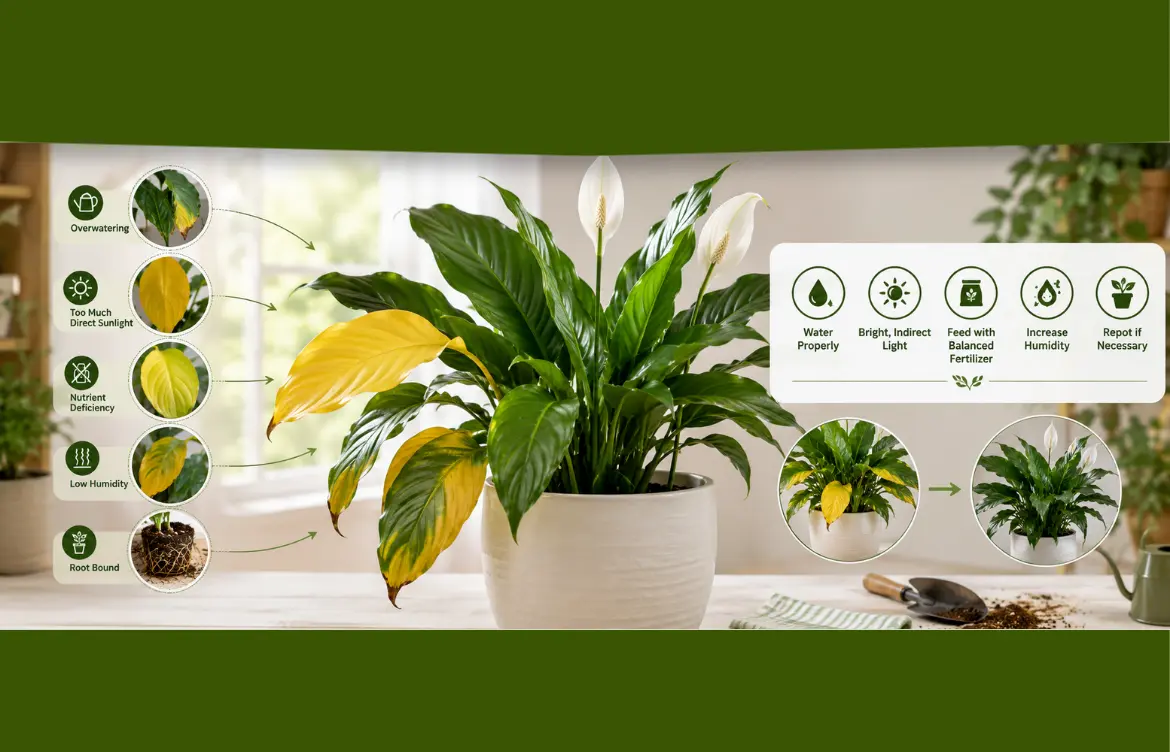
If multiple leaves are yellowing at once, especially starting from the base of the plant, and the soil has been staying consistently wet, overwatering is the most likely explanation. Waterlogged soil pushes oxygen away from the roots, and roots that can’t function properly are less able to support the leaves, which then lose their green color. Left unaddressed, this can progress into root rot, where the base of the plant and its roots turn soft and dark.
How to Tell Overwatering Yellowing From Root Rot
Overwatering on its own tends to just cause yellowing, sometimes along with a general droopy, tired appearance. Root rot is further along and comes with a distinctly unpleasant smell from the soil and roots that feel mushy and dark rather than firm and pale when you check them. If you suspect root rot, gently remove the plant from its pot, trim away any affected roots, and repot into fresh soil, letting the plant dry out somewhat before watering again.
Natural Aging: A Single Lower Leaf
It’s completely normal for one of the oldest, lowest leaves on a Peace Lily to slowly turn yellow and eventually die back as the plant redirects its energy toward newer growth. This is not a problem if it’s isolated to a single older leaf and everything else on the plant looks healthy it’s simply routine leaf turnover, and the leaf can be trimmed off once it’s mostly yellow.
Too Much Direct Light
While a Peace Lily needs decent indirect light to bloom well, direct sun exposure can cause leaves to yellow or bleach out, particularly if the plant was recently moved to a much brighter spot without time to adjust. This yellowing often looks more washed-out and pale than the deeper yellow caused by overwatering, and it tends to appear on the side of the plant facing the light source.
Nutrient Deficiency
Unlike a Snake Plant, which grows so slowly it rarely needs feeding, a Peace Lily is a more actively growing plant and can show yellowing from a long-term lack of nutrients if it’s never been fertilized. This type of yellowing often appears as a lighter green or yellow color between the leaf veins, while the veins themselves stay comparatively green, which is a distinct pattern from the more uniform yellowing caused by overwatering. A light, balanced liquid fertilizer during the growing season usually resolves this over the following weeks.
Cold Temperature Stress
A Peace Lily kept near a cold drafty window or an air conditioning vent can develop yellow or discolored patches from temperature stress, separate from any watering issue. Moving the plant away from the draft is usually enough to prevent further damage, though existing yellow patches won’t reverse.
Can Pests Cause Yellow Leaves?
It’s less common than the causes above, but spider mites and scale can both cause yellowing, usually starting as small speckled or mottled patches rather than an even, uniform yellow across the whole leaf. Check the undersides of leaves and along the stems for tiny pests or fine webbing if the yellowing pattern looks speckled rather than solid, especially if the plant is otherwise being watered and lit correctly.
Quick reference
| Pattern | Most likely cause |
| One old, outer leaf, rest of plant fine | Normal aging — no action needed |
| Whole leaf pale yellow, droopy plant | Overwatering / root rot |
| Yellow between green veins | Nutrient deficiency |
| Tips/edges yellow, soil dry | Underwatering |
| Yellow + webbing or bugs | Pests |
| Yellowing near a bright window | Too much direct light |
| Yellowing + stalled growth, old pot | Root-bound |
How to Fix It, by Cause
Cold stress — relocate the plant away from drafts and vents.
Overwatering — check the soil and hold off on watering until it’s properly dried out; confirm the pot has good drainage. See the Peace Lily Watering Guide for a schedule that avoids this going forward.
Natural aging — no action needed beyond trimming the leaf once it’s mostly yellow.
Too much light — move the plant a few feet back from the window, or add a sheer curtain to soften direct sun.
Nutrient deficiency — begin a light, regular fertilizing routine during spring and summer.
More resources about peace lily:
Frequently Asked Questions
Can a Peace Lily recover fully from yellow leaves once the cause is fixed?
The plant as a whole can recover well, but individual leaves that have already turned yellow will not turn back to green. Fixing the underlying cause protects new growth and stops further yellowing, while the already-affected leaves are usually best trimmed off once they’re mostly yellow.
Is yellowing worse in winter than summer?
It can be, for a couple of reasons. Lower light and cooler indoor temperatures in winter slow the plant’s ability to use water efficiently, which makes overwatering more likely if your watering habits don’t adjust for the season, and nutrient deficiency yellowing can also become more noticeable if fertilizing was paused for winter, as is normal.
How is nutrient-deficiency yellowing different from overwatering yellowing?
Nutrient deficiency often shows as a lighter yellow-green color between the leaf veins while the veins themselves remain greener, giving a slightly striped or mottled look. Overwatering tends to cause more uniform yellowing across the whole leaf, often starting with older, lower leaves first.
Should I remove a yellow leaf immediately, or wait?
If it’s a single older leaf naturally aging, you can wait until it’s mostly yellow before trimming, since the plant may still be drawing some nutrients back from it. If yellowing is spreading across multiple leaves and you suspect overwatering, focus on correcting the watering first rather than prioritizing removal.
Can tap water cause yellow leaves, the same way it causes brown tips?
It’s less commonly the direct cause of yellowing specifically, since tap water sensitivity in Peace Lilies usually shows up first as browning at the leaf tips rather than an overall yellow color. If you’re seeing both yellowing and browning at once, it’s worth checking watering habits and soil moisture first, since that’s the more common cause of yellowing on its own.