
ZZ Plant Care Guide
The ZZ Plant (Zamioculcas zamiifolia) has earned its popularity honestly: glossy, dark green leaves, a genuine tolerance for low light, and a root system built to survive weeks without water. This guide covers everything it needs to grow well, from light and watering to soil, propagation, and the handful of problems that show up most often.
How to Care for a ZZ Plant
A ZZ Plant needs bright, indirect light (though it tolerates low light), watering only once the soil is completely dry, roughly every 2 to 4 weeks, and a fast-draining potting mix in a pot with drainage holes. It prefers normal room temperature, doesn’t need extra humidity, and should be fed lightly during spring and summer only. It’s toxic if eaten, so it’s best kept out of reach of pets and small children.
How Much Light Does a ZZ Plant Need?
A ZZ Plant grows best in bright, indirect light, but it’s genuinely one of the more shade-tolerant houseplants available, and it will survive for a long time in a dim corner or windowless office, just with much slower growth. Direct sun for extended periods can scorch or bleach the leaves, so filtered or indirect brightness is the target, not a spot in direct afternoon sun. If a room has no natural light at all, a basic LED grow light run for 8 to 10 hours a day is a practical substitute.
How Often Should You Water a ZZ Plant?
Water a ZZ Plant only once the soil has dried out completely, which typically works out to roughly every 2 to 4 weeks in spring and summer, and every 4 to 6 weeks or longer in fall and winter. The plant’s underground rhizomes store water much like a potato does, which is exactly why it tolerates long gaps between waterings so well. When you do water, water thoroughly until it drains from the bottom of the pot, then let it dry out fully again before the next watering. Overwatering, not underwatering, causes the vast majority of ZZ Plant problems, so when in doubt, wait a few extra days rather than watering early.
Learn more about ZZ Plant Watering
What Soil and Pot Does a ZZ Plant Need?
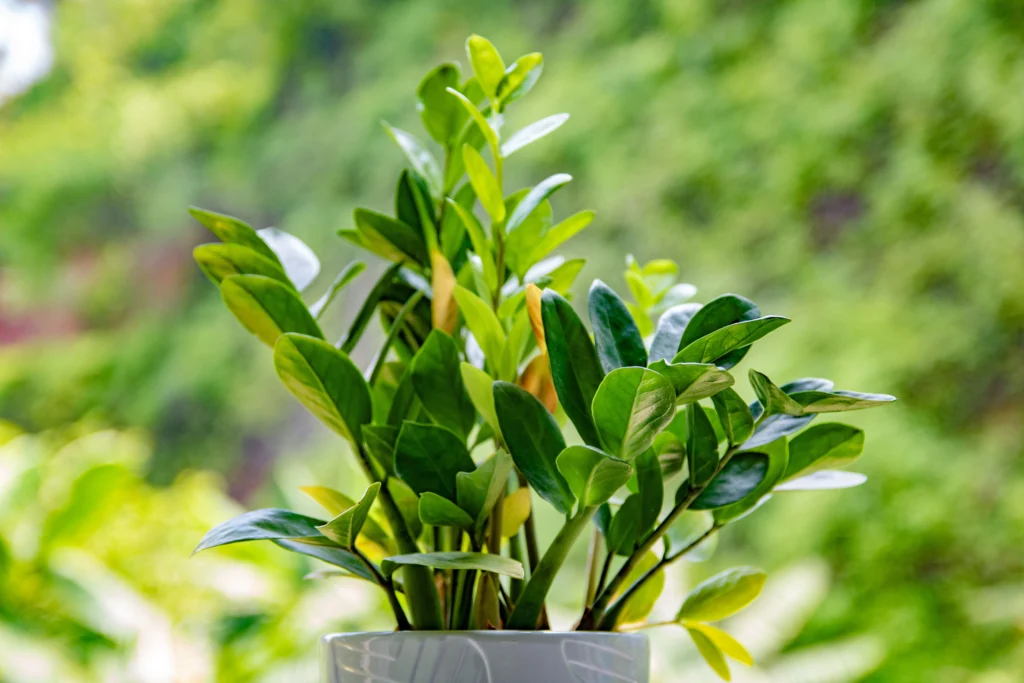
Use a fast-draining mix made for succulents or cacti, or mix regular potting soil with extra perlite to improve drainage. Always choose a pot with at least one drainage hole, since a ZZ Plant’s rhizomes are especially prone to rotting in soil that stays wet. A pot only slightly larger than the current root ball is better than a big size jump, since excess soil around a small root system holds moisture far longer than the plant wants.
Temperature and Humidity
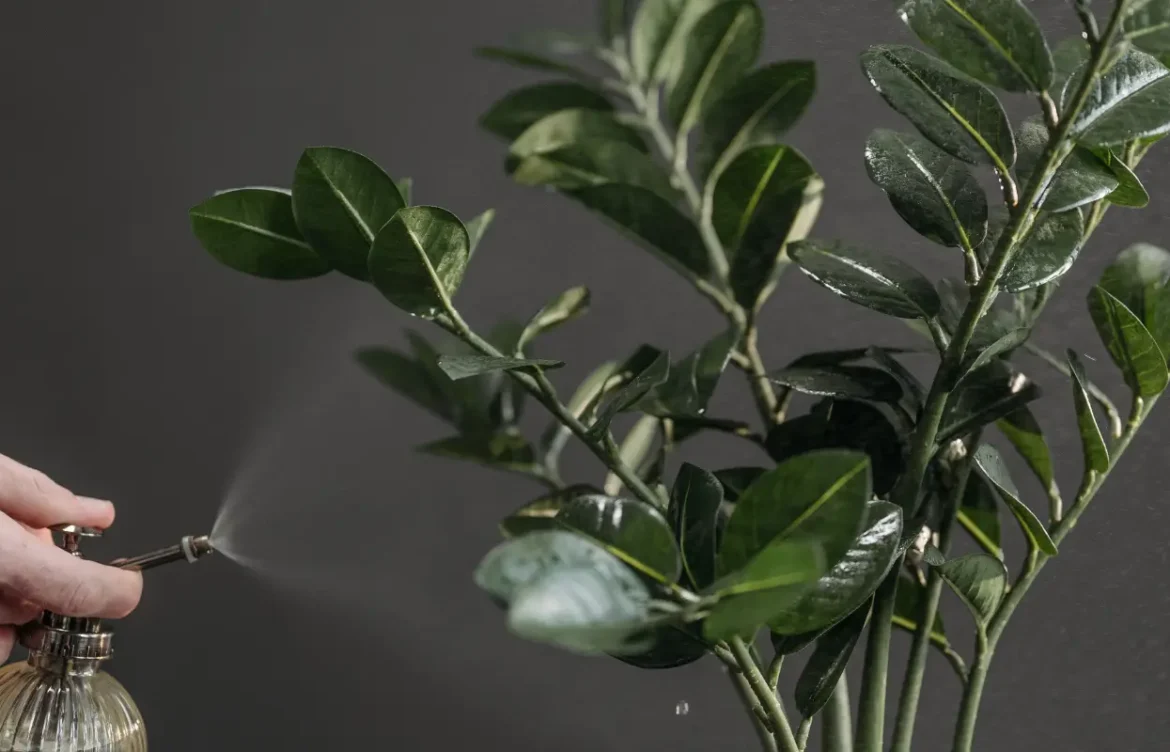
Normal room temperature, roughly 60–75°F (15–24°C), suits a ZZ Plant well. It’s sensitive to cold, and temperatures below about 45°F (7°C) can damage the leaves and stems, so keep it away from cold drafts, exterior doors in winter, and unheated rooms. Average home humidity is perfectly fine; unlike a Peace Lily or Calathea, it doesn’t need a humidifier, pebble tray, or misting to stay healthy.
Fertilizing
A light, balanced liquid fertilizer once every 6 to 8 weeks during spring and summer is enough to support healthy growth. Skip fertilizing entirely in fall and winter, when the plant is naturally growing more slowly and won’t use the extra nutrients. Because ZZ Plant is such a slow, undemanding grower, over-fertilizing is a bigger practical risk than under-fertilizing — a buildup of fertilizer salts in the soil can cause leaf tip burn.
Repotting
ZZ Plant grows slowly and doesn’t need frequent repotting, typically only once every 2 to 3 years, or once roots are visibly circling the bottom of the pot or pushing through the drainage holes. When repotting, handle the rhizomes gently, since they can be somewhat brittle, and wear gloves, since the sap can mildly irritate skin. Water sparingly for the first week or two afterward to give any disturbed roots time to settle.
How to Propagate a ZZ Plant
ZZ Plant can be propagated two ways: dividing the rhizomes during repotting, which produces a new plant fastest, or rooting individual leaflets in water or soil, which works but takes considerably longer, often several months before a new rhizome forms. Division is the more reliable and faster method for most home growers.
Learn more about ZZ Plant Propagation
Common ZZ Plant Problems
- Yellow leaves — almost always caused by overwatering or a pot without proper drainage; let the soil dry out fully and check that excess water isn’t collecting in the saucer.
- Soft stems or a stem that falls over — a sign of rot at the base, usually traced back to consistently wet soil around the rhizome; trim away any soft, mushy tissue and repot into dry soil.
- Slow or stalled growth — often just normal, since this plant grows slowly even in ideal conditions, but can also mean the light is too low or the pot has become rootbound.
- Leggy, stretched stems — a sign the plant is reaching for more light; move it closer to a window or add a grow light.
Is a ZZ Plant Toxic?
Yes. ZZ Plant contains calcium oxalate crystals throughout the plant and is toxic to cats, dogs, and humans if chewed or eaten, typically causing irritation in the mouth and throat. The sap can also mildly irritate skin on contact. It’s best kept out of reach of pets and small children, and it’s worth washing your hands after handling or repotting it.
ZZ Plant Care at a Glance
| Care Factor | What It Needs |
| Light | Bright, indirect light; tolerates low light with slower growth |
| Water | Only when soil is fully dry — every 2 to 4 weeks in summer, less in winter |
| Soil | Fast-draining succulent or cactus mix, in a pot with drainage |
| Temperature | 60–75°F (15–24°C); avoid below 45°F (7°C) |
| Humidity | Average home humidity; no extra humidity needed |
| Fertilizer | Light, diluted fertilizer every 6–8 weeks, spring and summer only |
| Repotting | Every 2 to 3 years, or once rootbound |
| Toxicity | Toxic to pets and humans if eaten; sap can irritate skin |
FAQs
How do you make a ZZ Plant grow faster?
Move it to brighter, indirect light, since low light is the most common reason growth stalls, and fertilize lightly during spring and summer. Even under ideal conditions, ZZ Plant is naturally a slow grower, so faster still means gradual, not fast in absolute terms.
Can a ZZ Plant grow in water long-term, without soil?
It can survive in water for a while during propagation, but it isn’t a good long-term growing method the way it is for a plant like Pothos. ZZ Plant’s rhizomes are adapted to store water in soil and don’t thrive kept permanently submerged; moving a rooted cutting into soil once roots form gives better long-term results.
Why are the leaves on my ZZ Plant curling?
Curling leaves are usually a sign of underwatering or very low humidity combined with heat, rather than a serious problem. Check the soil first; if it’s been dry for a while, a thorough watering typically resolves the curling within a few days.
Is a ZZ Plant an indoor or outdoor plant?
It’s grown almost exclusively as an indoor plant in most climates, since it’s sensitive to cold and can only tolerate outdoor conditions year-round in warm, frost-free regions similar to its native East African habitat. In most homes, it stays indoors permanently or is only moved outside briefly during warm months.
How long does a ZZ Plant live?
With reasonable care, a ZZ Plant can live for many years, often a decade or more, since it’s a slow-growing, long-lived perennial rather than a short-lived houseplant. Repotting it every couple of years as it matures helps support that long lifespan.