
ZZ Plant Watering Guide
The ZZ plant (Zamioculcas zamiifolia) is one of the most drought-tolerant houseplants grown indoors, and most of the problems people run into with this plant come from watering it too often rather than too little. Understanding how this plant stores water, and learning to read its simple warning signs, makes watering it correctly straightforward even for a first-time plant owner.
How Often to Water a ZZ Plant
A ZZ plant stores water in thick underground rhizomes, which act like a built-in reserve tank. Because of this, the plant does not need frequent watering, and giving it water on a fixed schedule is one of the most common mistakes owners make. Instead, water only when the soil has dried out completely from the top of the pot to several centimeters down.
As a general starting point, most indoor ZZ plants need water only once every two to three weeks. This is a guideline, not a rule, because the right frequency depends on your home’s light levels, temperature, humidity, and the size of the pot. A ZZ plant in a bright room will use water faster than one tucked into a dim corner, so always check the soil rather than counting days on a calendar.
- Check before you water: Press a finger about five centimeters into the soil. If it feels damp, wait.
- Use a moisture meter if unsure: A simple probe meter takes the guesswork out of judging moisture below the surface.
- Water deeply when you do: Give the plant a thorough soak until water runs from the drainage holes, rather than a light sprinkle.
Signs of Overwatering vs. Underwatering
Because both problems can eventually cause leaves to droop or discolor, it helps to compare the signs side by side before deciding how to adjust your watering routine.
| Sign | Overwatering | Underwatering |
| Leaf color | Pale yellow, often starting with older lower leaves | Leaves stay green but look dull or slightly shriveled |
| Leaf texture | Soft, mushy, sometimes translucent | Wrinkled or slightly shrunken |
| Stems | Soft, dark, or mushy at the base | Firm but may look thinner than usual |
| Soil | Stays wet for a long time, may smell sour | Fully dry and pulling away from the pot edges |
| Growth | New growth may rot before it opens | Growth simply slows down rather than dying |
If you notice soft, mushy stems along with yellowing leaves, stop watering immediately and let the soil dry out fully before checking the roots. Underwatering is far easier to correct: a single deep watering typically restores a wrinkled ZZ plant within a few days.
Watering by Season
Spring and Summer
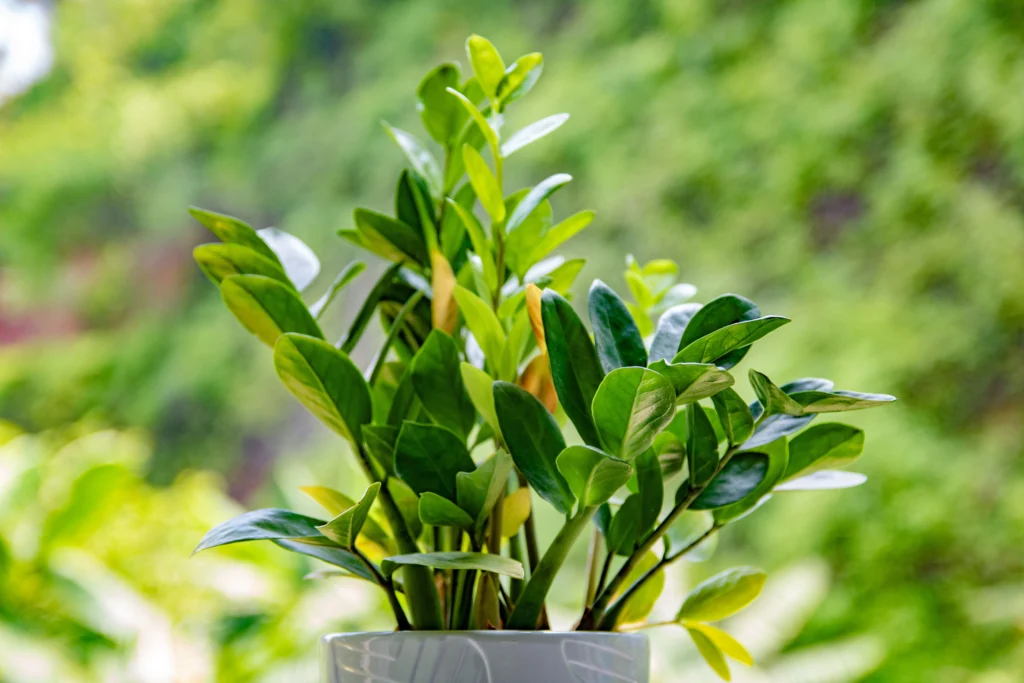
During the warmer months, a ZZ plant is actively growing and will use water somewhat faster, particularly if it receives bright, indirect light. Even so, always confirm the soil has dried before watering again rather than watering more often simply because it is summer.
Fall and Winter
Growth slows significantly in cooler, darker months, and the plant’s water needs drop along with it. It is common for a ZZ plant to need water only once every four to six weeks during winter. Cutting back on watering in this period is one of the simplest ways to prevent root problems.
Best Watering Method
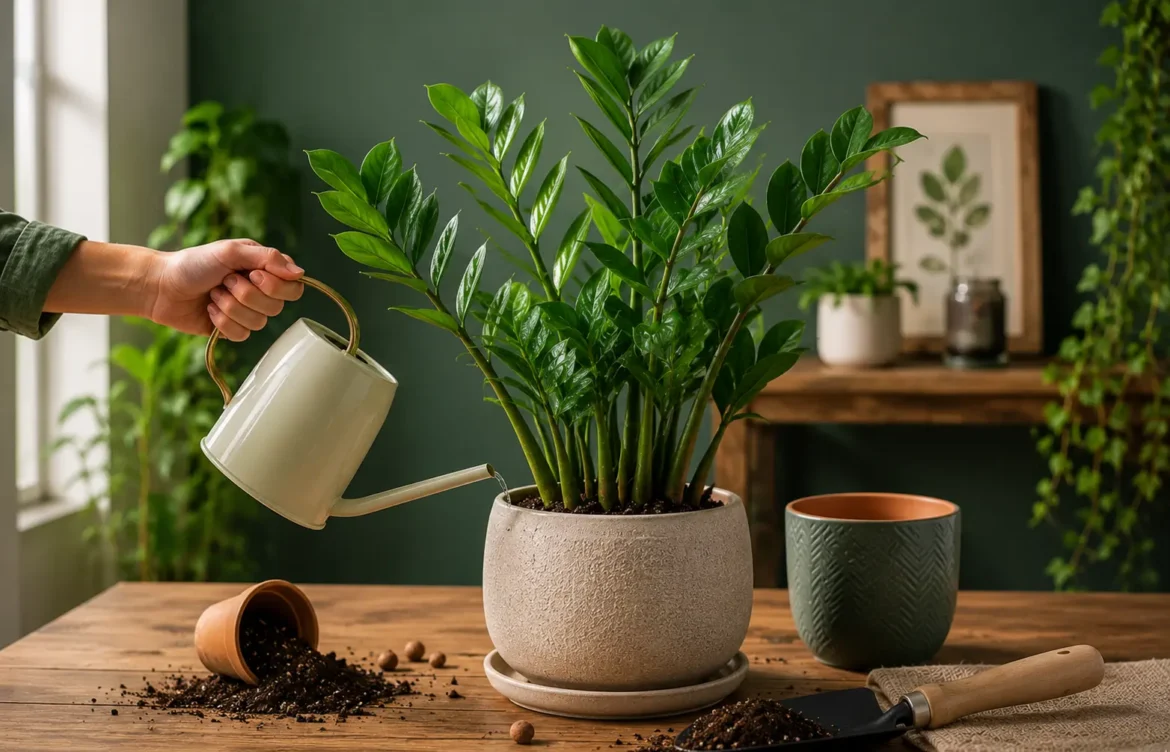
- Water at the soil, not the leaves: Pour water directly onto the soil surface and avoid wetting the crown of the plant, where standing moisture can encourage rot.
- Let it drain fully: Never leave the pot sitting in a saucer of water. Empty any runoff within about fifteen minutes.
- Use room-temperature water: Cold water straight from the tap can stress the roots; letting water sit out for a few hours first is a simple fix.
- Choose a pot with drainage holes: A pot without drainage makes it very easy to overwater a plant that is already adapted to dry conditions.
How Pot Material and Light Levels Change Watering Needs
Two factors that often get overlooked are the type of pot a ZZ plant is growing in and how much light it receives, and both can shift how quickly the soil dries out even if you never change your watering habits.
Pot Material
Unglazed terracotta and other porous pots allow moisture to evaporate through the sides of the container as well as the soil surface, so a ZZ plant in a terracotta pot typically dries out faster than one in a glazed ceramic or plastic pot of the same size. If you recently switched pot types, expect your watering interval to shift as well, and check the soil rather than assuming your old schedule still applies.
Light Levels
A ZZ plant kept in low light, which this species tolerates well, uses water far more slowly than one placed in bright, indirect light near a window. A plant in a dim hallway or windowless office may go five or six weeks between waterings, while the same plant moved to a sunnier spot could need water every two to three weeks instead. This is one of the main reasons a single fixed watering schedule does not work well for this species, and checking the soil directly remains the most reliable method regardless of where the plant is placed.
Common Watering Mistakes
- Watering on a fixed schedule instead of checking the soil first
- Using a pot or decorative sleeve with no drainage hole
- Letting the pot sit in standing water after watering
- Watering more in winter simply out of habit
- Misreading a wrinkled, thirsty plant as a sign it needs less water
Frequently Asked Questions
How often should I water my ZZ plant in winter?
In winter, most indoor ZZ plants only need water about once every four to six weeks, since growth slows down and the soil dries much more slowly. Always check the soil before watering rather than following a fixed interval.
Is tap water safe for a ZZ plant, or should I use filtered water?
Regular tap water is fine for most ZZ plants. If your tap water is very hard or heavily chlorinated, letting it sit out for a few hours before use, or switching to filtered water, can help prevent mineral buildup on the soil surface over time.
Can I use a self-watering pot for a ZZ plant?
Self-watering pots are risky for this plant because they keep the soil consistently moist, which works against its drought-adapted rhizomes. A standard pot with good drainage, watered only when the soil is dry, is a safer choice.
What does it mean if my ZZ plant’s stems feel wrinkled?
Wrinkled or slightly shrunken stems usually signal that the plant has used up its stored water reserves and is ready for a deep watering. This is a normal, easily corrected sign of underwatering rather than a serious problem.
How soon after repotting should I water a ZZ plant?
Water a newly repotted ZZ plant once, lightly, to help settle the fresh soil around the roots. After that, hold off and let the soil dry out before watering again, since disturbed roots are more vulnerable to rot in overly wet conditions.
Read more: