
Snake Plant Not Growing? Here’s Why, and What to Do
If your Snake Plant hasn’t produced a new leaf in months, it is usually not dying; it is either resting for the season or missing one specific condition it needs to grow. This article focuses only on stalled growth. If the leaves themselves are turning yellow or soft, that’s a different issue covered in the Snake Plant Yellow Leaves guide.
How New Growth Actually Appears
New leaves do not grow taller from the tip of an existing leaf. Each new leaf starts underground, from a spreading root structure called a rhizome, and pushes up near the base of the plant. This means new growth can be easy to miss; check around the base and soil line, not just the height of the tallest leaves, before assuming nothing is happening. A new shoot can sit just below the soil surface for a week or two before it becomes visible, so gently parting the leaves near the base every few weeks is a better way to check than glancing at the plant from across the room.
Is It Just the Season?
It is completely normal for a Snake Plant to produce no new growth at all during fall and winter. Shorter days and cooler temperatures naturally slow the plant down, and it typically resumes growing once spring brings longer daylight hours. If it’s winter and the plant otherwise looks healthy, this is very likely the explanation, and no action is needed. Trying to force growth during this rest period, through extra fertilizer or more frequent watering, usually does more harm than good, since the plant isn’t set up to use those extra resources right now.
Common Causes When It’s Not Just the Season
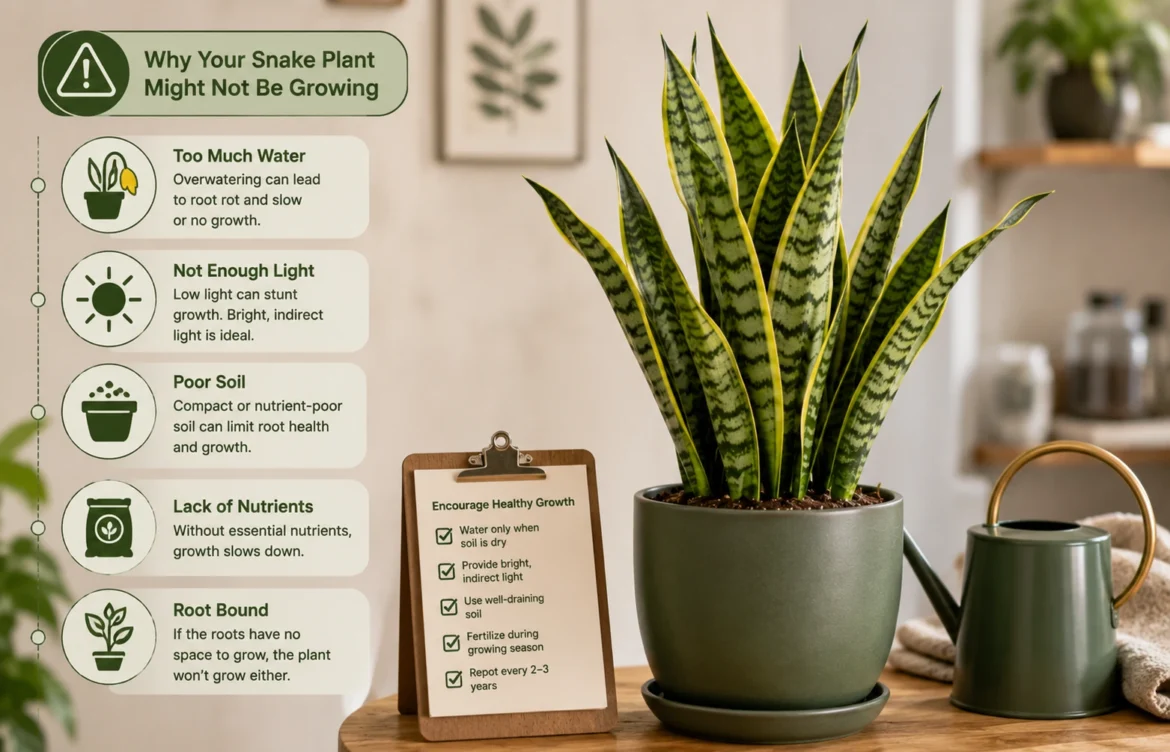
- Not enough light — a Snake Plant can survive in low light for a long time without dying, but it has little reason to put out new growth there. Moving it to brighter, indirect light is the single most common fix. See the Snake Plant Light Requirements guide for how to judge your room’s light level.
- A rootbound pot — check for roots circling tightly at the bottom or pushing out of the drainage holes. A pot that’s too small limits how much new growth the plant can support. See the Repotting Snake Plant guide.
- Watering stress — both consistently wet soil and long stretches of bone-dry soil can stall growth. See the Snake Plant Watering Guide for a schedule that avoids both.
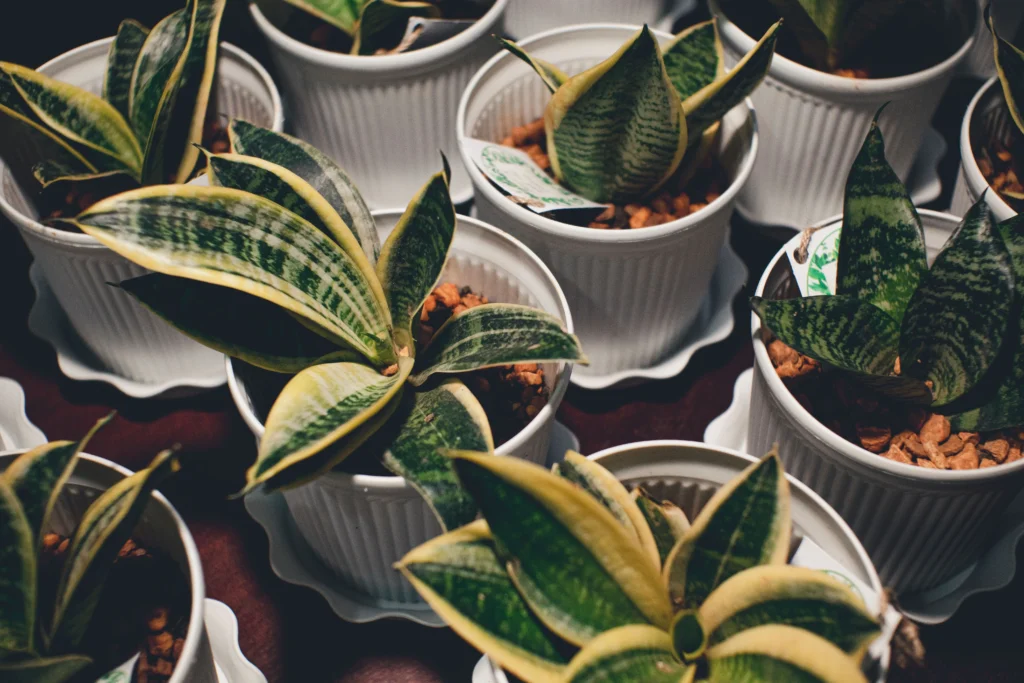
- The plant is simply young — a small or recently divided plant needs time to establish roots before it puts energy into new leaves.
- Nutrient depletion in old soil — soil that hasn’t been refreshed in several years can run low on the nutrients a plant needs to support new growth, even if drainage and watering are otherwise fine.
A Simple Way to Narrow Down the Cause
Work through the possibilities in order of how common they are. First, rule out the season, if it’s fall or winter, wait until spring before troubleshooting further. Next, check the light: if the plant sits more than a few feet from any window, that’s the most likely explanation. Then check the roots for crowding, and finally review your recent watering habits against the guidance above. Going through causes in this order avoids the common trap of changing several things at once, which makes it hard to tell what actually worked.
What a Realistic Growth Rate Looks Like
Even in ideal conditions, Snake Plants are naturally slow. A few new leaves a year is normal indoors, not a sign of a problem. If you’re comparing your plant’s pace to a fast-growing vine like Pothos, that comparison isn’t a fair one this plant is simply built to grow slowly. Growth rate also varies by variety: taller types like Laurentii tend to add height more noticeably than compact rosette varieties like Bird’s Nest, which mostly add new leaves rather than height once they reach their mature size.
When to Stop Waiting and Take Action
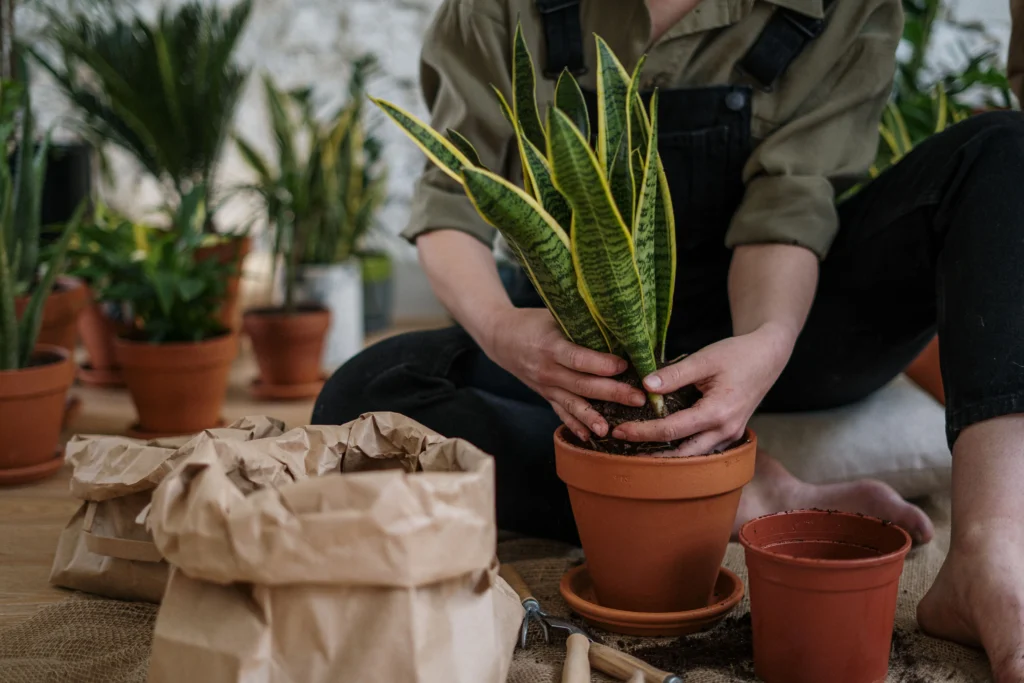
If a full growing season passes, spring through summer, without any visible new growth, and the plant is in reasonable light with a sensible watering routine, it’s worth checking the roots directly. Gently remove the plant from its pot and look for a tightly packed root ball or any soft, discolored roots. A plant that’s simply pot-bound will usually respond well to repotting into a slightly larger container, while damaged roots may need trimming before the plant can put energy into new growth again.
FAQs
How long should I wait before assuming something is actually wrong?
Give it at least one full growing season (spring through summer) after making a change, such as moving it to better light. Snake Plants respond slowly, so a lack of visible growth after just two or three weeks is not unusual and doesn’t necessarily mean the fix didn’t work.
Can a Snake Plant get stuck at a small size permanently?
Some varieties, like Bird’s Nest Snake Plant, are naturally compact and are not meant to grow tall — that’s not a growth problem, just the variety’s natural size. Check which variety you have before assuming a lack of height is an issue.
Does fertilizing help a stalled Snake Plant grow faster?
Only if the plant is actively growing already and simply needs support — a light, diluted houseplant fertilizer during spring and summer can help. Fertilizing a dormant plant in fall or winter does not speed things up, since it isn’t using nutrients much during that period.
Could pests be the reason my Snake Plant stopped growing?
It’s possible, though less common than light or watering issues. Check closely around the base of the leaves and where leaves overlap for small pests like mealybugs, which can quietly weaken a plant and slow new growth before any other damage becomes obvious.
I just repotted my Snake Plant and now it isn’t growing. Is that normal?
Yes. After repotting, a plant often pauses above-ground growth for a few weeks while it focuses on establishing roots in the new soil. This is a normal adjustment period, not a sign that the repotting went wrong.