A Beginner’s Guide to Low Light Plants
If you’ve never kept a plant alive before, or you’ve tried and it didn’t go well, starting with low light plants is one of the easiest ways to build confidence. This guide walks through the process step by step: how to judge your space, what tends to trip up beginners specifically, which plants to start with, and how to settle into a simple routine.
Step 1: Figure Out Your Actual Light Level
Before picking a plant, take an honest look at the room you have in mind. A simple, beginner-friendly way to judge it: during the middle of the day, can you comfortably read a book in that spot without turning on a lamp? If yes, that’s enough light for most low light plants. If the room feels distinctly dim even during the day, that’s still workable for a plant like a Snake Plant or Cast Iron Plant, but it rules out anything that needs bright, indirect light to really thrive.
Step 2: Common Mistakes Beginners Make
- Watering out of love, not need — checking on a new plant daily and watering because it feels like the caring thing to do is, by far, the most common way beginners accidentally kill an otherwise easy plant. Water only when the soil is actually dry, not on a schedule based on how often you think about it.
- Ignoring drainage — a decorative pot without a drainage hole traps excess water at the bottom, even if you’re otherwise watering correctly. Always check for a hole before buying a pot, or keep the plant in a plastic grow pot placed inside the decorative one.
- Buying based on looks alone — it’s easy to pick a plant because it looks appealing in the store without checking whether it actually suits your light level. A few extra minutes reading the plant’s actual needs saves a lot of frustration later.
- Moving plants around too often — a new plant needs a few weeks to adjust to a spot’s specific light and humidity. Moving it every few days to “find the right place” actually makes it harder for the plant to settle in.
Step 3: The Best Plants to Start With
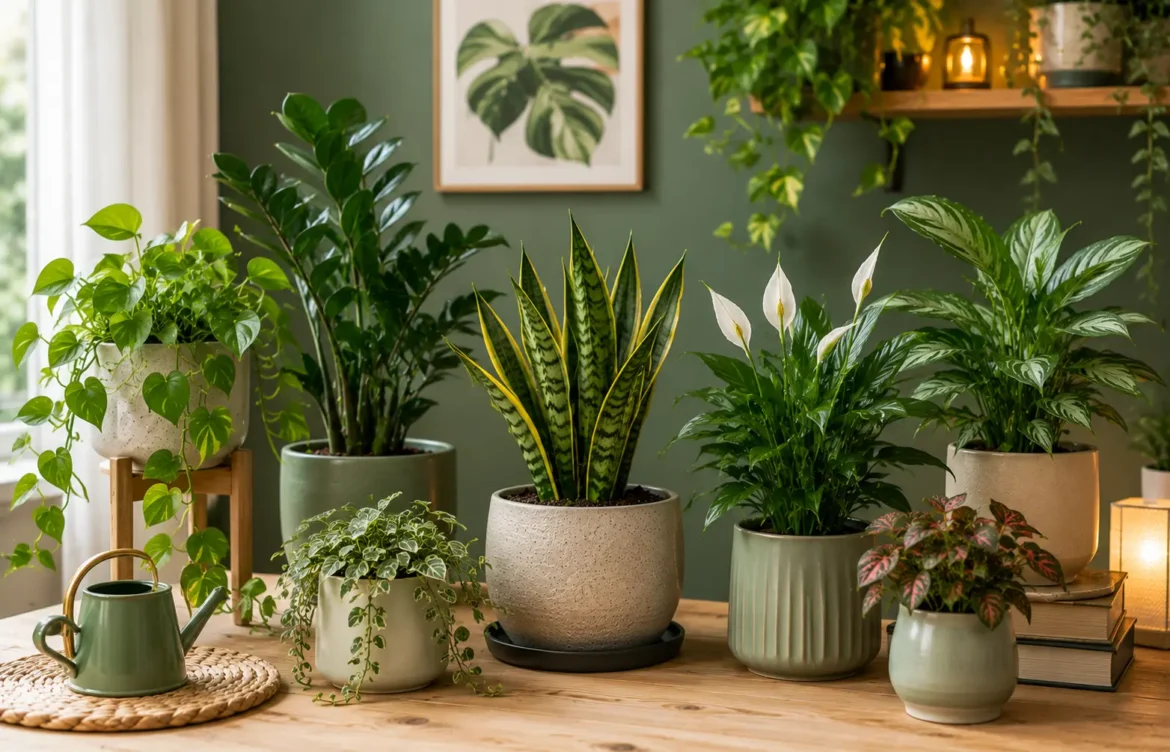
- Snake Plant — extremely tolerant of inconsistent watering and a wide range of light levels; a strong first choice for almost any beginner. See the full Snake Plant Care Guide.
- Pothos — fast-growing and forgiving, which makes it satisfying for a beginner who wants to see visible progress. See the full Pothos care guide.
- Cast Iron Plant — arguably even more tolerant of neglect than a Snake Plant, and a good pick for the darkest room in the house. See the full Cast Iron Plant Care guide.
- ZZ Plant — another highly tolerant option, with glossy leaves and a similar low-maintenance profile to Snake Plant.
Starting with just one or two of these, rather than five different plants at once, makes it much easier to learn what “normal” looks like for each one before adding more.
Step 4: A Simple First-Month Routine
For the first month with a new plant, check the soil once a week, but only water if it’s actually dry for most of these beginner plants, that might mean you only water once or twice in that first month, and that’s completely normal. Spend a moment each week just looking at the plant rather than doing anything to it: this builds familiarity with what it looks like day to day, which makes it much easier to notice if something actually changes later.
Step 5: When to Worry, and When to Relax
A new plant adjusting to your home may drop a leaf or two, or look slightly less perky for the first couple of weeks; this is a normal adjustment period, not a sign of failure. Similarly, one older leaf slowly turning yellow while everything else looks fine is usually just natural aging, not a crisis. What’s actually worth addressing quickly is a soft, mushy base, a strong unpleasant smell from the soil, or several leaves collapsing at once those are the signs that call for checking the roots or adjusting your watering right away, rather than waiting to see what happens.
Building From Here
Once your first plant or two has settled in and you’ve gotten comfortable with checking soil, judging light, and reading the early signs of a problem, expanding into other low light plants like Peace Lily or Spider Plant becomes much easier, since the core skills carry over. See the Low Light Plants hub for the full range of options as you’re ready to grow your collection.
FAQs
Do I need any special tools to start growing houseplants?
Not really. A pot with a drainage hole, a saucer to catch excess water, and a basic watering can are enough to get started. A moisture meter or a simple wooden skewer for checking soil dryness is a helpful, inexpensive addition, but it’s optional rather than essential.
How many plants should a total beginner start with?
One or two is a sensible starting point. It’s much easier to learn a plant’s specific watering rhythm and normal appearance when you’re only watching one or two, rather than trying to track several different care routines at once right from the start.
Is it normal to feel unsure about whether I’m doing it right, even after a few weeks?
Yes, and that uncertainty is a normal part of learning, not a sign you’re doing something wrong. Checking the soil before watering and watching how the plant responds over the following days is the most reliable way to build confidence, faster than trying to memorize a fixed schedule.
What’s the cheapest way to start with low light plants?
Snake Plant and Pothos are both widely available and generally inexpensive, especially in smaller starter sizes at general garden centers or home improvement stores. Buying one small plant to start, rather than several larger ones, keeps the initial cost low while you’re still learning.
Should I repot a new plant as soon as I bring it home?
Not right away. It’s generally better to let a new plant settle into your home for a few weeks or months before repotting, unless it’s showing clear signs of being rootbound, since repotting adds another adjustment on top of the move to a new environment.