Spider Plant Care Guide
This guide brings together everything a Spider Plant needs in one place, so you don’t have to piece it together from several pages. Each section gives you the core facts, with a link to a more detailed guide if you want to go further into any one topic.
Quick care snapshot
| Care factor | What spider plants need |
| Light | Bright, indirect light; tolerates moderate/low light with slower growth |
| Soil | Well-draining, general-purpose potting mix |
| Temperature | 60–80°F (15–27°C); avoid below 55°F |
| Humidity | Average household humidity is fine; benefits from a bit more |
| Feeding | Balanced liquid fertilizer, half strength, every 4–6 weeks in growing season |
| Repotting | Every 2–3 years, or sooner if rootbound |
| Toxicity | Non-toxic to cats and dogs (ASPCA) |
Light
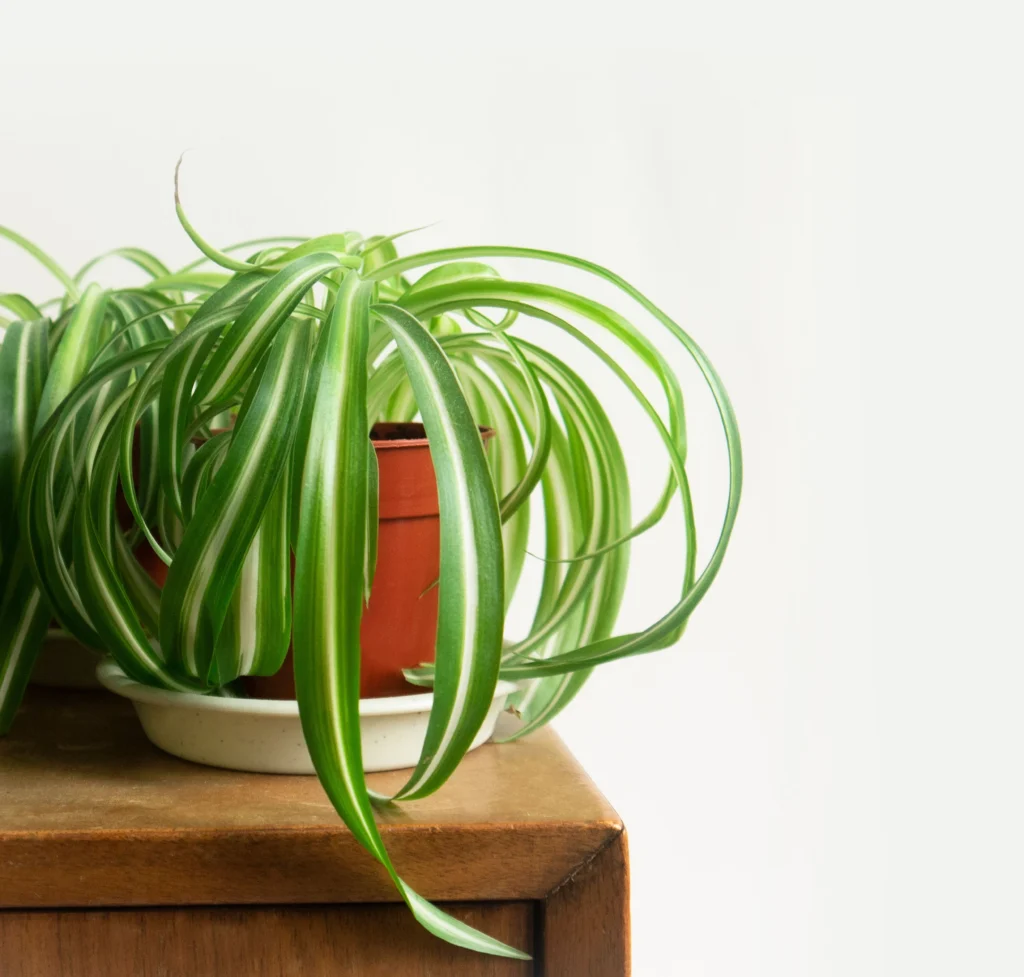
Spider Plant grows best in bright, indirect light, and tolerates lower light reasonably well, just with slower growth. Direct sun for extended periods can scorch or bleach the leaves, so bright but filtered light is the ideal target.
Water
Keep the soil lightly moist, watering roughly once a week during the growing season and somewhat less in fall and winter. Full seasonal schedule and general watering habits: Spider Plant Watering Guide.
Soil and Pot
A standard, well-draining potting mix works well, in a pot with a drainage hole. Because it grows relatively quickly, a Spider Plant tends to need repotting more often than slower low light plants, typically every year or two.
Humidity and Temperature
Average home humidity is generally fine, though slightly higher humidity can help reduce the brown tip issue this plant is prone to. Normal room temperature, roughly 65–80°F (18–27°C), suits it well, and it should be kept away from cold drafts.
Fertilizing
A light, balanced liquid fertilizer every 4 to 6 weeks during spring and summer supports healthy growth. Skip fertilizing in fall and winter, when growth naturally slows down.
Common Problems, at a Glance
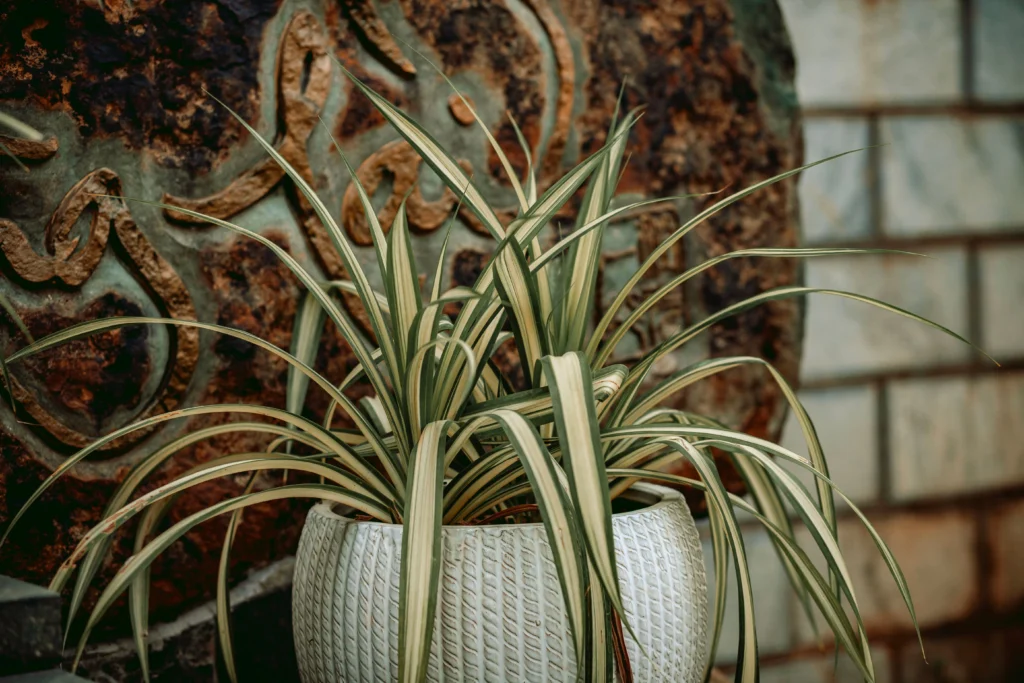
- Brown leaf tips — the most frequent complaint with this plant, commonly linked to tap water sensitivity and low humidity.
- Pale, washed-out leaves — usually too much direct sun; move to brighter indirect light instead.
- No plantlets forming — often just means the plant isn’t mature enough yet, or needs more light.
- Slow or stalled growth — usually low light or a pot the roots have outgrown.
Growing More Plants
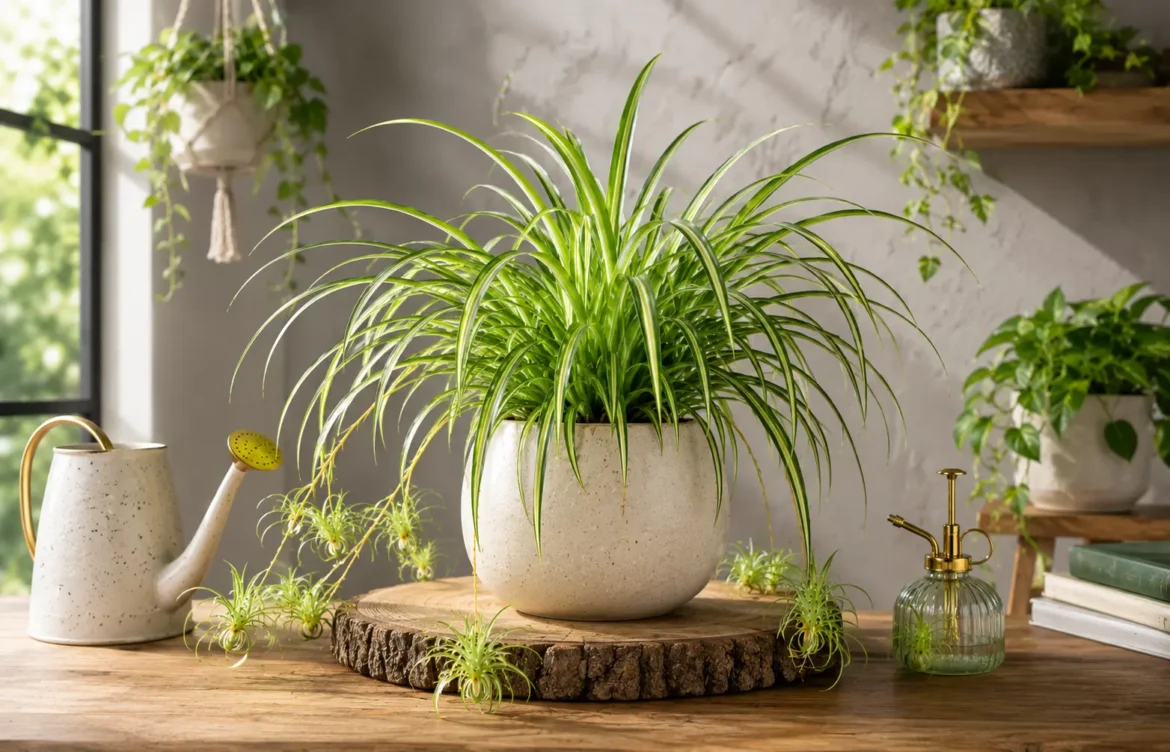
A Spider Plant propagates easily from the plantlets it produces on its own once mature, and an overgrown clump can also be divided directly. Full steps for both methods: Spider Plant Propagation.
Why People Choose This Plant
Beyond its low light tolerance, Spider Plant stands out for being genuinely non-toxic to cats and dogs and for propagating itself with very little effort on your part. For the fuller picture, including where it falls short, see Benefits of Spider Plant and Spider Plant Disadvantages.
A Simple Monthly Habit
Once a month, beyond your regular watering checks, look over the whole plant for any browning tips worth trimming, count how many plantlet stems have formed, and check whether roots are visible at the drainage holes. This light check makes it easy to catch a plant that’s ready to be repotted or has plantlets ready to propagate, before either becomes an overdue task.
The First 30 Days With a New Spider Plant
When you bring a new Spider Plant home, place it in a spot with bright, indirect light and water it once the top inch of soil feels dry rather than immediately. It’s normal for a leaf or two to brown at the tip during this adjustment period, especially if you’re switching it from whatever water source it was grown with commercially to your own tap water. Hold off on fertilizing or repotting for the first month, and let it settle into a consistent routine before making further changes.
How Spider Plant Care Compares to Other Low Light Plants
Against a Snake Plant or Cast Iron Plant, a Spider Plant needs more frequent watering and more frequent repotting, and it’s more prone to cosmetic issues like brown tips. In exchange, it offers something those tougher, slower plants don’t: fast, easy propagation and a fully pet-safe profile. Compared to a Pothos, care needs are fairly similar in terms of watering frequency, though Spider Plant’s propagation happens largely on its own through plantlets, while Pothos requires you to take deliberate cuttings yourself.
A Quick Troubleshooting Checklist
- Brown, crispy leaf tips: check your water source first, then humidity levels.
- Pale or washed-out leaves: likely too much direct sun; move to brighter indirect light instead.
- No plantlets after a year or more: check plant maturity and light levels before assuming a problem.
- Drooping or curling leaves despite regular watering: check for a rootbound pot or drainage issues.
FAQs
What’s the single biggest mistake to avoid with a Spider Plant?
Using untreated tap water without accounting for its sensitivity to fluoride and chlorine, which is the most common reason otherwise well-cared-for Spider Plants develop persistent brown tips. Switching to filtered water, or letting tap water sit out overnight, is a simple fix worth trying early rather than after tips have already become a recurring issue.
Is a Spider Plant a good choice for a first-time plant ownera?
Yes, particularly for someone who also wants to try propagating a plant for the first time, since it’s genuinely one of the easiest plants to multiply. It does need slightly more consistent watering than a Snake Plant, so it suits a beginner willing to check on it somewhat regularly rather than someone wanting the absolute lowest-maintenance option available.
How long does a Spider Plant typically live?
With reasonable care, a Spider Plant can live for many years, and because it’s so easy to divide and propagate, many owners effectively keep a lineage going indefinitely by periodically starting new plants from the original, well beyond what any single plant’s individual lifespan might otherwise be.
Does a Spider Plant need to be repotted on a stricter schedule than other low light plants?
Somewhat, yes, since it grows faster than plants like Snake Plant or Cast Iron Plant and fills its pot more quickly. Checking for rootbound signs every year or so is a reasonable habit for this particular plant, more frequent than the multi-year check-in that slower growers can get away with.
What’s the very first thing to check if a Spider Plant looks unhealthy?
Start with the water source and the light level, since those two factors are behind the large majority of common Spider Plant issues, from brown tips to pale, washed-out leaves. Checking those two things first usually points you toward the right fix faster than assuming a more complicated cause.