
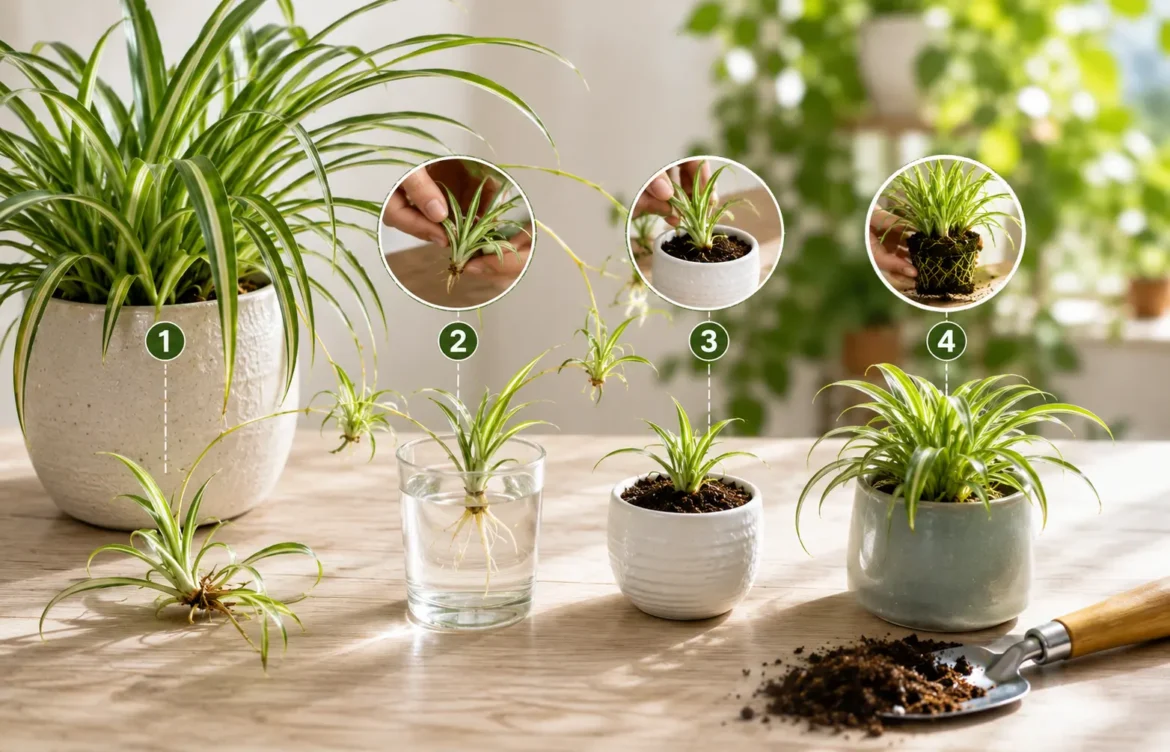
Spider Plant Propagation: How to Grow New Plants
A mature Spider Plant does most of the hard work of propagation on its own, by producing small plantlets on long stems that are ready to become new, independent plants. This guide covers exactly how to turn those plantlets into new plants, plus a second method, division, for anyone dealing with a large, overgrown parent plant instead.
Knowing When a Plantlet Is Ready
A plantlet is ready to propagate once it has small bumps or nubs at its base, which are the very beginning of root growth, even before any visible roots have formed. Waiting for at least a few of these root nubs to appear, rather than removing a plantlet the moment it forms, noticeably improves the odds of successful rooting.
Method 1: Rooting a Plantlet in Water While Still Attached
- Without cutting the plantlet from the parent plant, place it in a small cup or jar of water, positioning the base of the plantlet so it sits in the water while the stem connecting it to the parent plant stays intact.
- Keep the cup nearby the parent plant and change the water every few days to keep it fresh.
- Roots typically develop within 1 to 3 weeks.
- Once roots are a couple of inches long, cut the stem connecting the plantlet to the parent plant, and the newly rooted plantlet can then be potted into soil on its own.
Method 2: Cutting the Plantlet First, Then Rooting
- Cut the plantlet away from the parent plant, leaving a small amount of stem attached to the plantlet itself.
- Place the cut plantlet in water, or plant it directly into moist, well-draining soil.
- If using water, change it every few days and move the plantlet to soil once roots are established, typically within a couple of weeks.
- If planting directly in soil, keep the soil consistently lightly moist for the first couple of weeks while roots establish, since a soil-planted plantlet without established roots yet is more vulnerable to drying out than a mature plant.
Which Method Should You Choose?
Rooting a plantlet while it’s still attached to the parent plant is the more forgiving method, since the plantlet continues receiving some support from the parent plant while its own roots are developing, which reduces the risk of losing it. Cutting the plantlet off first is quicker to set up and takes up less space near the parent plant, but the plantlet is fully on its own from the start, so it’s slightly less forgiving of an imperfect setup.
Method 3: Dividing an Overgrown Mature Plant
If your Spider Plant has grown into a large, dense clump rather than producing many separate plantlet stems, division is a more practical propagation method than waiting on new plantlets. Remove the plant from its pot and gently separate the root ball into two or more sections, each with a healthy cluster of leaves and roots attached, using your hands or a clean knife if needed. Pot each section separately in fresh, well-draining soil. This method is best done in spring, and it also works well as a way to manage a Spider Plant that has simply outgrown its pot, doubling as a repotting solution.
Aftercare for New Plantlets and Divisions
Keep newly propagated plantlets or divisions out of direct sun while they settle in, and water a little more attentively than usual for the first few weeks, since a young or recently divided plant has a less developed root system to draw on. Once you see clear signs of new growth, typically within a month, it can be treated like a fully established plant and moved onto a normal watering routine.
Common Propagation Mistakes
- Removing a plantlet too early — a plantlet with no visible root nubs yet has a lower success rate than one that’s been allowed to mature on the parent plant a bit longer.
- Letting water propagation go on too long — roots left in water well past a couple of inches long can become more fragile and prone to breaking during the move to soil, so it’s better to transplant once roots are a reasonable length rather than waiting indefinitely.
- Overwatering a fresh soil-planted plantlet — “consistently moist” doesn’t mean soggy; waterlogged soil can rot a plantlet’s still-developing roots before they have a chance to establish.
FAQs
Do I need to use rooting hormone when propagating a Spider Plant?
No, Spider Plant plantlets root readily on their own in both water and soil without any additional rooting hormone. It’s not a wasted step if you have it on hand, but it isn’t necessary for good results with this particular plant.
Can I propagate a Spider Plant from a leaf, similar to a Snake Plant?
No, a Spider Plant leaf cut from the plant will not grow roots or become a new plant on its own. Propagation relies on either an existing plantlet or dividing the root system directly, not leaf cuttings.
How long does it take for a newly potted plantlet to look like a full-sized plant?
This varies with light and care, but a well-rooted plantlet typically takes several months to a year to fill out and resemble a mature plant, since it’s starting from a small size and needs time to develop both its root system and its leaf mass.
Is there a limit to how many plantlets I can propagate from one parent plant in a season?
There’s no strict limit, but propagating an unusually large number of plantlets at once can noticeably slow the parent plant’s own growth, since producing plantlets takes energy from the main plant. Propagating a reasonable, manageable number at a time is generally better for the parent plant’s overall health.
Can a plantlet be propagated even if it never developed visible roots on the parent plant?
It’s possible, but success rates are noticeably lower without any root development to start from. If a plantlet shows no root nubs at all, it’s usually better to leave it attached a little longer rather than removing it prematurely and hoping it roots from scratch.