
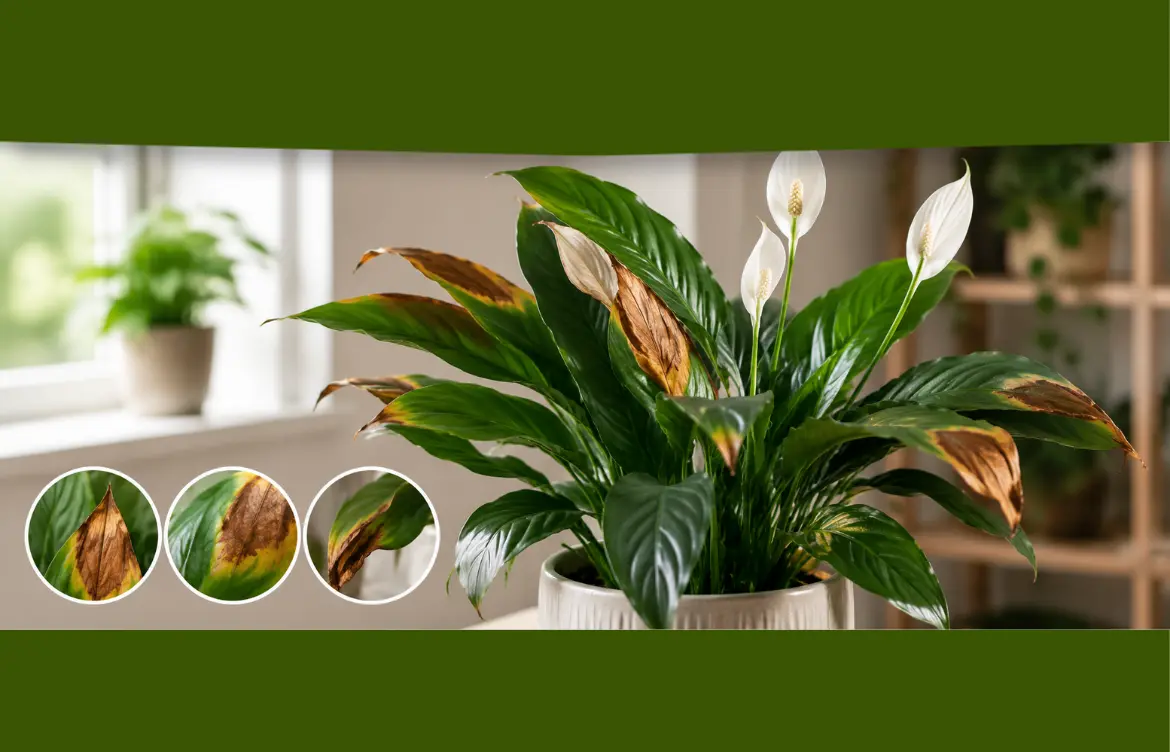
Peace Lily Brown Leaves: Causes and Fixes
Brown leaves on a Peace Lily are a different problem than yellow leaves or drooping, even though all three can sometimes show up together. This article focuses specifically on brown discoloration tips, edges, or spots and what each pattern usually means. For wilting or sagging leaves, see the Peace Lily Plant Drooping guide; for leaves turning yellow, see the Peace Lily Yellow Leaves guide.
Why the Pattern of Brown Matters
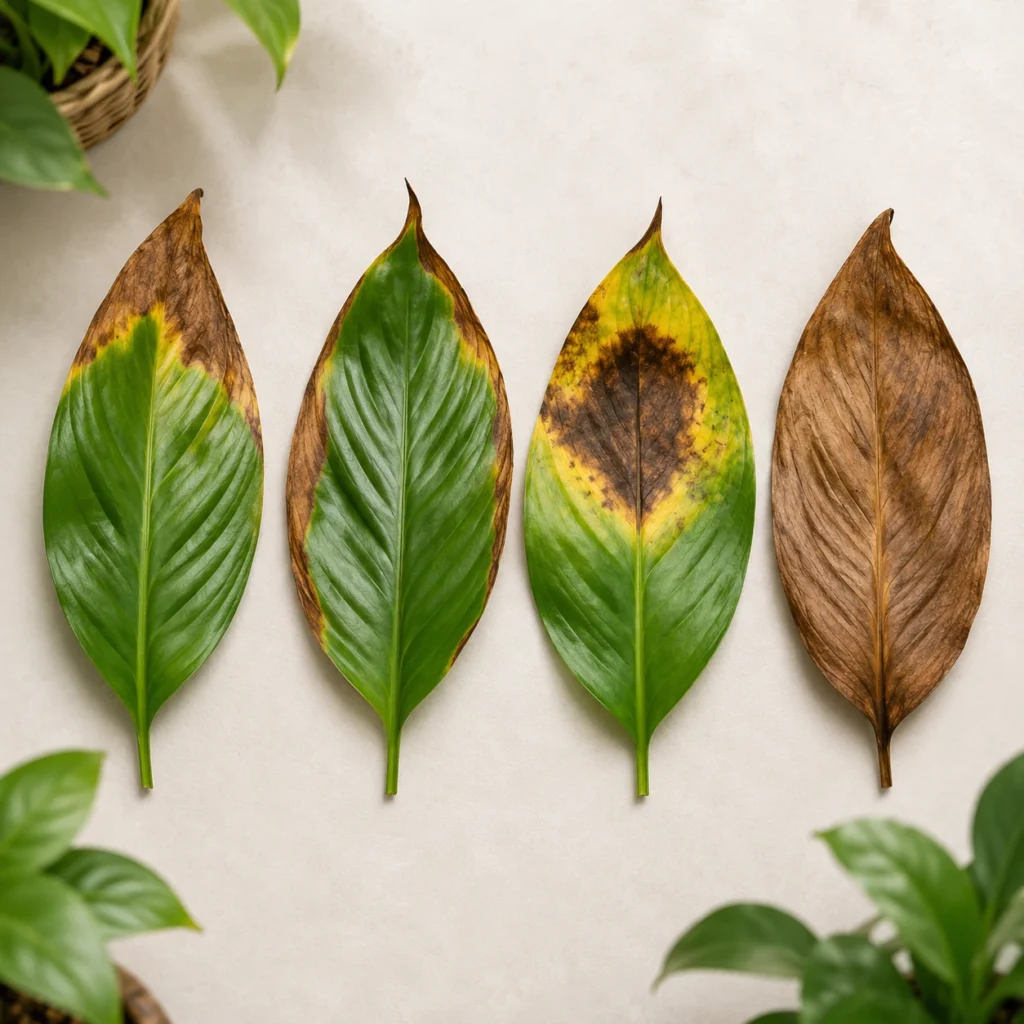
Before looking at causes, take note of exactly where and how the brown is showing up. Brown that starts at just the very tip of a leaf points to a different cause than brown spots scattered across the middle of a leaf, and a leaf that’s uniformly brown all over usually means something different again, often that it was already dying from another cause and has simply reached its final stage.
Brown, Crispy Tips: Usually Water Quality or Humidity
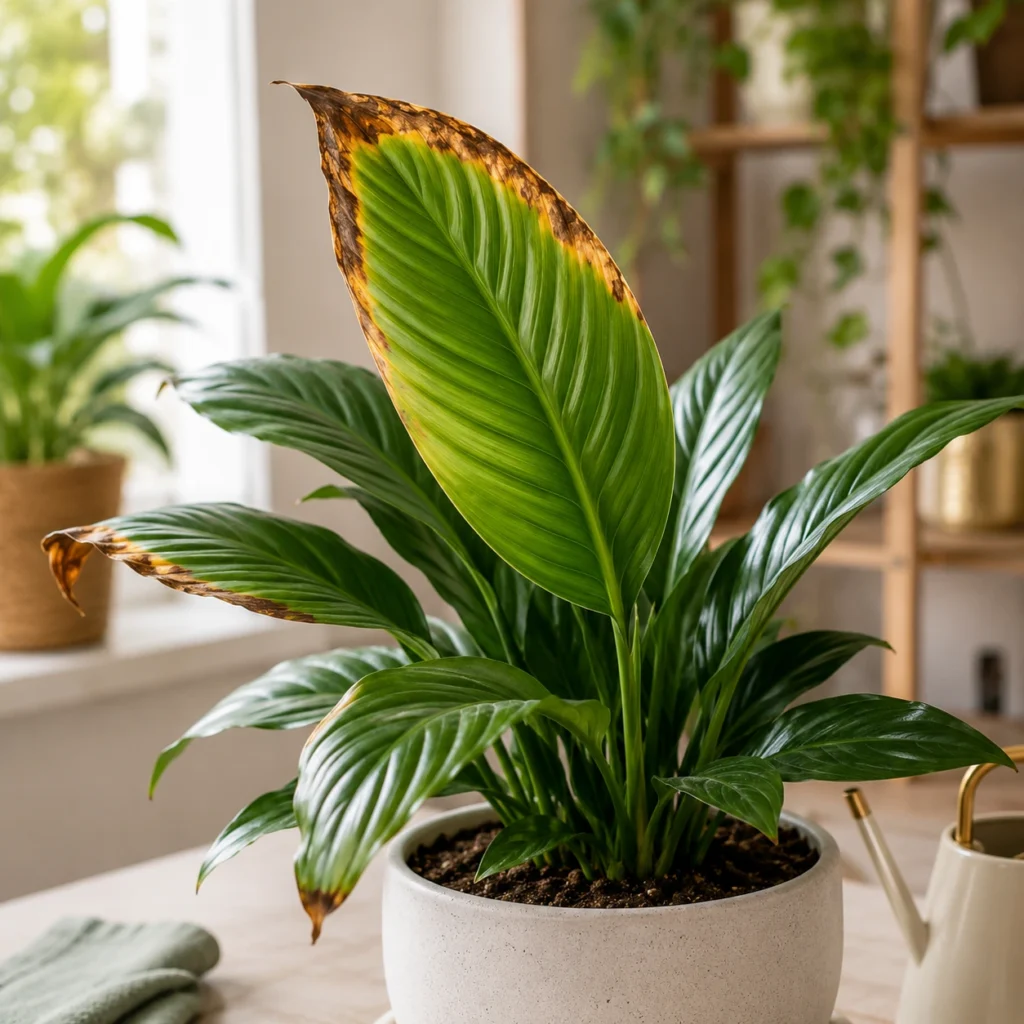
This is the most common brown-leaf pattern on a Peace Lily. Tap water containing fluoride or chlorine is a well-known trigger for tip burn on this particular plant, more so than on many other common houseplants. Low humidity, especially in winter when indoor heating dries out the air, is another frequent contributor. Switching to filtered or distilled water, or letting tap water sit out uncovered overnight before using it, often noticeably reduces new tip browning over the following weeks.
Brown Patches or Scorched Areas: Usually Direct Sun
Unlike crispy tips, a brown patch in the middle of a leaf, especially one with a slightly bleached or pale halo around it, is a strong sign of sun scorch from direct sunlight hitting the leaf. Peace Lilies are adapted to filtered light beneath a forest canopy, and direct sun, even for a couple of hours a day, can damage the leaf tissue. Moving the plant a few feet back from a bright window, or adding a sheer curtain to diffuse the light, usually prevents further scorching.
Brown Spots With a Yellow Halo: Often Overfertilizing or Fungal Issues
Small brown spots surrounded by a yellowish ring can point to a couple of different causes. A buildup of fertilizer salts in the soil from over-fertilizing is a common one, and it’s often accompanied by a white, crusty residue on the soil surface. Less commonly, a fungal leaf spot disease can cause a similar pattern, particularly if the leaves are frequently wet from misting or splashing during watering. Reducing fertilizer frequency and avoiding water sitting on the leaves are reasonable first steps for either cause.
An Entire Leaf Turning Brown
A leaf that’s gone from green to yellow to fully brown over a period of time is usually just an older leaf that’s completed its natural lifecycle, especially if it’s one of the lower, older leaves and the rest of the plant looks healthy. This is normal plant maintenance, not a problem to fix, and the leaf can simply be trimmed off at the base once it’s fully brown.
How to Fix Brown Leaves, by Cause
- Tip burn from tap water — switch to filtered or distilled water, or let tap water sit out uncovered for 24 hours before using it, which allows some chlorine to dissipate.
- Low humidity — group plants together, use a pebble tray with water beneath the pot, or run a humidifier nearby, especially during winter heating season.
- Sun scorch — move the plant further from the window or add a sheer curtain to diffuse direct light.
- Fertilizer buildup — flush the soil thoroughly with plain water several times to help clear excess salts, and scale back fertilizing frequency going forward.
Quick reference
| Where the brown shows up | Most likely cause |
| Just the tips | Mineral/salt buildup (water or fertilizer) |
| Crispy edges, whole margin | Low humidity |
| Scorched patches, window-facing | Direct sun |
| Spots with yellow halos | Fungal/bacterial leaf spot |
| Whole leaf soft and mushy | Root rot from overwatering |
| Sudden, whole-leaf, after cold exposure | Temperature/draft stress |
Should You Trim Brown Leaves Off?
Brown sections don’t turn green again, so trimming is mainly about appearance rather than plant health. For a leaf with just a browned tip, you can trim only the brown portion with clean scissors, following the natural shape of the leaf tip, rather than removing the whole leaf. For a leaf that’s mostly or entirely brown, it’s simpler and just as effective to remove it completely at the base.
Preventing Brown Leaves Going Forward
Since tap water sensitivity is the leading cause on this particular plant, switching to filtered or distilled water is the single change most likely to reduce future browning. Pairing that with keeping the plant a comfortable distance from direct sun and giving it a bit more humidity during dry winter months covers most of the remaining common causes, without needing to change your watering frequency at all.
FAQs
Why does my Peace Lily only get brown tips on new leaves, not old ones?
New leaves are often more sensitive to water quality issues like fluoride and chlorine sensitivity while they’re still developing, so tip damage can show up on the newest growth first, even though the exposure to tap water is happening equally across the whole plant.
Can misting cause brown spots on a Peace Lily?
It can contribute, particularly if water sits on the leaves for a long time in a room with poor air circulation, which creates conditions where fungal spotting is more likely. Misting isn’t inherently harmful, but watering the soil directly rather than relying on misting for humidity is a safer overall approach.
Is it normal for a Peace Lily to get some brown leaves even with perfect care?
Yes, to a small degree. Even with ideal water quality, humidity, and light, older leaves naturally age and eventually brown over time as part of the plant’s normal growth cycle, so a small number of aging leaves isn’t a sign that something is being done wrong.
Will trimming off brown tips harm the leaf?
No, trimming just the damaged brown portion with clean scissors doesn’t harm the rest of the leaf, since you’re only removing tissue that has already died. Many people trim along the natural pointed shape of the leaf tip so the cut isn’t obviously visible.
How long does it take to see improvement after switching to filtered water?
Existing brown tips won’t reverse, but new leaf growth that emerges after the switch typically shows noticeably less tip damage within a few weeks to a couple of months, since that’s roughly how long it takes for new leaves to fully develop and reveal whether the change helped.