Spider Plant Watering Guide: How Much and How Often
A Spider Plant sits closer to the Peace Lily end of the watering spectrum than the Snake Plant end it prefers soil that stays lightly moist rather than fully drying out between waterings. This guide covers exactly how much and how often, what water to use, and how that shifts through the year.
The Simple Test: Check the Top Inch of Soil
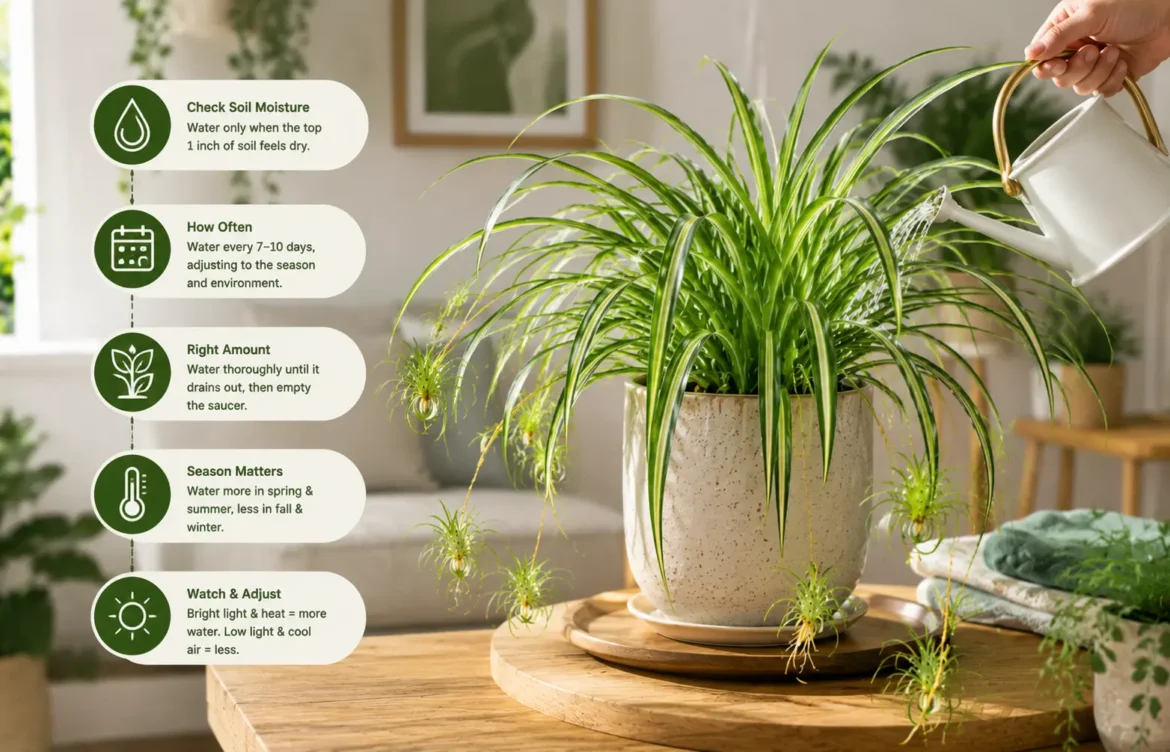
Push a finger about an inch into the soil. If it feels dry at that depth, it’s time to water. If it’s still slightly damp, wait a day or two and check again. Checking before watering, rather than sticking to a fixed weekly day regardless of conditions, is the most reliable way to avoid both over- and under-watering this plant.
How Much Water to Use
Water thoroughly until it runs out of the drainage holes at the bottom of the pot, then let any excess drain fully and empty the saucer so the roots aren’t left sitting in standing water. This ensures the whole root system gets moisture, rather than just a shallow top layer that leaves the lower roots dry.
A Seasonal Watering Schedule
- Spring and summer — roughly once a week in most homes, depending on light, pot size, and room temperature. A plant in brighter light or a smaller pot will dry out faster and may need water a little more often.
- Fall and winter — roughly every 10 days to 2 weeks, since growth slows down during shorter, cooler days and the plant uses less water.
These are starting points rather than fixed rules always confirm with the soil check above, since indoor heating, pot material, and light level all affect how quickly soil actually dries.
A Brief Note on Water Quality
Spider Plant is known for being sensitive to the fluoride and chlorine commonly found in tap water, which is part of why this plant is more prone to brown, crispy leaf tips than many other common houseplants. Using filtered or distilled water, or letting tap water sit out uncovered overnight before using it, is a simple habit that helps reduce this over time. This guide focuses on watering frequency and technique; for a fuller breakdown of brown tips specifically, including the other contributing causes beyond water quality, that topic deserves its own dedicated guide.
Top Watering vs. Bottom Watering
Top watering, poured directly onto the soil until it drains through, works well for most Spider Plants and is the simpler default method. Bottom watering, where the pot sits in a basin of water for 15 to 20 minutes so the soil draws moisture up through the drainage holes, is a reasonable alternative if you want to avoid getting water on the leaves, though it isn’t required for healthy growth.
How Pot Size and Material Affect the Schedule
A larger pot holds more soil and stays moist longer than a small one, so a recently repotted Spider Plant in a bigger container will typically need watering less often than it did before, at least until the roots grow to fill the new space. Pot material matters too: unglazed terracotta lets moisture evaporate through its sides, drying the soil faster than plastic or glazed ceramic, which usually calls for slightly more frequent watering if you’re using a terracotta pot for this plant.
Signs You’re Watering Correctly
A well-watered Spider Plant has firm, upright leaves most of the time, with the soil feeling lightly moist rather than wet or bone-dry a couple of days after watering. If leaves are consistently drooping or curling despite a seemingly reasonable schedule, it’s worth checking whether the pot has proper drainage or whether the plant has become rootbound, since either can throw off how the soil actually holds and releases moisture.
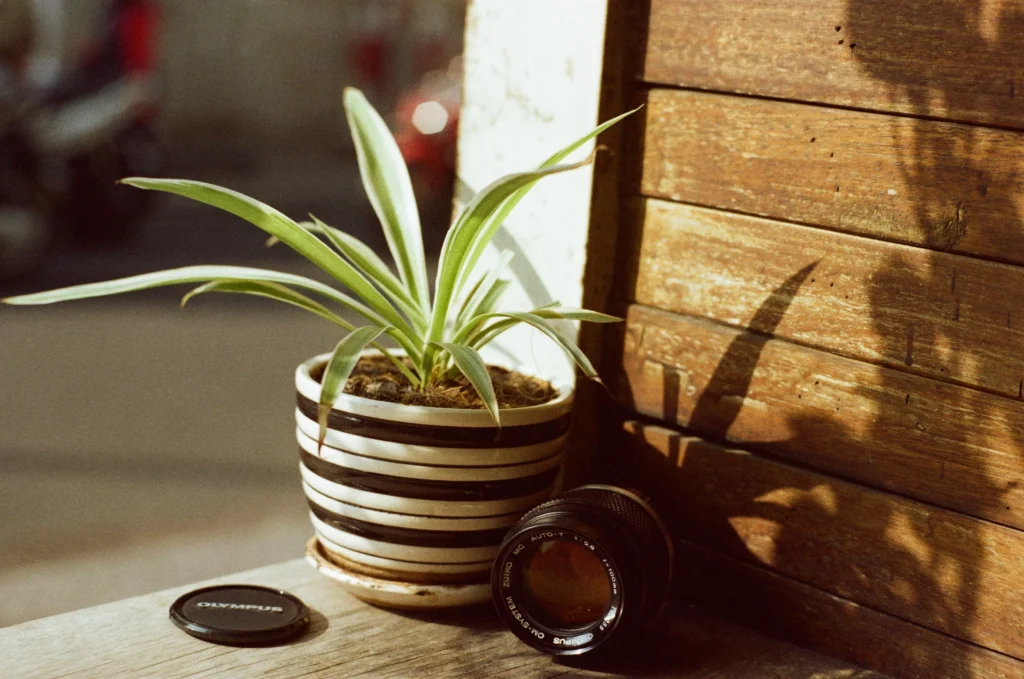
Watering a Spider Plant With Many Plantlet Stems
A mature Spider Plant with several long plantlet stems trailing over the sides of the pot can make it harder to see or reach the soil surface for a quick check. Gently pushing the stems aside rather than watering blindly around them ensures you’re actually reaching the soil near the base of the plant, rather than just wetting the outer edge of the pot, which can leave the central root mass drier than it looks from the outside.
FAQs
Is it better to water a Spider Plant a little bit often, or thoroughly and less often?
Thoroughly and less often, checking the soil in between, works better than frequent light watering. A deep watering that reaches the full root ball keeps the whole root system consistently healthy, while shallow, frequent sips only dampen the top layer of soil and can leave the lower roots too dry.
Can I use a self-watering pot for a Spider Plant?
Yes, since it prefers consistently moist soil rather than a fully dry-out cycle, a self-watering pot suits this plant reasonably well and can help if you tend to forget regular watering. It’s not required, but it’s a practical option worth considering.
Does a Spider Plant need more water once it has several plantlet stems?
A plant with many plantlet stems is generally larger and more established overall, which can mean somewhat more water use, but the trailing plantlets themselves draw their moisture through the parent plant’s root system rather than needing to be watered separately, so no extra watering step is needed for them specifically.
How can I tell if I’m overwatering a Spider Plant, rather than just watering it correctly?
Overwatering typically shows up as yellowing leaves, a soft or mushy feel at the base of the plant, or a musty smell from the soil, rather than the firm, upright appearance a correctly watered plant has most of the time. If you’re seeing those signs, it’s worth letting the soil dry out more than usual before watering again.
Should I water a Spider Plant differently in a hanging basket versus a regular pot?
Hanging baskets are often smaller and can dry out a bit faster than a larger floor or shelf pot of the same plant, so it’s worth checking the soil slightly more often in a hanging setup rather than assuming the same schedule applies regardless of pot size and placement.