
12 Snake Plant Varieties, Explained
Snake Plant isn’t just one look. The family ranges from tall, upright striped leaves to short, silver rosettes, and the variety you pick affects both how it looks and, in some cases, how it grows. Here’s a closer look at 12 varieties worth knowing, what makes each one distinct, and how to choose between them.
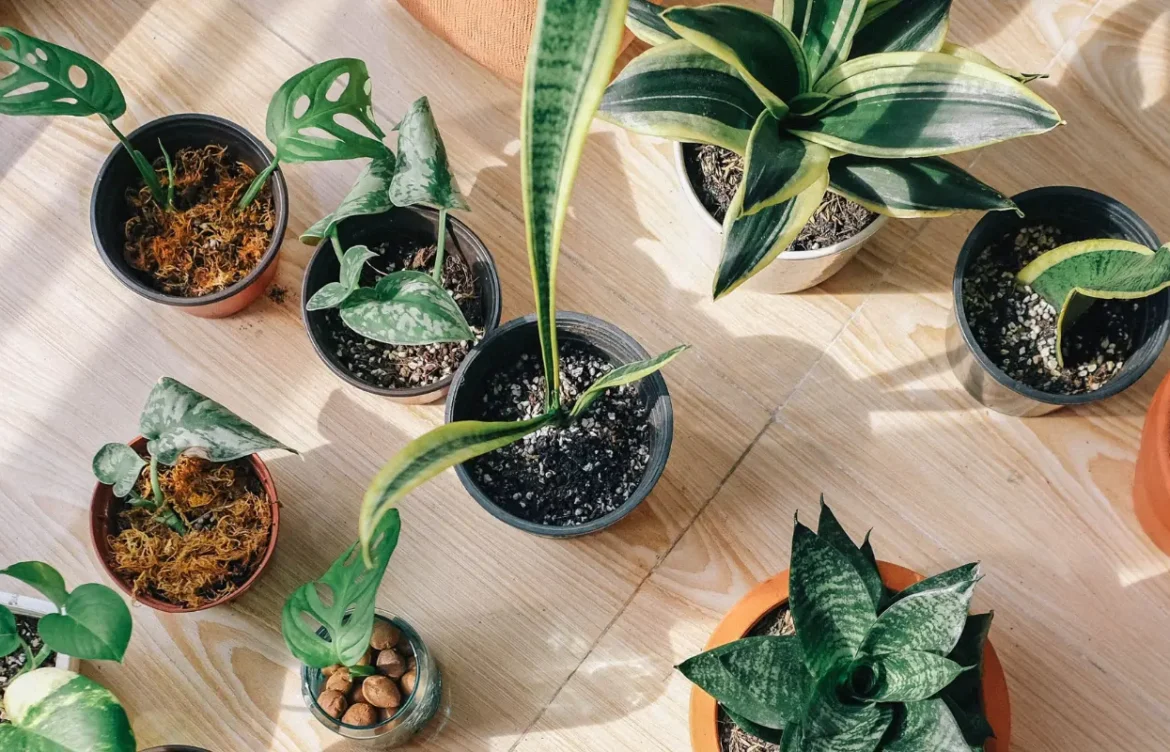
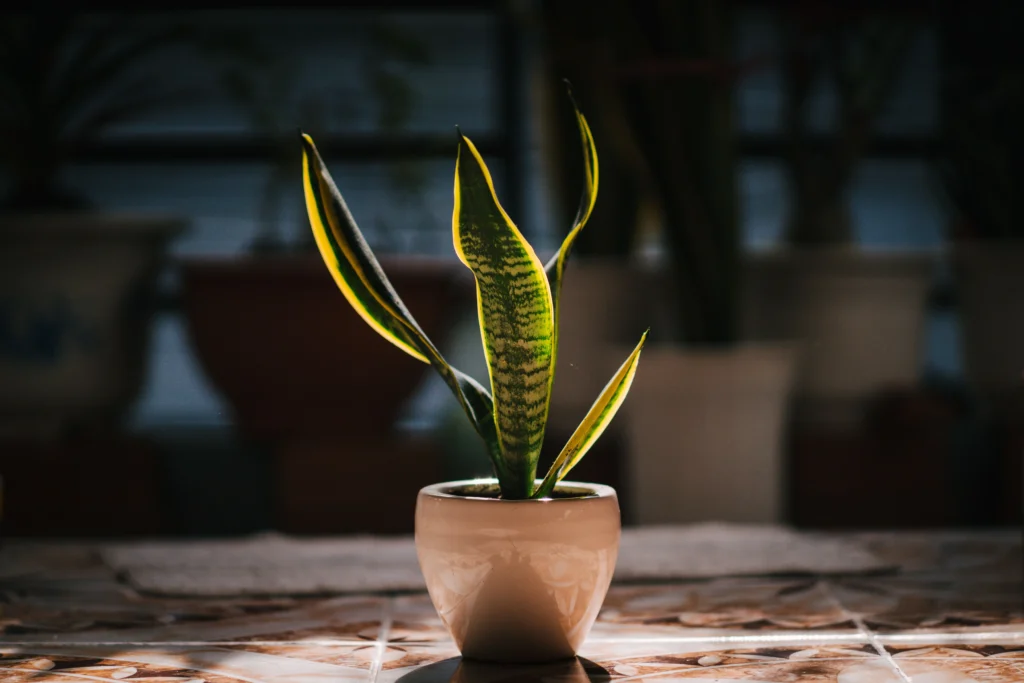
- Laurentii — the most recognized variety, with dark green leaves edged in a bright yellow border, growing upright and tall. It’s widely available and usually the most affordable option, which makes it a common starting point for new owners.
- Moonshine — solid, pale silvery-green leaves with a smooth, modern look and no yellow edging. Its understated coloring works well in minimalist or neutral-toned interiors.
- Bird’s Nest (Hahnii) — a compact variety that grows in a low, rounded rosette rather than tall spikes, well suited to desks and small shelves where a taller variety wouldn’t fit.
- Whale Fin (Masoniana) — grows one or a few large, wide, paddle-shaped leaves rather than the typical narrow blades, giving it a bold, sculptural look that stands out from the rest of the family.
- Cylindrica — has rounded, spear-like leaves instead of flat ones, often arranged in a fan shape, giving it a noticeably different texture and silhouette.
- Black Coral — very dark, almost black-green leaves with faint lighter banding, a striking option for a more dramatic look, though it tends to be pricier and less commonly stocked than Laurentii.
- Golden Hahnii — a compact rosette variety similar to Bird’s Nest, but with yellow-striped edges instead of solid green, combining the small footprint of Bird’s Nest with brighter coloring.
- Futura Superba — wider leaves than the classic Laurentii, with similar green-and-yellow coloring, giving a fuller look in a similar upright form.
- Zeylanica — solid green leaves with subtle grey-green banding and no yellow edge, a simpler, more understated look than Laurentii.
- Silver Flame — leaves with a strong silvery sheen and dark green mottling, often more compact than standard upright varieties, and less commonly found outside specialty growers.
- Twisted Sister — similar coloring to Laurentii, but with leaves that curl and twist rather than growing straight up, giving it a more playful, unusual form.
- Fernwood — narrow, rounded, dark green leaves that grow in a looser, more relaxed shape than the stiff classic form, closer in feel to Cylindrica but with a fuller habit.
Where New Variegated Types Come From
Many of the more unusual varieties available today, including several with twisted leaves or extra-wide silver banding, originally appeared as a single unexpected “sport” on an otherwise ordinary plant a spontaneous genetic mutation in one section of growth that looked different from the rest. Growers who spot a sport like this can propagate it through division to preserve the new trait, which is how many named varieties were first identified and eventually became available to buy. This is also part of why variegated types need to be propagated by division rather than leaf cuttings to reliably keep their pattern a cutting doesn’t always carry the same genetic mutation as the section it was taken from.
How to Choose a Variety for Your Space
Small desks or shelves, Bird’s Nest or Golden Hahnii, since they stay compact. A tall, architectural statement Laurentii, Moonshine, or Black Coral, which all grow upright and eye-catching. A more unusual look Whale Fin or Cylindrica, both very different in shape from the typical narrow-leaf form. A tight budget Laurentii and Zeylanica are usually the most widely available and least expensive options at general garden centers.
Where Rarer Varieties Are Typically Sold
Common varieties like Laurentii, Moonshine, and Zeylanica are usually available at general garden centers, home improvement stores, and large plant retailers. Less common types, like Black Coral, Silver Flame, or Twisted Sister, are more often found through specialty plant nurseries or online plant sellers that focus specifically on houseplants, and they typically carry a higher price simply due to being propagated in smaller numbers.
Avoiding Common Variety Mix-Ups
A few varieties are commonly confused with one another when unlabeled. Laurentii and Futura Superba look similar at a glance, both featuring green leaves with yellow edges, but Futura Superba has noticeably wider leaves. Bird’s Nest and Golden Hahnii are also easy to mix up, since they share the same compact rosette shape; the clearest difference is the yellow striping on Golden Hahnii, which Bird’s Nest lacks entirely.
Do All Varieties Need the Same Care?
Care needs are very similar across all varieties light, water, and soil requirements don’t change much from one type to another. See the Snake Plant Care Guide for the full care details that apply across the whole family. The main practical difference between varieties isn’t in how you care for them, but in their mature size and how much space they’ll eventually need.
FAQs
Do all Snake Plant varieties need the same amount of light and water?
Yes, care needs are very similar across nearly all common varieties. The differences between types are almost entirely about leaf shape, color, and mature size, not how much light or water they require.
Which Snake Plant variety grows the tallest?
Laurentii and Zeylanica are among the taller common varieties, often reaching 2 to 4 feet indoors with enough light and time. Compact types like Bird’s Nest and Golden Hahnii stay well under a foot, regardless of light or care.
Can I keep a variegated variety looking colorful, or does the pattern fade over time?
Variegated patterns, like the yellow edge on Laurentii, stay consistent in good light throughout the plant’s life. Low light can cause new growth to come in with less distinct coloring, so brighter indirect light helps keep the pattern sharp over time.
Are rarer varieties like Whale Fin harder to care for than common ones?
No, care requirements are the same as more common varieties. Rarer types are simply less widely propagated and sold, which is why they tend to cost more and can be harder to find, not because they need different care.
How do I know which variety I actually have?
Leaf shape and color are the most reliable clues — wide, single paddle-shaped leaves point to Whale Fin, a low rosette shape points to Bird’s Nest or Golden Hahnii, and tall leaves with a bright yellow border point to Laurentii. If it was bought without a label, comparing leaf shape and mature size against known varieties is usually enough to identify it.