
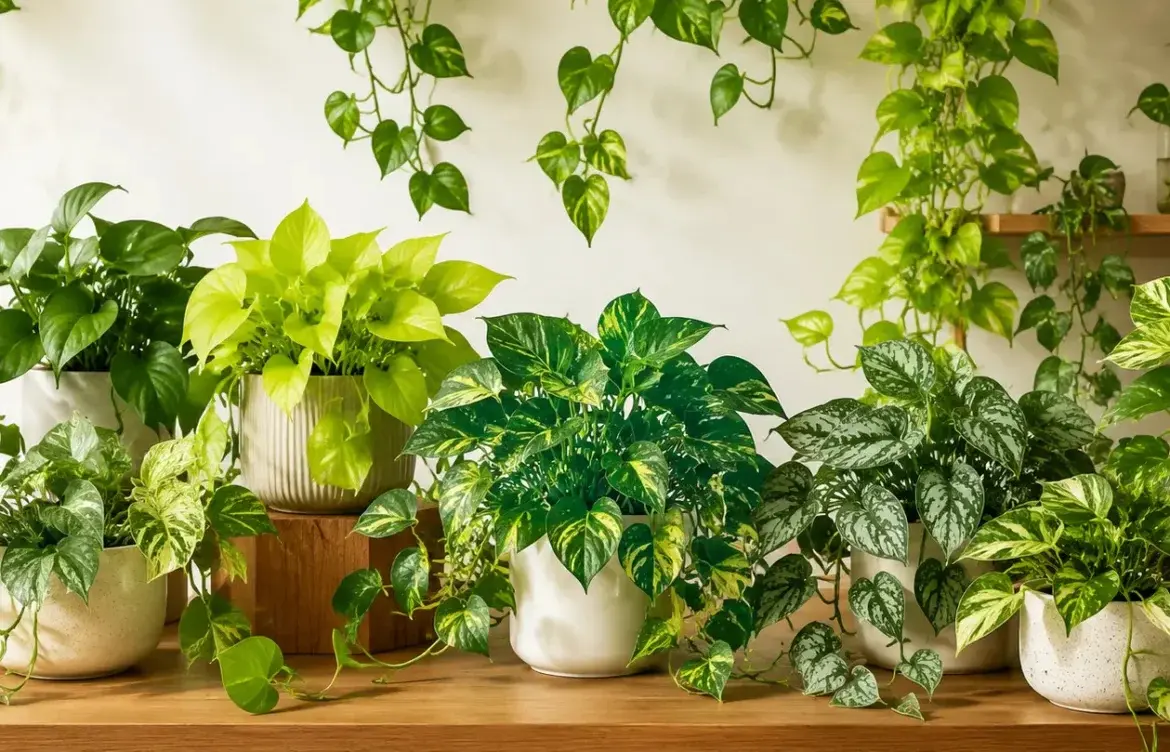
Pothos Varieties, and a Few Plants That Aren’t Actually Pothos
Pothos plant, botanically Epipremnum aureum, comes in far more forms than the classic green-and-yellow variety most people picture. This is a deeper reference list than a short overview page can offer, covering 13 real varieties plus a couple of popular plants that get called “Pothos” in stores despite not technically being one.
Popular Pothos Plant Varieties
1. Golden Pothos
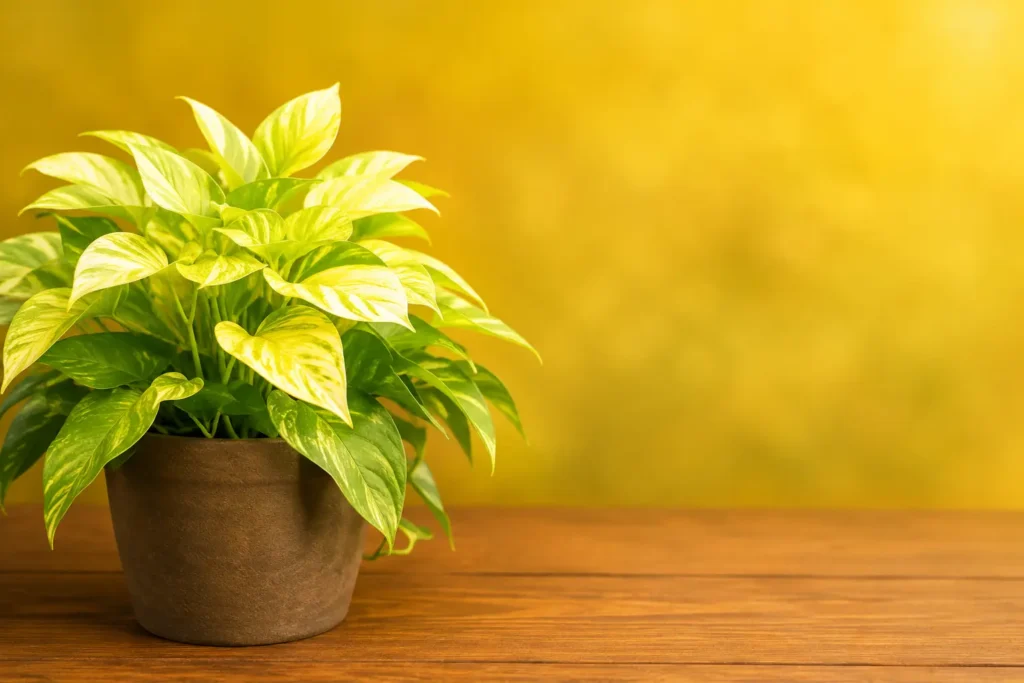
The original, most widely available variety, with green leaves marbled in yellow. It’s the standard most other varieties are compared against, and usually the least expensive option.
2. Marble Queen Pothos
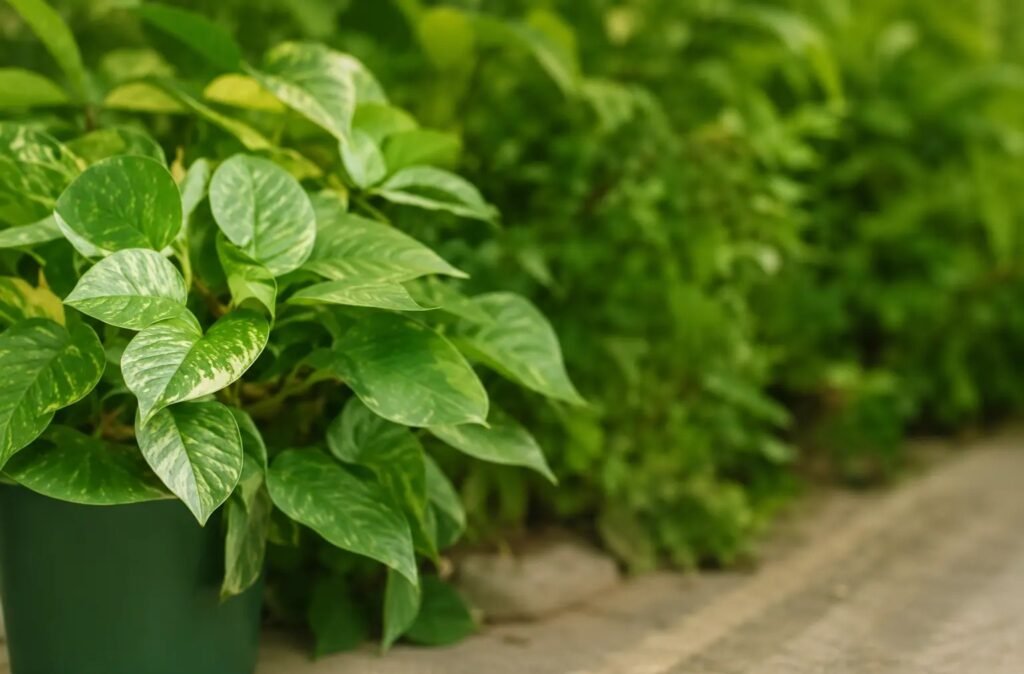
Heavier white and cream variegation than Golden Pothos, sometimes with almost half the leaf white. It needs brighter light than Golden Pothos to maintain that much variegation, since more white on a leaf means less chlorophyll available to fuel growth.
3. Neon Pothos
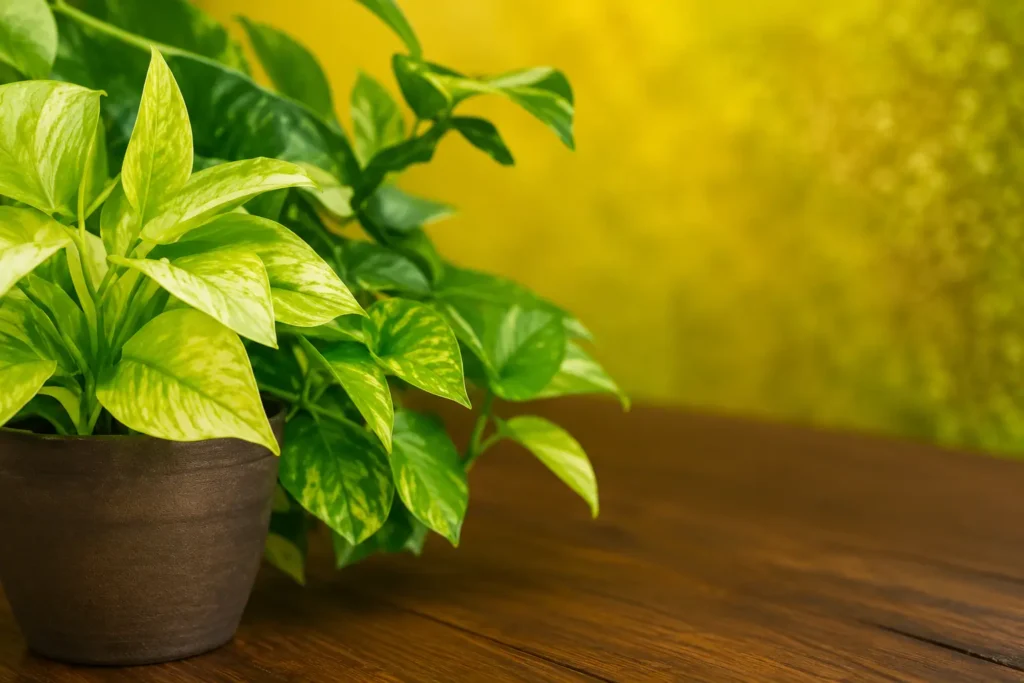
Solid, bright chartreuse-yellow leaves with no variegation pattern at all. Because the color comes from the leaf itself rather than a pattern, it holds up consistently even in slightly lower light than Marble Queen needs.
4. Jade Pothos
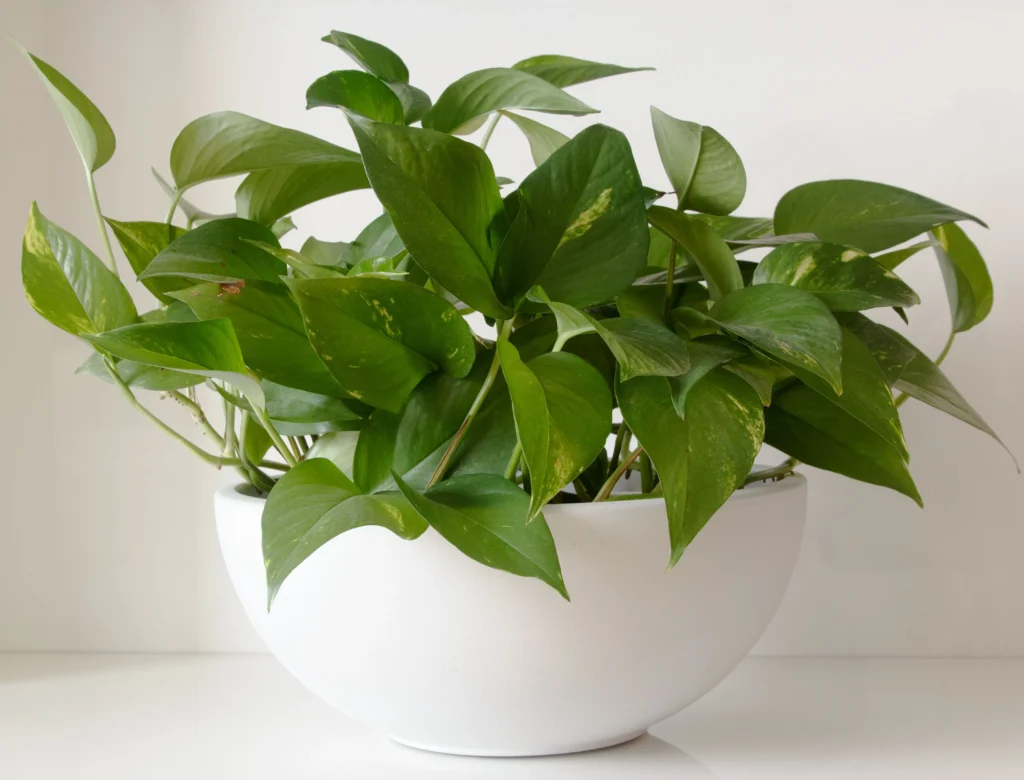
Solid deep green leaves, the most shade-tolerant variety on this list, since it has no variegation to lose in low light.
5. Manjula Pothos
Ruffled, wavy leaf edges with a mix of cream, silver, and green variegation; a patented variety with a noticeably different leaf shape than the others here, not just a different color.
6. Pearls and Jade Pothos
Smaller leaves than Golden or Marble Queen, with a mix of white, grey-green, and green variegation. It tends to grow slightly slower and stay more compact than larger-leaved varieties.
7. N’Joy Pothos
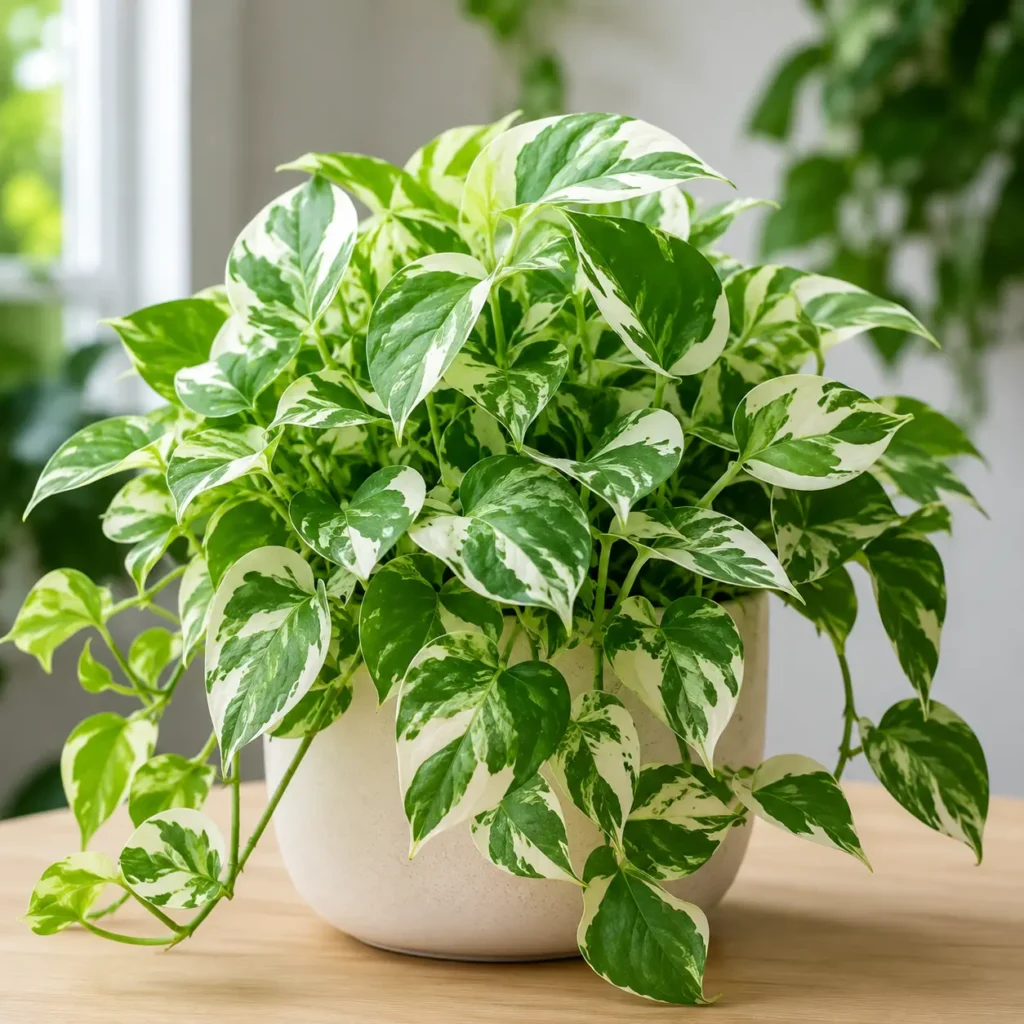
Similar in size and variegation style to Pearls and Jade, with a slightly different, more irregular white-and-green pattern.
8. Cebu Blue Pothos
Silvery, blue-green leaves with a noticeably different look from the typical heart-shaped green Pothos. As it matures and is given something to climb, its leaves can develop natural splits, similar to a Monstera.
9. Baltic Blue Pothos
Closely related to Cebu Blue, with a similar silvery-blue color, but known for developing more pronounced splits in its leaves at an earlier stage when given a pole or trellis to climb.
10. Global Green Pothos
Two-tone green variegation, dark and light green, without any white or yellow in the pattern at all, giving a more subtle look than most variegated types.
11. Glacier Pothos
A compact variety with small, white-and-green leaves, well suited to a small pot or shelf where a sprawling vine wouldn’t fit.
12. Jessenia Pothos
Similar to Golden Pothos but with more vivid, higher-contrast yellow marbling.
13. Trebi Pothos
larger leaves with a silvery, mottled pattern; often confused with Satin Pothos due to a similar look, but it’s a true Epipremnum variety.
Plants Commonly Sold as “Pothos” That Aren’t
A couple of popular houseplants are frequently labeled or nicknamed “Pothos” in stores despite belonging to an entirely different genus. Satin Pothos (Scindapsus pictus) is the most common example: it has a velvety, matte leaf texture with silvery splotches, quite different from the glossy leaves of true Pothos, and it’s technically a separate plant, Scindapsus, not Epipremnum. Care needs are similar enough that the mix-up rarely causes problems, but it’s worth knowing if you’re specifically trying to identify or shop for true Pothos varieties.
Philodendron Brasil is another plant sometimes confused with Golden Pothos at a glance, since both have similar green-and-yellow marbled heart-shaped leaves, though Philodendron leaves tend to be thinner and slightly more pointed.
How to Tell True Pothos From Satin Pothos
True Pothos (Epipremnum aureum) has smooth, glossy, slightly thicker leaves, and new leaves emerge from a small papery sheath. Satin Pothos (Scindapsus pictus) has a soft, velvety, matte leaf surface without that glossy sheen, and no papery sheath on new growth.
If you’re unsure which one you have, running a finger over the leaf is often the fastest way to tell: glossy and smooth points to true Pothos, while soft and slightly fuzzy points to Satin Pothos.
Do All These Varieties Need the Same Care?
Yes, for the most part. Watering, soil, and general light tolerance are similar across nearly all Pothos varieties. The main practical difference is how much light each one needs to hold onto its specific variegation pattern heavily variegated types like Marble Queen and Manjula need more consistent bright, indirect light to keep their white and cream coloring than solid green varieties like Jade, which will do fine in noticeably lower light.
FAQs
Which Pothos variety is the rarest or most expensive?
Cebu Blue and Baltic Blue tend to be pricier and less commonly stocked at general retailers compared to Golden or Marble Queen, since they’re less widely propagated and have a more distinctive look that keeps demand high relative to supply.
Can a variegated Pothos leaf lose its pattern over time?
Yes, if the plant is kept in low light for an extended period, new growth often comes in with less white or cream coloring than the older leaves, since the plant produces more chlorophyll-rich green tissue when light is limited. Moving it to brighter indirect light usually restores stronger variegation in future leaves, though already-grown leaves won’t change.
Is Cebu Blue’s leaf-splitting the same thing that happens to a Monstera?
It’s a visually similar effect, called fenestration, but it happens for different underlying reasons in each plant, and Cebu Blue’s splits are generally smaller and less dramatic than a mature Monstera’s. It also typically only develops once the plant is climbing a support and reaches a more mature growth stage, rather than happening on a young, trailing plant.
Can I grow multiple Pothos varieties in the same pot?
Yes, since care needs are similar across varieties, planting a few different types together in one larger pot is a common way to create a fuller, more textured look with contrasting leaf colors and patterns, without any real difference in how you’d care for them individually.
Is Marble Queen harder to keep alive than Golden Pothos?
Not harder exactly, but less forgiving of low light specifically. Marble Queen needs brighter indirect light to stay healthy and keep its heavy white variegation, and it’s more prone to slow, weak growth in a dim spot than Golden Pothos, which tolerates lower light more comfortably