Pet Friendly Indoor Plants for Cats and Dogs
Quite a few popular houseplants, including some of the most commonly recommended ones, are actually toxic to cats and dogs if eaten. This guide focuses on plants that are considered safe, how to verify that for yourself, and what to do if a pet does get into something it shouldn’t.
How to Actually Check If a Plant Is Safe
“Pet friendly” and “non-toxic” are used loosely across plant retailers and general articles, and not always accurately. The most reliable source is the ASPCA’s searchable list of toxic and non-toxic plants, which is maintained specifically for this purpose and covers a very wide range of common houseplants. It’s worth checking a plant by its specific name there before assuming a general label like “pet friendly” on a plant tag is accurate.
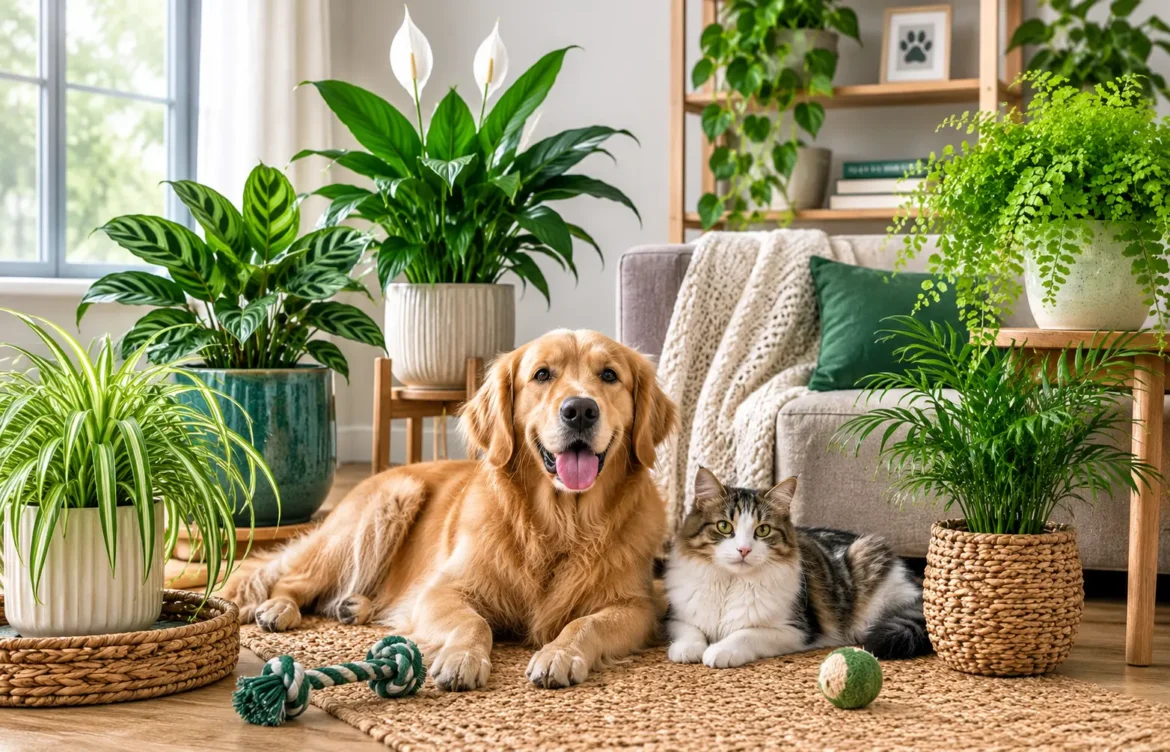
Pet-Friendly Indoor Plants
- Spider Plant — one of the most reliably pet-safe common houseplants, and tolerant of low light too. See the full Spider Plant care guide.
- Calathea — grown for its patterned leaves, non-toxic to cats and dogs, though it prefers higher humidity than many low-maintenance plants.
- Boston Fern — a full, feathery, non-toxic option that also tolerates moderate indoor light well.
- Areca Palm — a larger, non-toxic palm that works well as a statement plant in a bright room.
- Parlor Palm — a smaller, more compact palm option, non-toxic and tolerant of lower light than most palms.
- Peperomia — a large, generally non-toxic plant family with many compact varieties suited to shelves and small spaces.
- Ponytail Palm — despite the name, not a true palm, and non-toxic; tolerates infrequent watering well, similar to a succulent.
- Prayer Plant (Maranta) — known for leaves that fold up at night, non-toxic and well suited to medium, indirect light.
- Friendship Plant (Pilea) — a small, non-toxic plant with a textured, quilted leaf pattern, easy to fit on a windowsill or small shelf.
- Haworthia — a small, non-toxic succulent that needs bright light and infrequent watering, a safer succulent option than some others in that family.
Common Houseplants That Are Not Pet Safe
A few widely recommended houseplants are toxic to cats and dogs and are worth knowing about, even if you already own or love them. Pothos and Peace Lily are both toxic if chewed or eaten, and Snake Plant is mildly toxic. True lilies (a different plant family from Peace Lily, despite the similar name) are especially dangerous specifically to cats and should be avoided entirely in a cat household. This isn’t a reason to avoid these plants altogether, but it’s worth placing them somewhere pets genuinely can’t reach, rather than assuming a pet simply won’t bother with them.
Does “Non-Toxic” Mean Completely Risk-Free?
Not entirely. A plant being non-toxic means it doesn’t contain compounds known to poison a pet, but eating a large amount of any plant material, toxic or not, can still cause mild stomach upset, vomiting, or diarrhea simply from the physical bulk and fiber involved. Non-toxic plants are the safer choice by a wide margin, but they’re not a guarantee that a pet won’t have any reaction at all if it eats a large quantity.
Practical Tips for a Plant-and-Pet Household
- Use height to your advantage — a tall shelf, wall-mounted planter, or hanging basket keeps a plant out of reach even if a cat can jump onto furniture. See the Hanging Indoor Plants guide for setup ideas.
- Watch new plants closely at first — some pets show little interest in most houseplants but fixate on one particular new addition; a few days of observation after bringing a new plant home helps you catch that early.
- Offer a pet-safe alternative to chew on — cat grass or a small pot of wheatgrass gives a curious cat something appropriate to nibble, which can reduce interest in other houseplants.
- Keep dropped leaves cleared away — some pets are more interested in fallen leaves on the floor than the plant itself, so regular cleanup reduces easy access.
What to Do If a Pet Eats a Toxic Plant
If you know or suspect a pet has eaten part of a toxic plant, contact your veterinarian or an animal poison control hotline right away rather than waiting to see if symptoms appear. Try to identify the plant, and if possible, note roughly how much was eaten, since this information helps a vet assess the situation quickly. Keep a small sample or a photo of the plant on hand if you can, as this can help with identification over the phone.
FAQs
What should I do first if I catch my pet chewing on a toxic plant?
Remove the plant or the pet from the situation immediately, then check the ASPCA’s toxic plant list or call your vet to find out how concerning that specific plant is. Even for mildly toxic plants, it’s worth mentioning it to your vet rather than assuming a small amount is automatically fine.
Are all succulents safe for pets?
No, this is a common misconception. While many succulents, like Haworthia, are non-toxic, others, including Aloe Vera and several types of Euphorbia, are toxic if eaten. Succulents should be checked individually rather than assumed safe as a category.
Is it safe to keep a toxic plant in the house if my pet has never shown interest in plants?
It carries some risk, since pet behavior can change, and a new or unusually bored pet may take an interest in a plant it previously ignored. If you’d rather not remove the plant, placing it well out of reach is a safer middle ground than leaving it accessible based on past behavior alone.
Do pet-friendly plants need different care than toxic ones?
No, toxicity to pets has no connection to a plant’s care needs. A non-toxic plant can be just as easy or difficult to care for as a toxic one; light, water, and soil requirements are entirely separate from the toxicity question.
Can birds be affected by plants that are safe for cats and dogs?
Not necessarily. Toxicity varies by animal, and a plant considered safe for cats and dogs isn’t automatically safe for birds or other pets, since different species can react differently to the same compounds. If you have birds or other pets, it’s worth checking toxicity specifically for that species rather than relying on cat and dog safety information alone.