
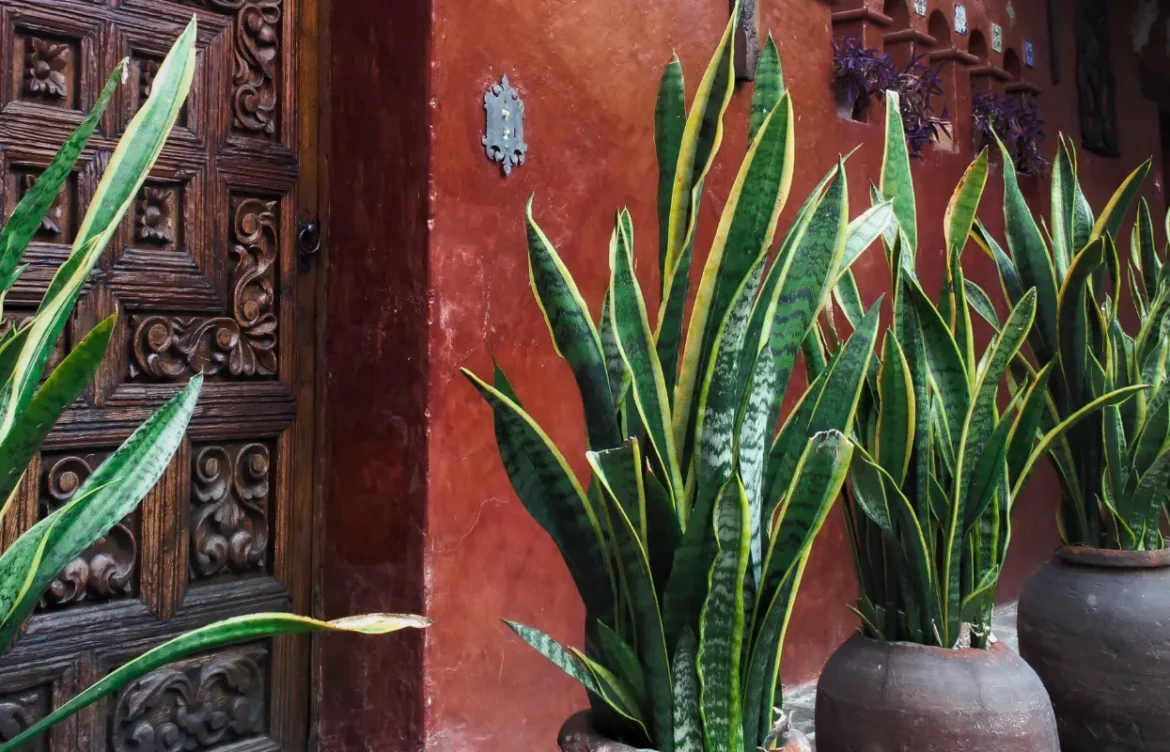
Benefits of Growing a Snake Plant
Snake Plants are often described with big claims about purifying entire rooms of air, so it’s worth separating what’s genuinely useful about this plant from what’s simply popular marketing. Here’s a grounded look at what a Snake Plant actually offers, based on how it behaves and what’s realistically supported.
It’s Genuinely Low Maintenance
This is the most practical, well-supported benefit. A Snake Plant tolerates irregular watering, a wide range of light levels, and long stretches without attention far better than most houseplants. For anyone who travels often, has a busy schedule, or is simply new to keeping plants alive, that reliability is a real, everyday advantage. It also means the plant is well suited to shared spaces like offices, where consistent daily care from one specific person isn’t realistic.
It Releases Oxygen at Night
Most plants release carbon dioxide at night and take in oxygen, but Snake Plants use a different process called CAM photosynthesis, which allows them to release oxygen during the night instead of only during the day. This is a real, documented trait of the plant, though the actual effect on air quality in a single room is modest it’s a nice detail more than a meaningful health intervention.
Contributes to Indoor Air Purification, in Small Amounts
A well-known NASA study from the 1980s found that Snake Plants and several other common houseplants can absorb some airborne chemicals, like formaldehyde, in a sealed test chamber. This research is often stretched into bigger claims than it supports the study used sealed chambers, not average rooms with normal air exchange, so a single houseplant in a real home will not meaningfully clean the air on its own. It’s a legitimate, modest benefit, not a replacement for ventilation.
It Handles a Wide Range of Lighting
Because it tolerates everything from low light to several hours of direct sun, a Snake Plant works in far more spots around a home or office than most houseplants, which makes it a flexible choice when you’re not sure exactly how much light a space gets. This flexibility also makes it a practical option for renters who move often and can’t always predict what light a new space will offer.
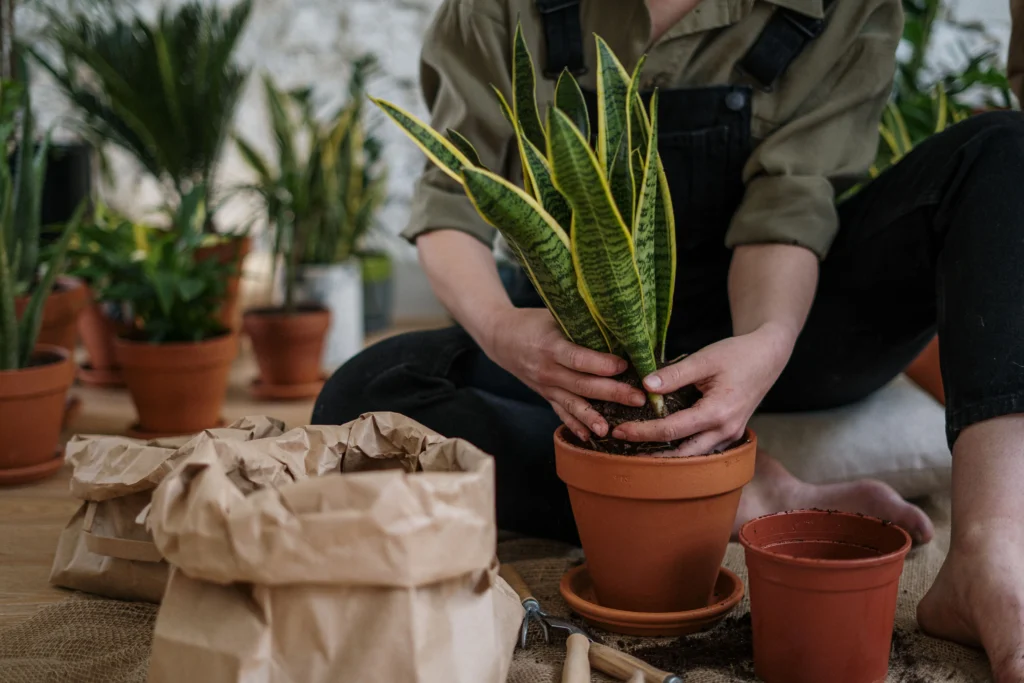
It Looks Good With Very Little Styling
Its upright, architectural shape adds height and structure to a room without needing pruning or shaping, which makes it a simple way to add greenery to a space without much ongoing effort. Unlike trailing or bushy plants, it doesn’t need to be trained onto a support or regularly trimmed to hold its shape, so it looks tidy by default rather than needing upkeep to stay that way.
It Has a Small Physical Footprint
Because it grows upright rather than spreading outward, a Snake Plant takes up relatively little floor or shelf space for its height, which makes it a practical option for small apartments, narrow hallways, or tight corners where a wide, bushy plant wouldn’t comfortably fit.
It Represents Good Long-Term Value
Because it’s slow-growing and long-lived, often surviving a decade or more with reasonable care, a single Snake Plant can remain a fixture in a home for years without needing to be replaced. Combined with its low ongoing needs, this makes it a relatively low-cost plant to own over time, compared to shorter-lived or higher-maintenance options.
It Fits Almost Any Style of Interior
Its clean, simple shape doesn’t compete visually with other decor the way a bushier or more colorful plant might, which is part of why it shows up so often in minimalist, modern, and traditional interiors alike. A single Snake Plant in a plain pot reads as intentional in almost any room, without needing to be styled around.
It Builds Confidence for New Plant Owners
Beyond the practical care benefits, there’s a real psychological upside to starting with a plant that’s genuinely hard to get badly wrong. Someone who kills a few finicky plants in a row often assumes they simply aren’t good at keeping plants alive, when the real issue was picking a demanding species to start with. A Snake Plant’s tolerance for mistakes gives a new owner room to learn the basics, like checking soil before watering, without the discouragement of an early loss.
FAQs
Does a Snake Plant really clean the air in a normal room?
Only to a small degree. The commonly cited NASA research was conducted in sealed lab chambers, which don’t reflect how air moves in an actual home with doors, windows, and ventilation. A Snake Plant can play a very small supporting role, but it isn’t a substitute for good airflow.
Are the health benefits of Snake Plants scientifically proven?
Some claims, like the oxygen release at night and limited chemical absorption, are based on real research. Broader claims about stress reduction or major air quality improvements from a single houseplant are less well supported and are often exaggerated in general plant care content.
Is a Snake Plant a good choice for someone with allergies?
It can be a reasonable choice since it doesn’t produce noticeable pollen indoors, but keep in mind that damp soil can support mold growth if consistently overwatered, which could be a concern for some people with mold sensitivities. Good watering habits reduce this risk.
Do Snake Plants add humidity to a room?
Only a very small amount. Because they release moisture slowly compared to plants with thinner, larger leaves, their impact on room humidity is minor. For meaningfully more humidity, a plant like a Peace Lily or a proper humidifier will make more of a difference.
Is it worth keeping a Snake Plant in a bedroom specifically for the nighttime oxygen release?
It’s a nice bonus, but the actual amount of oxygen released by one plant is very small compared to the air already in a bedroom. It’s fine to keep one there for its low light tolerance and appearance, just without expecting a noticeable difference in air quality.