Cast Iron Plant Care Guide
The Cast Iron Plant (Aspidistra elatior) earned its name for a reason: it tolerates neglect, poor light, dust, dry air, and inconsistent care better than almost any other common houseplant. It’s not as widely sold as a Snake Plant or Pothos, but for a genuinely dark corner where other plants struggle, it’s one of the most reliable options available. This guide covers everything it needs to grow well.
What Is a Cast Iron Plant?
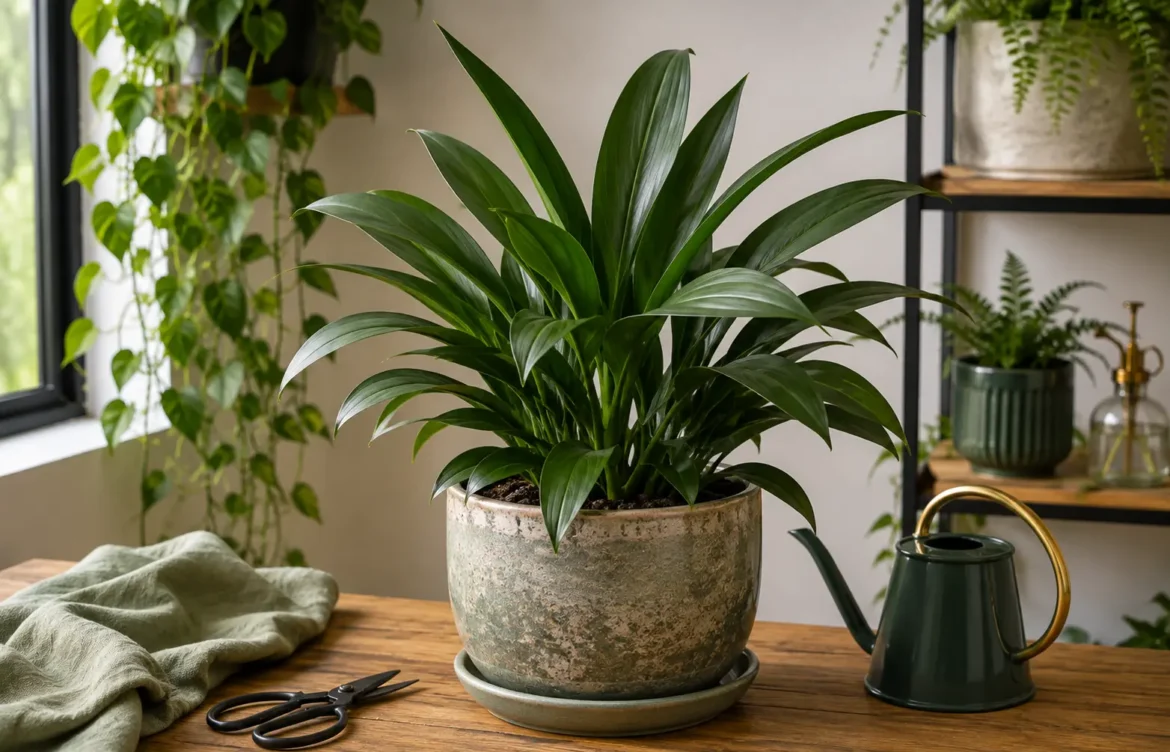
Native to the forest floors of Japan and Taiwan, the Cast Iron Plant grows naturally in deep shade beneath a dense tree canopy, which is exactly why it handles dim indoor rooms so comfortably. It has broad, dark green, upright leaves that grow directly from an underground rhizome, similar in structure to a Snake Plant, though the leaves are wider, softer, and more matte in texture.
Why It’s Called “Cast Iron”
The name dates back to Victorian England, where this plant became a household favorite specifically because it could survive the conditions of a 19th-century parlor: dim gaslight, coal smoke, dust, and irregular watering from busy households. While most ornamental plants of that era struggled or died in those rooms, Aspidistra kept growing, which earned it a reputation as being practically indestructible tough as cast iron. That reputation has held up well over a century later; it remains one of the most tolerant common houseplants sold today.
Light Needs
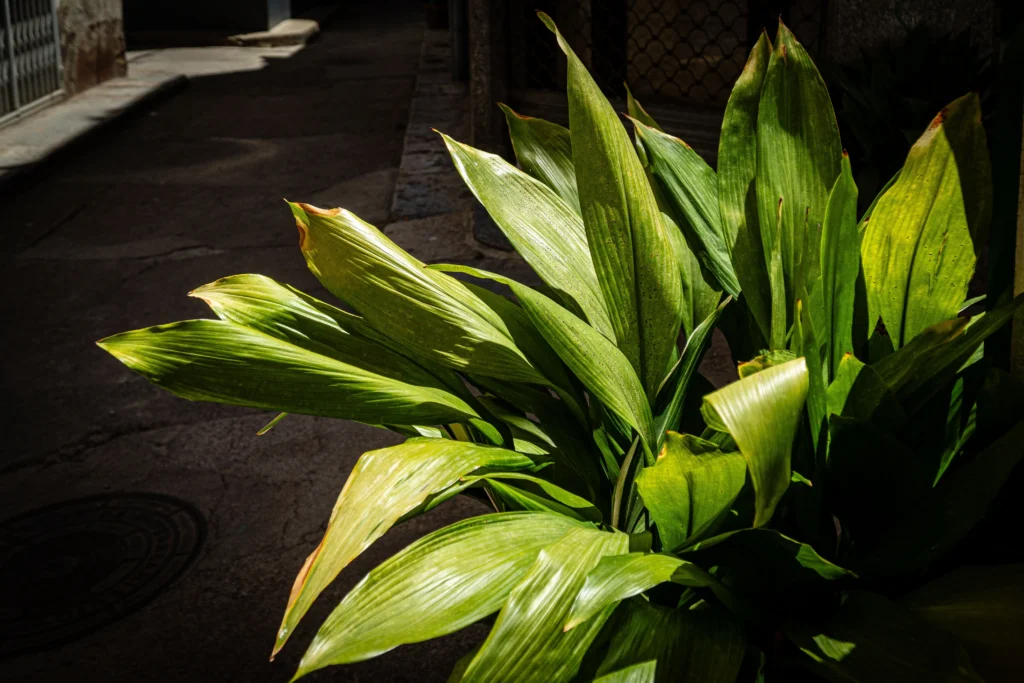
This is genuinely one of the most shade-tolerant houseplants available, more so than even a Snake Plant in many cases. It grows well in low light, including spots several feet from a window, and can tolerate rooms with only modest ambient light. Bright, indirect light will speed up its naturally slow growth, but direct sun should be avoided, since it can scorch or bleach the leaves, which are adapted to filtered forest shade rather than open sun.
Watering
Water when the top 1 to 2 inches of soil feel dry, roughly every 1 to 2 weeks in most homes, though this varies with light and season. Unlike a Snake Plant, which strongly prefers to dry out completely between waterings, a Cast Iron Plant is comfortable with slightly more regular moisture, but it still does not want to sit in consistently soggy soil. It’s a forgiving plant in both directions it tolerates an occasional missed watering and an occasional overly generous one better than most houseplants, though a consistent pattern of either extreme will eventually cause problems.
Soil and Pot
A standard, well-draining potting mix works well; it doesn’t require the fast-draining succulent mix that a Snake Plant needs. Choose a pot with a drainage hole, and avoid oversized pots, since excess soil around a small root system holds moisture longer than the plant wants.
Temperature and Humidity
Cast Iron Plants handle a wider temperature range than most tropical houseplants, tolerating everything from cool rooms down to near-freezing temperatures for brief periods, up to warm indoor conditions. Average home humidity is fine, and unlike more delicate tropical plants, it doesn’t need extra humidity from misting or a pebble tray to stay healthy.
Common Problems
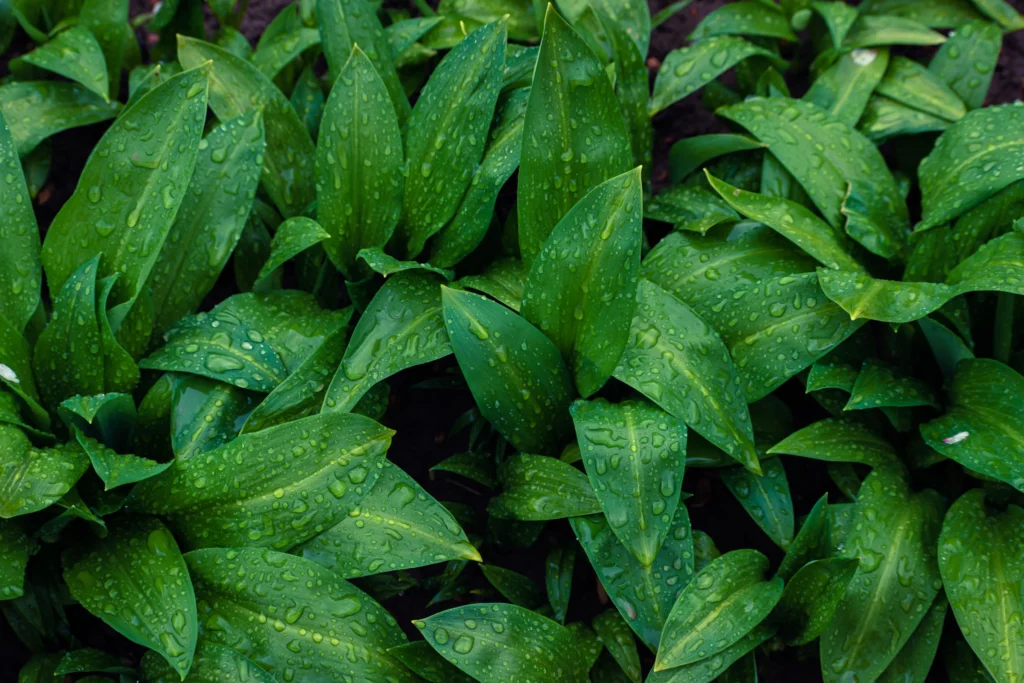
- Brown leaf tips — usually caused by too much direct sun, dry air combined with heat, or sensitivity to fluoride in tap water, similar to the brown tips seen on Spider Plants.
- Very slow visible growth — normal for this plant even in good conditions; it’s naturally one of the slowest-growing common houseplants, often slower than even a Snake Plant.
- Pale or washed-out leaves — typically a sign of too much direct sun rather than a nutrient issue; move it to a shadier spot.
- Pest issues — uncommon, but spider mites can occasionally appear in very dry indoor air; wiping the broad leaves down periodically helps you spot early problems and also keeps them dust-free.
Propagation
Like a Snake Plant, a Cast Iron Plant is propagated primarily through division rather than leaf cuttings, since its leaves don’t reliably grow new roots on their own. Remove the plant from its pot, gently separate sections of the rhizome that each have a few leaves and some roots attached, and pot each section separately in fresh, well-draining soil. Division is best done in spring, and because this plant grows so slowly, don’t expect a newly divided section to look full again for some time.
Cast Iron Plant vs. Snake Plant: Which Should You Choose?
Both are among the most shade-tolerant and forgiving houseplants available, so the choice often comes down to look and slightly different watering preferences. A Snake Plant has stiff, upright, sword-shaped leaves and wants to dry out completely between waterings. A Cast Iron Plant has broader, softer, more relaxed-looking leaves and tolerates slightly more frequent watering without complaint. If you want the absolute darkest corner of a room covered, or slightly more flexibility with a less strict watering routine, Cast Iron Plant is worth choosing over Snake Plant for that specific spot.
FAQs
Is a Cast Iron Plant harder to find than a Snake Plant or Pothos?
Generally yes. It’s less commonly stocked at large general retailers and more often found at dedicated plant nurseries or online plant sellers, partly because its slow growth rate makes it less profitable for growers to produce quickly compared to faster-selling plants.
Can a Cast Iron Plant survive in an office with only fluorescent lighting and no windows?
Yes, better than almost any other common houseplant. It’s one of the few plants that can genuinely sustain itself for extended periods on ambient artificial light alone, though growth will be extremely slow and a supplemental grow light will still improve its condition over time.
Is a Cast Iron Plant toxic to cats or dogs?
It’s generally considered non-toxic to cats and dogs, making it a reasonable option for pet-owning households, though as with any plant, it’s still sensible to discourage pets from regularly chewing on the leaves.
Why does my Cast Iron Plant have spots or streaks of yellow on the leaves?
Some varieties, including certain natural sports and cultivars, have naturally speckled or striped leaf patterns and aren’t a plain solid green to begin with, so a bit of yellow marking may simply be the variety rather than a problem. If it’s a plain-leaf variety showing new spotting, check for excess direct sun as the more likely cause.
How often should a Cast Iron Plant be repotted?
Rarely — similar to a Snake Plant, it grows slowly and doesn’t need frequent repotting, typically only once every several years or once roots are visibly circling the bottom of the pot. Repotting too often can actually slow this already-slow grower down further while it adjusts.