
How to Propagate Pothos: 2 Easy Methods
Pothos is one of the easiest houseplants to propagate, which is a big part of why it’s so widely shared between friends and family. This guide covers exactly where to cut, the two main methods, and a bonus technique for using propagation to make an existing leggy plant look fuller again.
Finding the Right Spot to Cut: Nodes
Before cutting anything, it helps to understand what a node is, since it’s the single most important detail in Pothos propagation. A node is the small bump or slightly thickened section on the vine where a leaf attaches, and it’s also where roots will eventually grow from. You’ll often see a small brown or tan nub near the node, especially on older growth this is an aerial root, and its presence confirms you’ve found a node. A cutting with no node attached will not grow roots, no matter how long you leave it in water.
Method 1: Propagating in Water
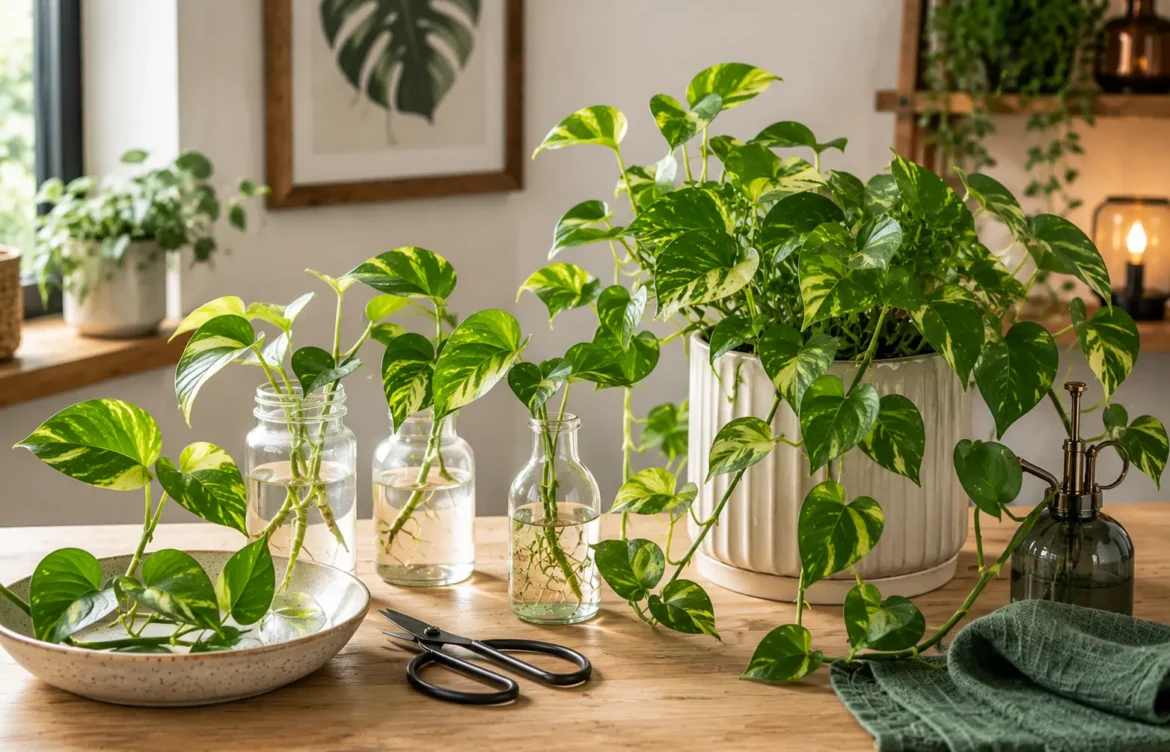
- Using clean scissors or pruning shears, cut a section of vine with at least one node and one or two leaves attached, cutting about half an inch below the node.
- Remove any leaves that would sit below the waterline, since submerged leaves tend to rot rather than help the cutting.
- Place the cutting in a glass or jar of water, making sure the node is fully submerged.
- Set it in bright, indirect light, and change the water every 5 to 7 days to keep it fresh and oxygenated.
- Roots typically appear within 1 to 3 weeks, and the cutting can be moved into soil once the roots are an inch or two long.
Method 2: Propagating Directly in Soil
- Take a cutting the same way as above, with at least one node.
- Dip the cut end in rooting hormone if you have it (optional, but it can speed things up slightly).
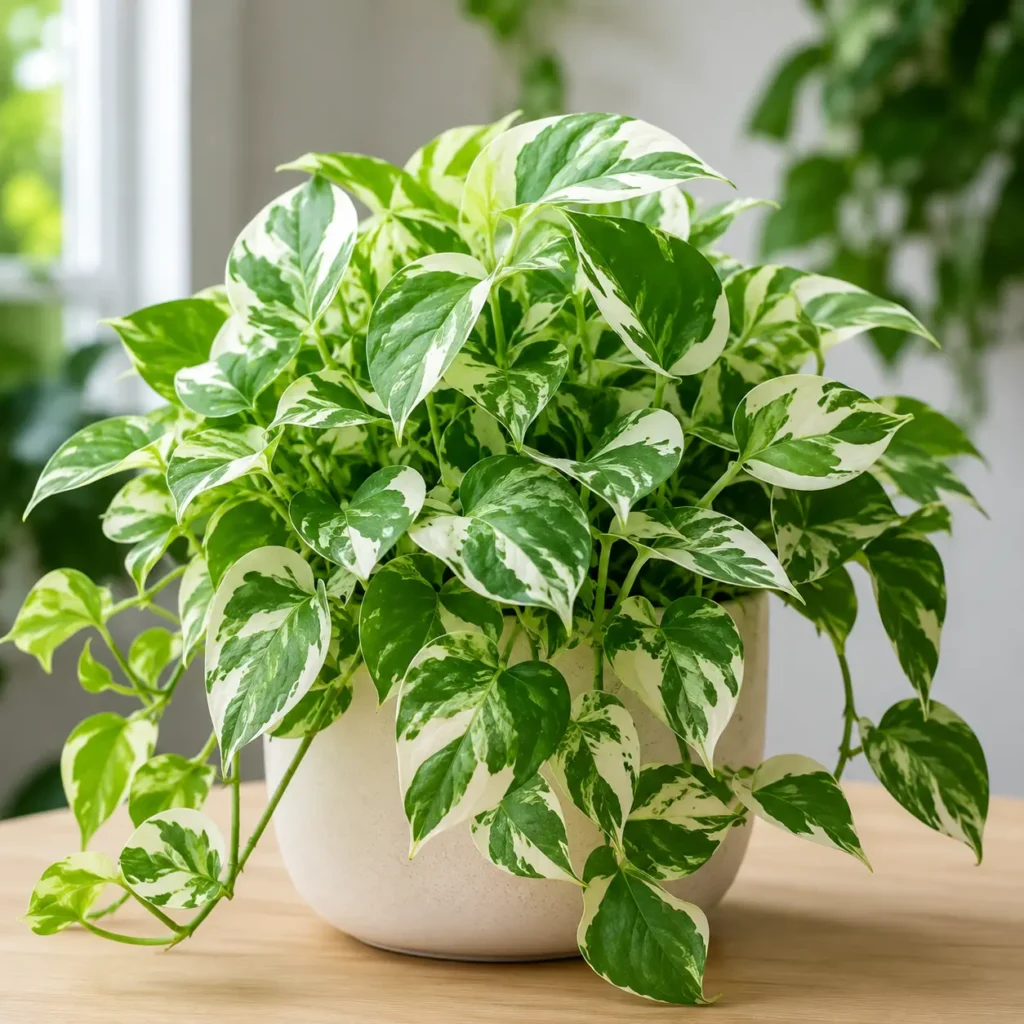
- Plant the cutting directly into moist, well-draining potting mix, burying the node just under the soil surface.
- Keep the soil lightly moist, not wet, and place the pot in bright, indirect light.
- Roots typically establish within 3 to 4 weeks, though there’s no visual confirmation until you gently tug the cutting and feel resistance.
Water Propagation vs. Soil Propagation: Which Is Better?
Water propagation is easier to monitor, since you can see the roots forming, which makes it a satisfying choice for beginners or for anyone propagating with kids. Soil propagation skips an extra transplanting step and tends to produce a slightly hardier root system from the start, since the roots never have to adjust from growing in water to growing in soil. Neither method is objectively better; it mostly comes down to whether you want to watch the process or skip straight to a potted plant.
Moving a Water Cutting Into Soil
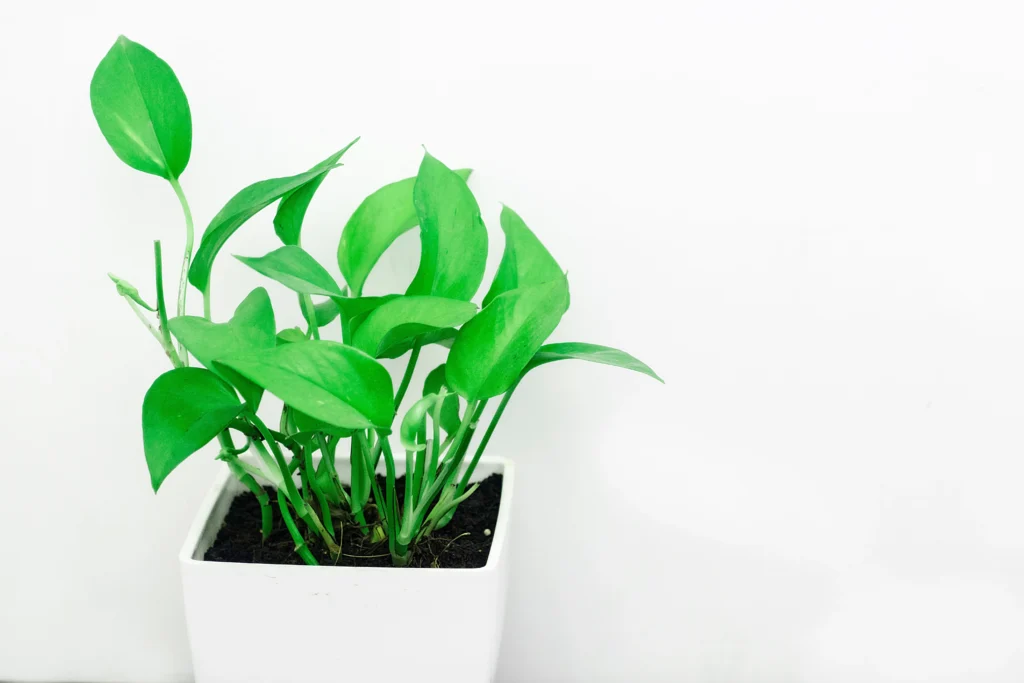
Once roots are a couple of inches long, transplant the cutting into a small pot of well-draining soil. Keep the soil more consistently moist than usual for the first couple of weeks, since roots that developed in water are used to constant moisture and need a short adjustment period before they’re comfortable with normal watering intervals.
The “Chop and Prop” Technique for a Fuller Plant
If your Pothos has grown into a few long, sparse, leggy vines rather than a full, bushy look, propagation itself is the fix. Cut the leggy vines back at a node, close to the base of the plant, then root those cuttings using either method above. Once they’ve developed roots, tuck the new rooted cuttings back into the same pot as the original plant, around its base. This immediately fills out the pot and gives the original plant a reason to branch out from the fresh cuts, rather than continuing to grow as a single long vine.

Common Propagation Mistakes
- Cutting without a node — a piece of vine or a single leaf with no node attached will not root, regardless of how long it sits in water or soil.
- Leaving submerged leaves on a water cutting — leaves sitting underwater tend to rot and can foul the water, which slows down or stalls root development.
- Moving a cutting to soil too early — roots under an inch long are often too fragile to handle the transition well; waiting until they’re a bit longer improves the success rate.
FAQs
Can I propagate a Pothos using just a leaf, with no stem or node attached?
No. A leaf without a node attached has no way to grow roots and will not become a new plant, even though it may stay green in water for a surprisingly long time before eventually declining. Always include at least a small section of stem with a node in every cutting.
How many leaves should a good cutting have?
One or two leaves per cutting is enough, and is often better than more. A cutting with too many leaves has to support all that foliage before it has roots to draw water from, which can stress the cutting more than a smaller, more manageable piece.
Do I need rooting hormone to propagate Pothos successfully?
No, Pothos roots readily without it in both water and soil. Rooting hormone can speed up the process slightly and may improve success rates for soil propagation specifically, but it’s an optional boost rather than a requirement for this particular plant.
Can I propagate Pothos at any time of year, or only in spring?
You can propagate Pothos in any season, since it’s a resilient, fast-growing plant, though cuttings taken in spring and summer generally root noticeably faster than ones taken during the shorter, cooler days of fall and winter.
Why did my water-propagated cutting stop growing new roots after the first few?
It’s common for a cutting to grow a handful of initial roots and then pause for a bit before continuing, rather than growing continuously and evenly. As long as the existing roots look healthy and white rather than brown or mushy, this pause is normal and growth typically resumes on its own.