Best Hanging Indoor Plants, and How to Keep Them Healthy
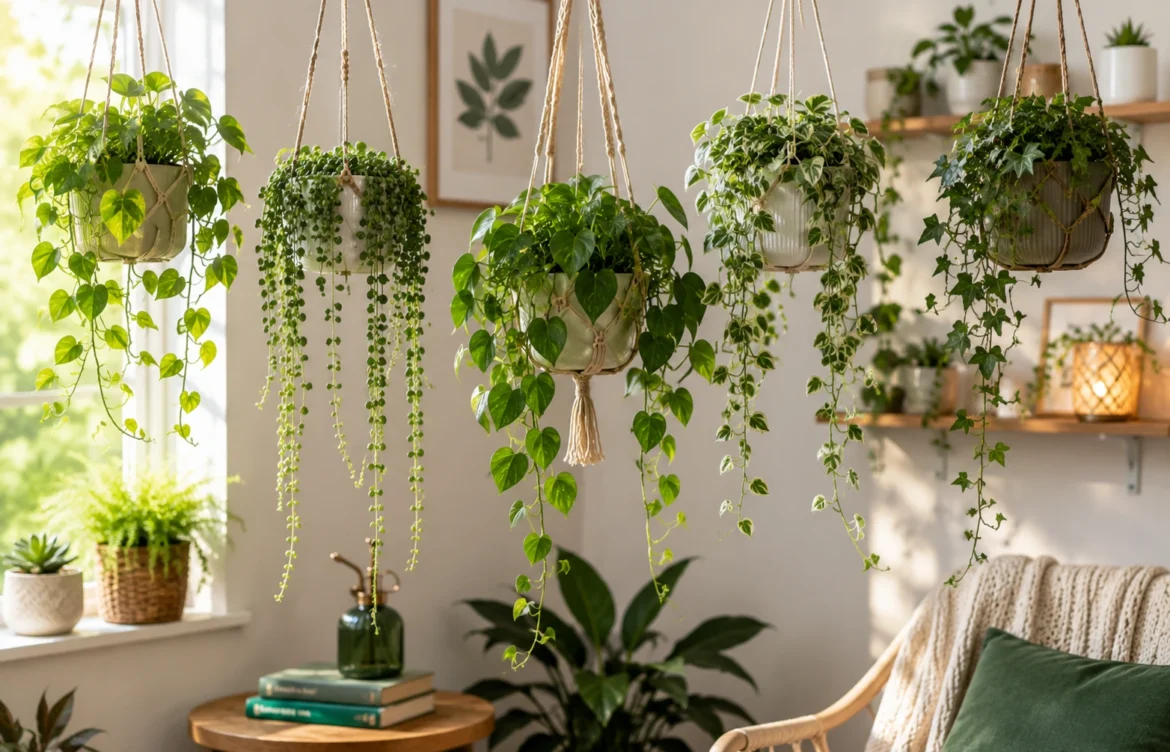
A hanging plant fills space that would otherwise go unused: empty corners near the ceiling, blank walls, or the awkward gap above a window. Beyond just filling space, trailing plants add movement and softness to a room that upright plants can’t. This guide covers which plants actually do well hanging, and the handful of care habits that are specific to hanging setups rather than a plant sitting on a shelf or floor.
What Makes a Plant Good for Hanging
The best hanging plants share a trailing or cascading growth habit, meaning their stems naturally grow downward or outward rather than upright. Beyond growth habit, lighter-weight plants are easier to hang safely, and plants that tolerate a bit of inconsistency are more practical, since a hanging basket is naturally easier to forget about than a plant at eye level on a desk.
Best Hanging Indoor Plants
1. Pothos (Epipremnum aureum)
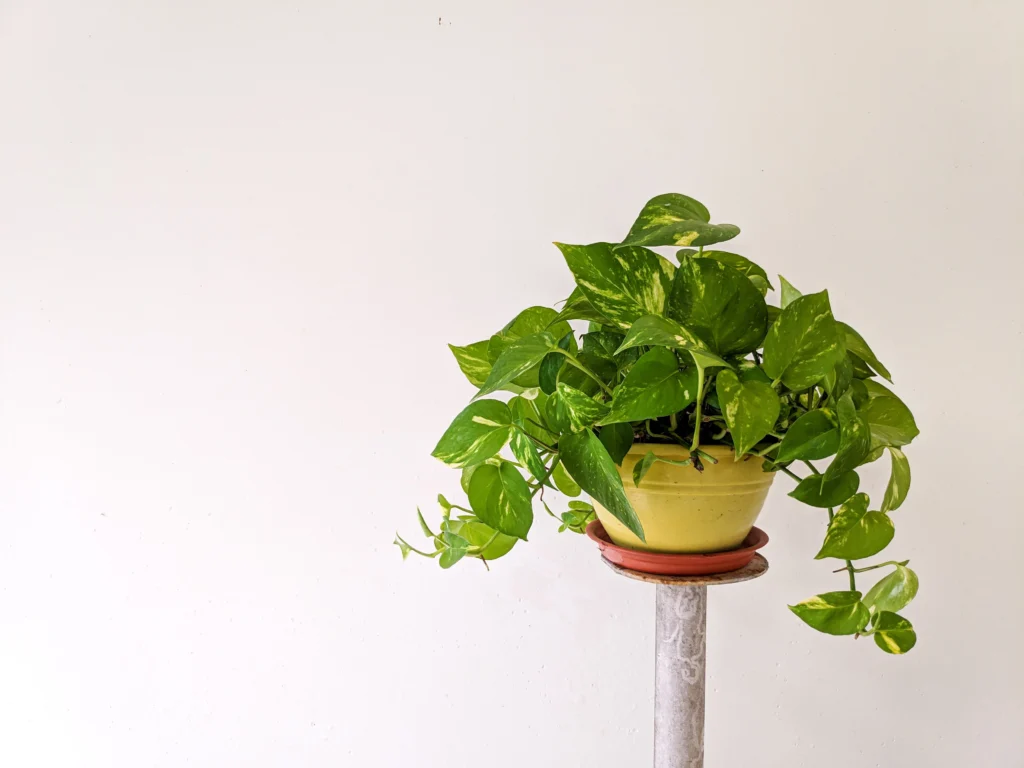
One of the most popular hanging plants, thanks to fast growth and tolerance for a wide range of light and watering habits. See the full Pothos care guide for detailed care.
Best for: Beginners, offices, bedrooms, apartments
Care Highlights
- Bright indirect to low light
- Water when the top 1–2 inches of soil are dry
- Fast-growing and easy to propagate
2. Spider Plant (Chlorophytum comosum)
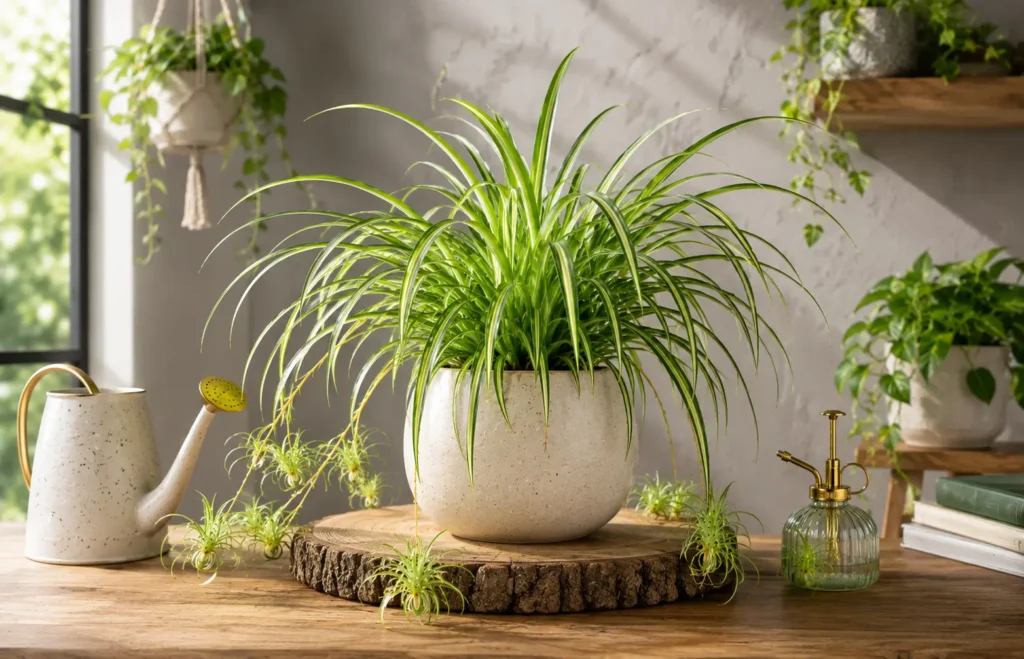
A classic hanging basket choice, especially once mature enough to send out trailing plantlets that cascade over the sides of the pot. See the full Spider Plant care guide.
Best for: Hanging baskets, pet-friendly homes, beginners
Care Highlights
- Bright indirect light
- Moderate watering
- Produces baby plants for easy propagation
3. Heartleaf Philodendron
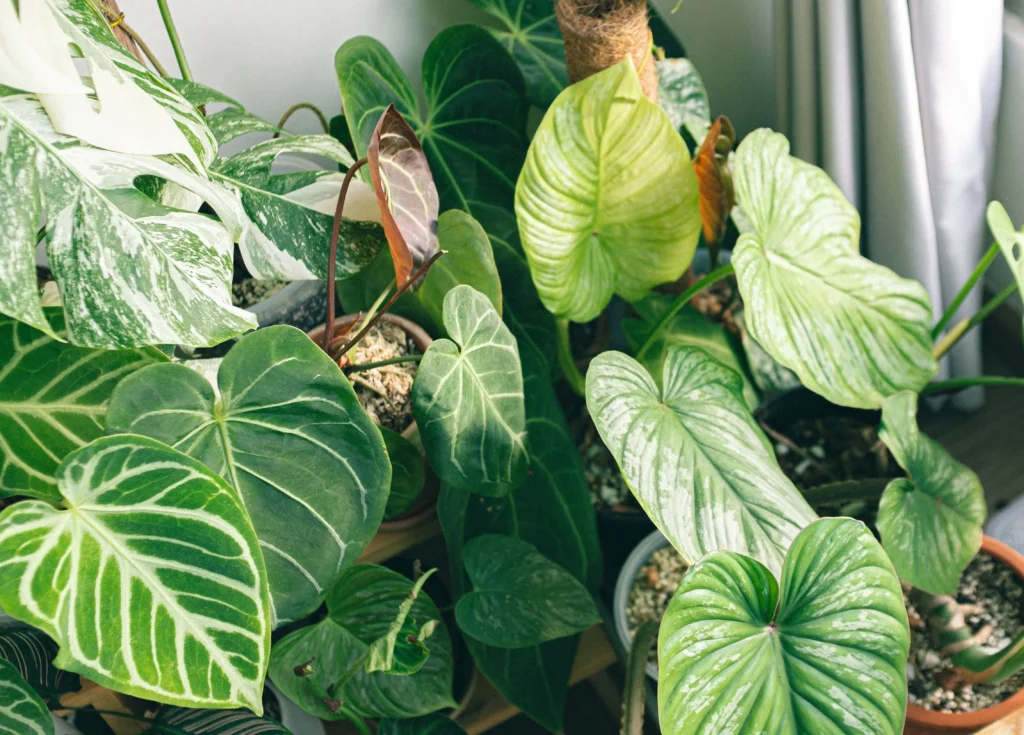
Similar in appearance to Pothos, with a slightly more delicate, glossy leaf; tolerates low to medium light well.
Best for: Living rooms, bedrooms, home offices
Care Highlights
- Bright indirect light
- Allow soil to partially dry between waterings
- Easy to prune and propagate
4. String of Pearls
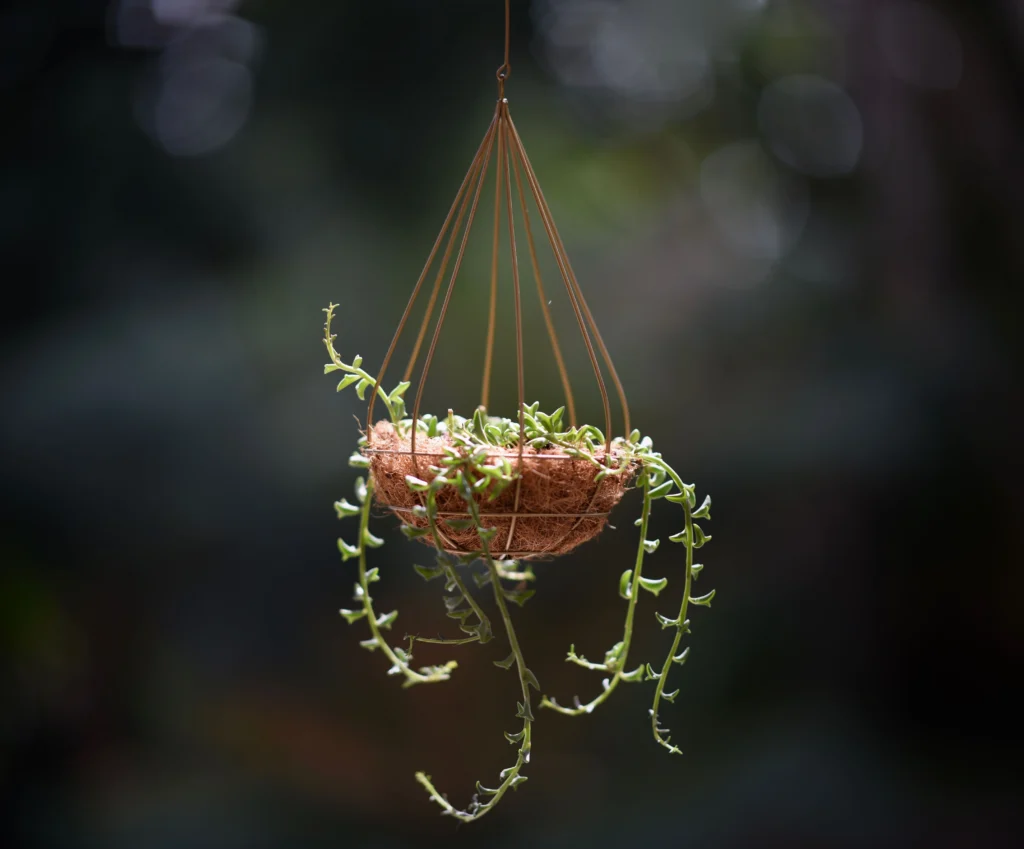
A succulent with round, bead-like leaves on thin trailing stems; needs bright light and infrequent watering, more like a typical succulent than the other plants on this list.
Best for: Bright rooms with indirect sunlight
Care Highlights
- Bright filtered light
- Infrequent watering
- Well-draining cactus soil
5. Boston Fern
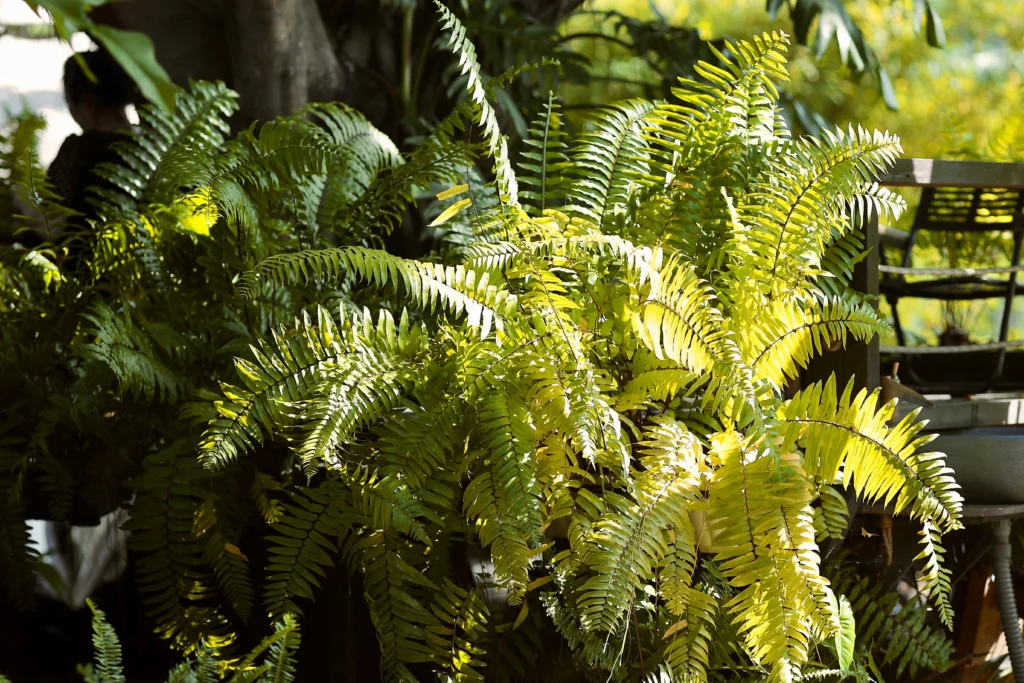
Full, feathery fronds that cascade attractively, though it wants more humidity and more consistent watering than the average low-maintenance hanging plant.
Best for: Bathrooms and humid rooms
Care Highlights
- Bright indirect light
- Consistently moist soil
- Higher humidity preferred
6. English Ivy
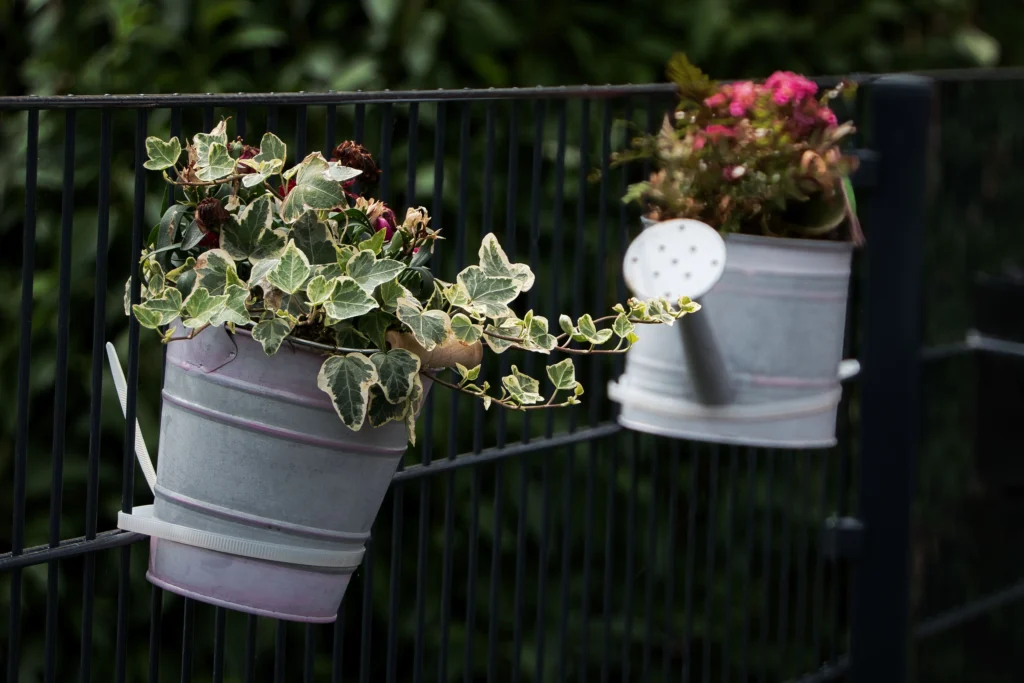
Dense, trailing stems with classic lobed leaves; prefers cooler rooms and consistently moist soil compared to most other plants on this list.
Care Highlights
- Bright indirect light
- Even moisture
- Regular trimming encourages fuller growth
7. String of Hearts
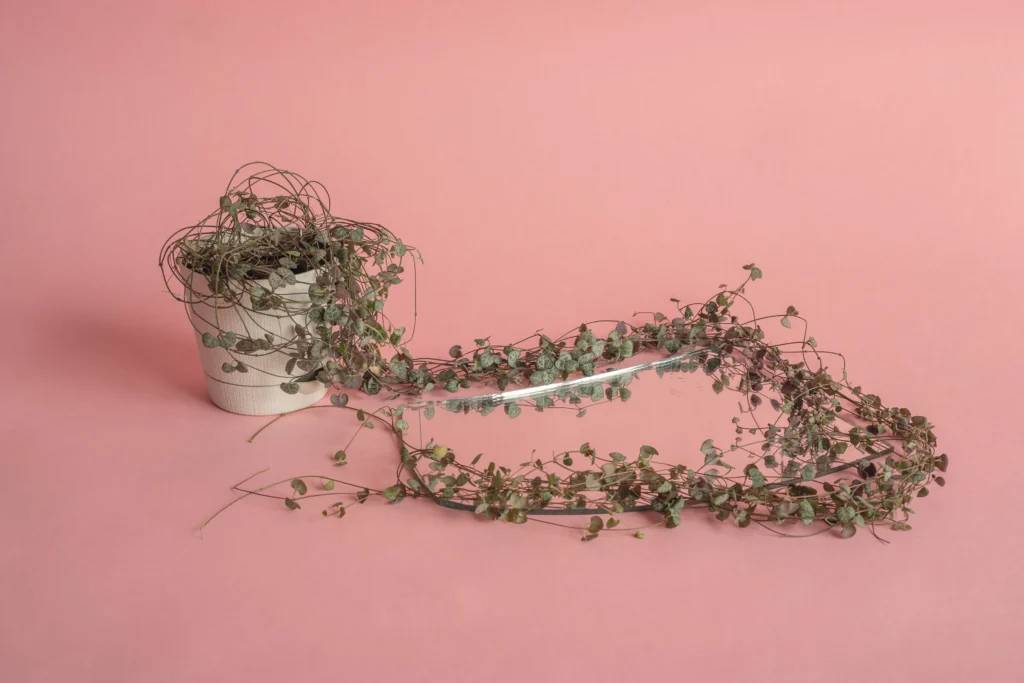
Thin, wiry stems with small heart-shaped, patterned leaves; tolerates some neglect and prefers bright, indirect light.
Care Highlights
- Bright indirect light
- Allow soil to dry between watering
- Excellent for hanging planters
8. Burro’s Tail
A succulent with plump, trailing, bead-like leaves; needs bright light and very infrequent watering, and is best handled gently, since the leaves detach easily.
Care Highlights
- Bright light
- Excellent drainage
- Water sparingly
9. Tradescantia (Wandering Dude)
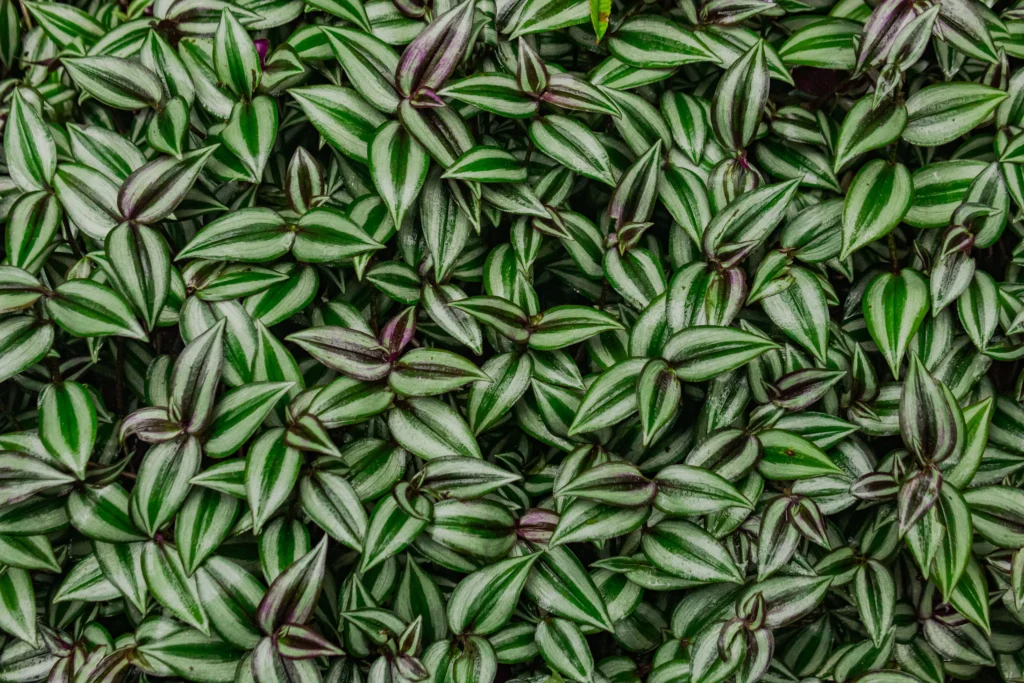
Known for its colorful purple, green, and silver foliage, Tradescantia grows rapidly and creates vibrant hanging displays.
Care Highlights
- Bright indirect light
- Regular watering
- Occasional pruning keeps plants compact
10. Peperomia Hope
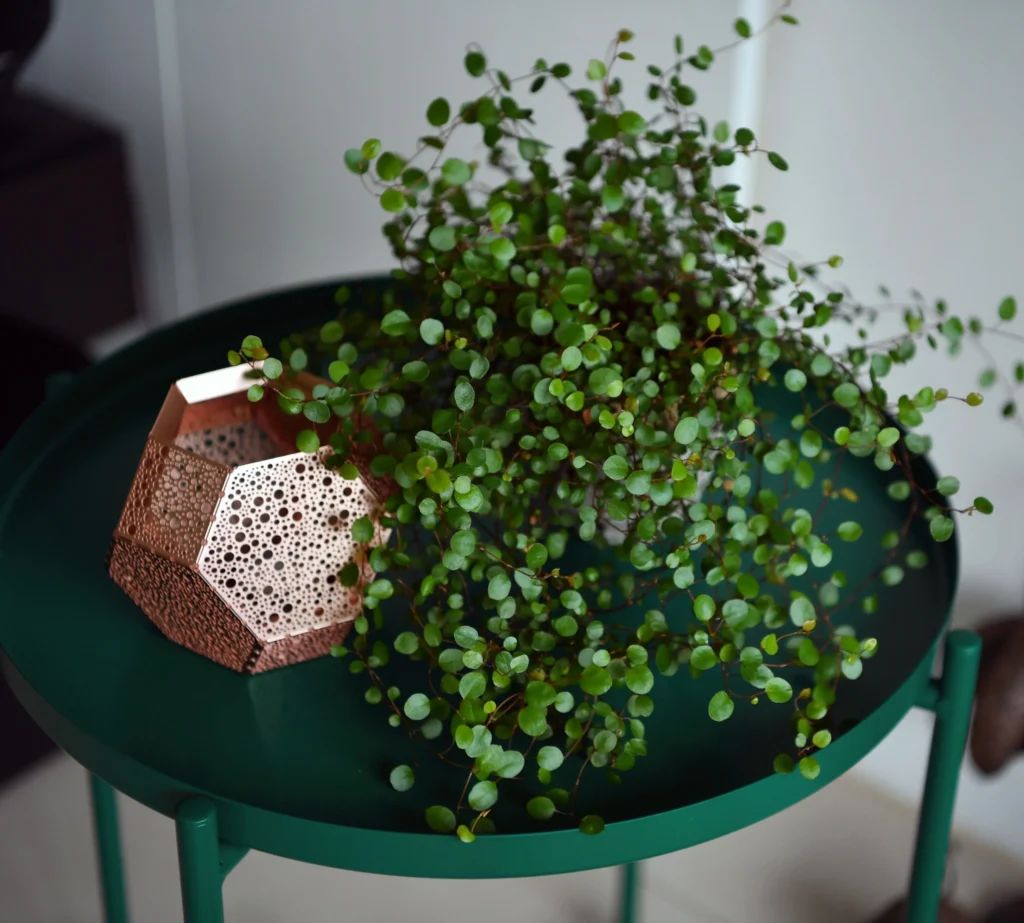
Peperomia Hope features thick round leaves on trailing stems and is an excellent low-maintenance option for smaller hanging baskets.
Care Highlights
- Bright filtered light
- Moderate watering
- Compact growth habit
11. Lipstick Plant
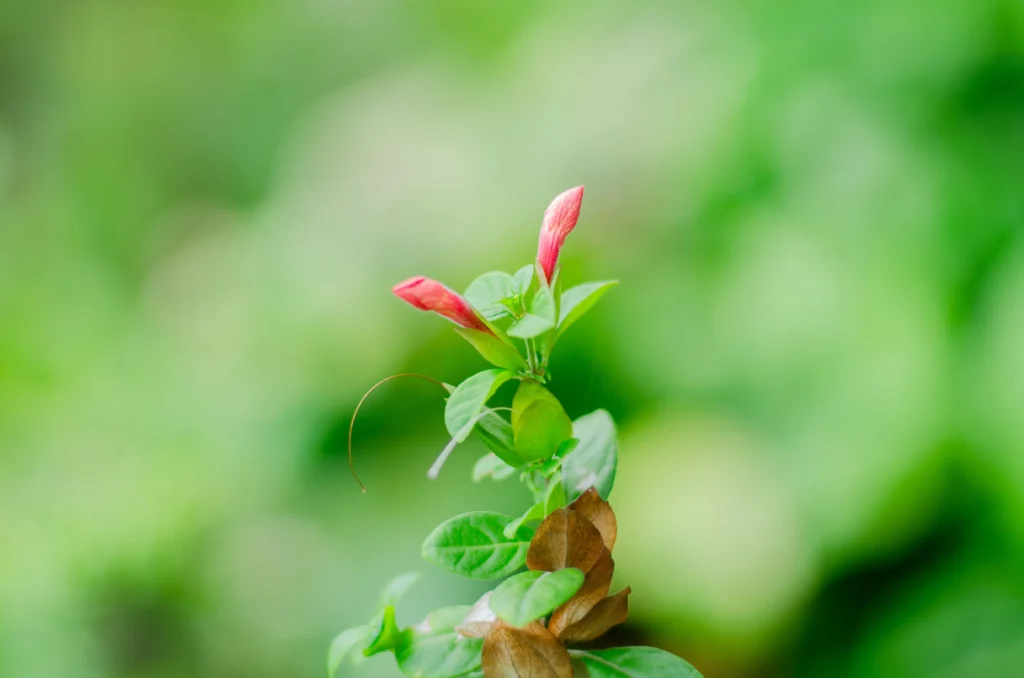
Trailing stems with glossy leaves and, in good light, tubular red flowers; prefers bright indirect light and consistent watering.
Care Highlights
- Bright indirect light
- Moderate humidity
- Regular watering
12. Bird’s Nest Fern
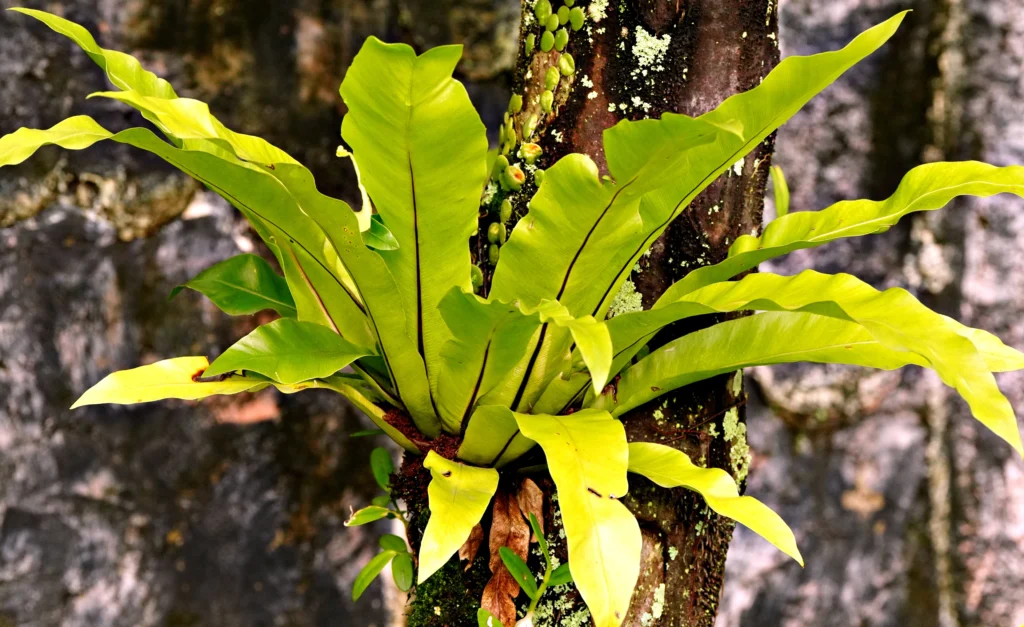
Unlike many trailing plants, Bird’s Nest Fern forms elegant arching fronds that spill beautifully from elevated containers.
Care Highlights
- Medium to bright indirect light
- Moist soil
- High humidity
Which of These Work in Low Light?
If the hanging spot doesn’t get much natural light, Pothos, Spider Plant, and Heartleaf Philodendron are the strongest choices from this list, since all three tolerate low light reasonably well. The others, particularly the succulents like String of Pearls and Burro’s Tail, need bright light to actually thrive and will grow leggy, sparse, or lose color in a dim spot, regardless of how well they’re watered.
Watering a Hanging Plant Without the Mess
Checking soil moisture and watering a hanging basket is naturally more awkward than a plant within easy reach, since it usually means reaching up or taking it down. A few habits make this easier: use a pot with a built-in saucer or a removable liner so you can water it in a sink or tub and let it drain fully before rehanging, rather than watering in place and risking drips onto the floor below. For very high or hard-to-reach plants, a long-spout watering can makes it possible to water without taking the plant down every time.
Light Is Often Different Than It Looks
A spot near the ceiling can actually receive more light than a shelf at eye level in the same room, since light entering through a window often travels upward and across a ceiling before it reaches the corners of a room. It’s worth reassessing the actual light level at hanging height rather than assuming it matches the light lower in the room, since the difference can be enough to affect which plants will do well there.
Mounting and Hardware Safety
A hanging planter, especially once the soil is fully watered, can be considerably heavier than it looks. Use a proper ceiling hook rated for the combined weight of the pot, soil, and plant, and anchor it into a ceiling joist or use a hardware-rated drywall anchor rather than relying on the drywall alone. For plants that will grow large and heavy over time, like a mature Boston Fern or Pothos, it’s worth checking the hardware periodically rather than assuming it will hold indefinitely without any wear.
Keeping Growth Even on All Sides
Hanging plants tend to grow toward whichever side gets the most light, which can leave one side noticeably fuller than the other over time. Giving the pot a quarter turn every couple of weeks helps keep growth balanced, especially for plants like Pothos and Spider Plant that are otherwise fairly low-maintenance and don’t need much other intervention.
FAQs
Do hanging plants need to be watered more or less often than the same plant in a regular pot?
It depends more on pot size and material than on the fact that it’s hanging. Hanging baskets are often smaller and lighter than floor or shelf pots, and smaller pots hold less soil, which tends to dry out faster, so a hanging plant may need slightly more frequent watering than a larger pot of the same plant elsewhere.
Can I hang a plant that isn’t naturally a trailing type, like a Snake Plant?
You can, but upright plants like a Snake Plant don’t take advantage of the hanging format the way a trailing plant does, since they won’t cascade over the sides. Hanging generally works best visually and practically for plants that are naturally suited to trail or cascade.
Is it normal for a hanging plant to grow lopsided?
Yes, this is common and is simply the plant growing toward its strongest light source. Regularly rotating the pot is the most effective way to correct or prevent this, rather than treating it as a sign of a health problem.
Are macrame hangers safe for all pot types?
Macrame and rope hangers work well for most lightweight plastic or resin pots, but a heavy ceramic or ceramic-style ceiling pot may be too much weight for some rope hangers to support safely over time. Check the hanger’s weight rating, or opt for a metal hanging bracket for heavier pots.
What’s the easiest hanging plant for someone who tends to forget to water?
Pothos is the most forgiving option on this list for inconsistent watering, since it tolerates the soil drying out more than most of the others and shows clear, early warning signs, like slightly drooping leaves, well before serious damage occurs.