
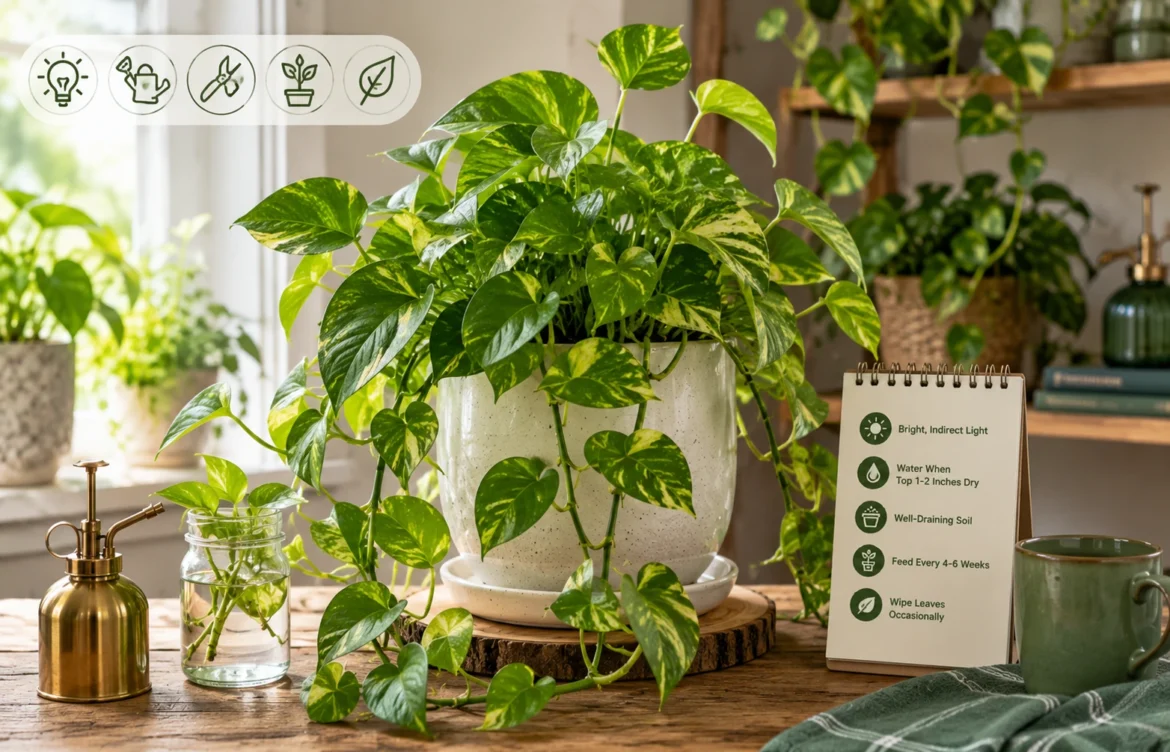
12 Pothos Care Hacks Worth Knowing
Beyond the basics of light, water, and soil, there are a handful of small habits that make a real difference in how full, healthy, and attractive a Pothos plant ends up looking. None of these replace the fundamentals for a full watering schedule or a deep dive into yellow leaves or leggy vines, those topics deserve their own dedicated guides. These are the smaller, practical extras.
1. Use “chop and prop” to fix a leggy plant
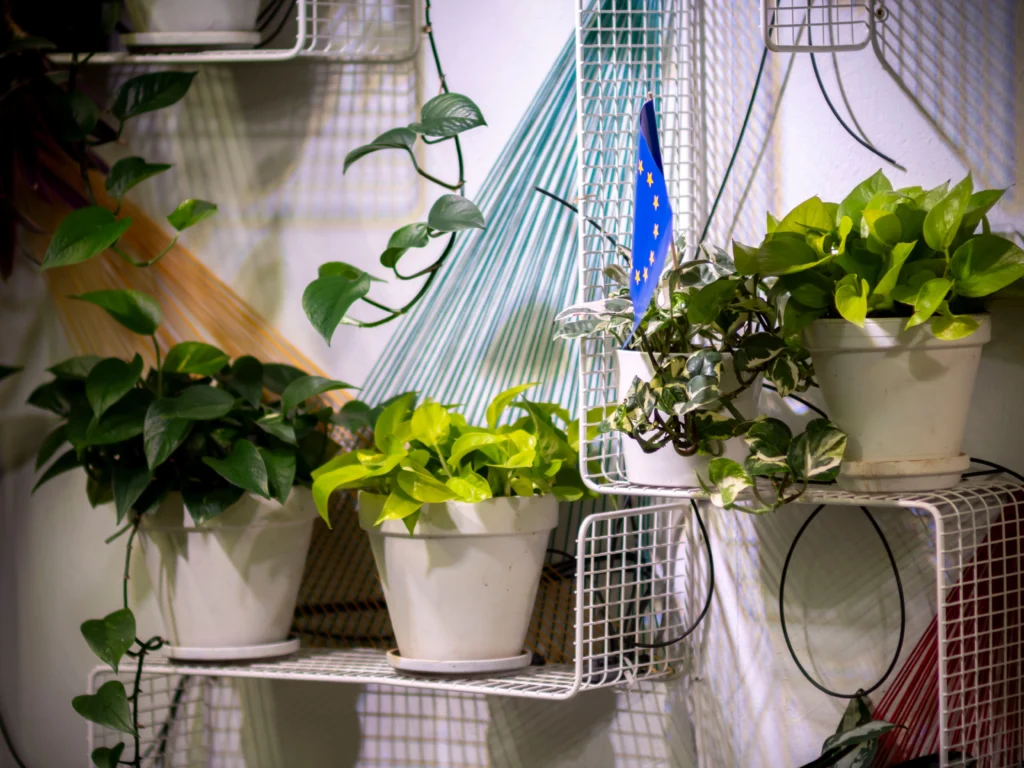
If your Pothos has turned into a few long, sparse vines rather than a full plant, cut them back at a node, root the cuttings, and tuck them back into the same pot. See the full How to Propagate Pothos guide for the exact steps.
2. Wipe the leaves down occasionally
Dust builds up on broad leaves over time and blocks some light from reaching the leaf surface. A damp cloth every few weeks keeps leaves looking glossier and helps the plant photosynthesize a little more efficiently.
3. Give it something to climb
A moss pole or small trellis encourages a Pothos to grow larger, more mature leaves compared to the same plant left to trail, since climbing triggers a different growth stage in the plant.
4. Use room-temperature water
Cold water straight from the tap can mildly shock the roots, especially in winter. Letting water sit out for a bit before using it, or simply using lukewarm water, is gentler on the plant.
5. Rotate the pot every couple of weeks
A Pothos placed near a single light source tends to grow more on the side facing the light. A quarter turn every so often keeps growth balanced on all sides.
6. Skip the coffee grounds and eggshell myths
These are popular DIY fertilizer tips online, but they break down slowly and unevenly in a potted plant and can attract pests or mold indoors. A proper, diluted liquid houseplant fertilizer is a more reliable and predictable choice.
7. Trim just above a node to encourage branching
Cutting a vine just above a node, rather than mid-stem, prompts the plant to grow a new branch from that point, which is a simple way to encourage a bushier shape over time rather than one long vine.
8. Use a plastic grow pot inside a decorative one
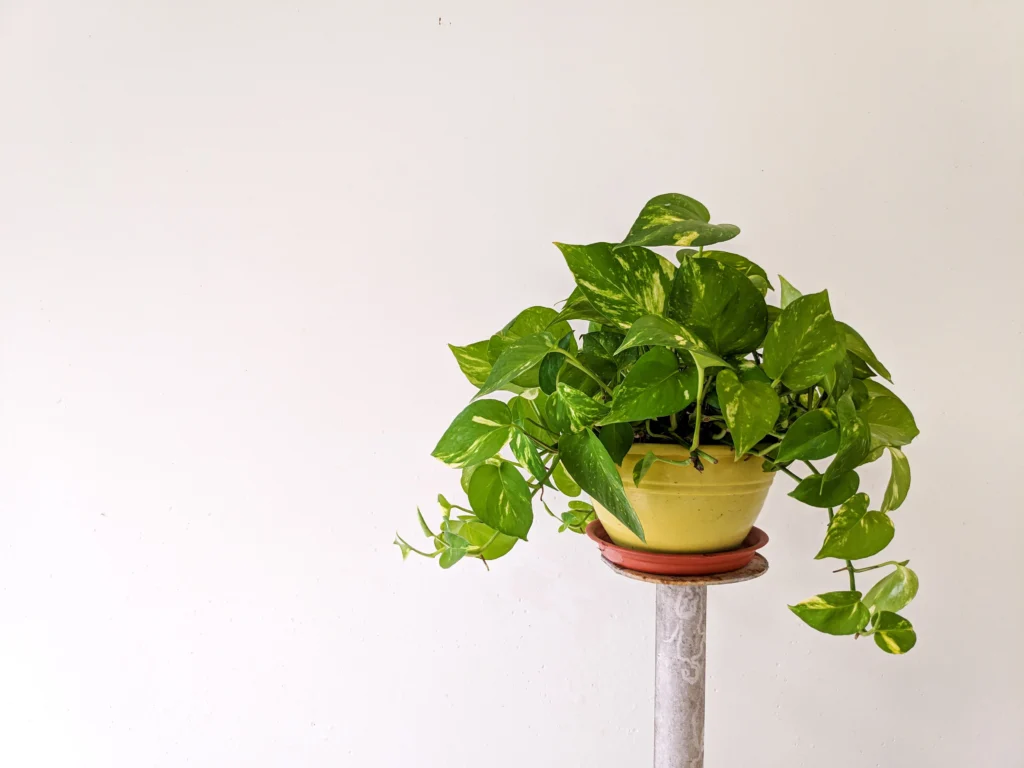
If you love a ceramic pot that doesn’t have a drainage hole, keep the Pothos in a plastic nursery pot with drainage and set that inside the decorative pot, rather than potting directly into it.
9. Let a few cuttings root in a decorative jar
Beyond just propagating for new plants, a jar of rooting Pothos cuttings on a shelf or windowsill works as a simple, low-cost decorative accent on its own while it roots.
10. Check for underwatering before assuming pests
Curling or slightly drooping leaves are more often a sign of dry soil than an early pest problem. Checking the soil first saves time before inspecting for pests unnecessarily.
11. Don’t rush to repot a slightly snug plant
Pothos tolerates being a little root-bound without much issue, so there’s no need to size up the pot the moment roots become visible; it’s only worth repotting once growth clearly slows or roots are circling densely.
12. Use extra cuttings to fill out other pots
Rooted Pothos cuttings can be tucked into the soil of other, sparser houseplants to add fullness and greenery to a pot that’s looking a little bare, since Pothos tolerates a wide range of soil and light conditions well enough to adapt to another plant’s pot.
Why These Are “Extras,” Not Replacements for Basic Care
None of the tips above substitute for getting the fundamentals right first: appropriate light, checking soil before watering, and a pot with proper drainage. These hacks are best thought of as ways to get more out of a Pothos that’s already receiving reasonably good basic care, rather than fixes for a plant that’s struggling due to a fundamental care issue.
FAQs
Is trimming really necessary, or will a Pothos branch out on its own eventually?
A Pothos can occasionally branch on its own, but it happens far less predictably and less often than when you deliberately trim just above a node. If you want a fuller shape sooner rather than waiting to see if it happens naturally, intentional trimming is the more reliable approach.
Do these hacks apply to all Pothos varieties equally, or just Golden Pothos?
They apply equally across varieties, since these are general growth-habit tips rather than anything specific to one type’s coloring or pattern. Climbing, trimming, rotating, and propagating all work the same way regardless of whether you have Golden, Marble Queen, or any other Pothos variety.
Is it actually true that dust on leaves affects a plant’s health, or is that overstated?
It’s a real, if fairly minor, effect. A heavy dust layer measurably reduces how much light reaches the leaf surface, which can slightly limit photosynthesis, though a light dusting won’t cause serious harm. It’s a nice-to-have habit for overall plant vigor rather than a critical fix for a struggling plant.
Can I use these hacks on a Pothos that’s already unhealthy, or should I fix the underlying problem first?
Address the underlying problem first, whether that’s watering, light, or drainage. These tips are meant to improve an already reasonably healthy plant’s fullness and appearance, not to fix an active problem, which needs a proper diagnosis rather than a general care tip.
Is climbing on a moss pole better than trailing for the plant’s actual health, not just looks?
Not necessarily healthier, just different. A trailing Pothos is perfectly healthy left on its own; climbing simply encourages a different, more mature growth pattern with larger leaves. It’s a style and growth-stage choice rather than one being the objectively healthier option over the other.