
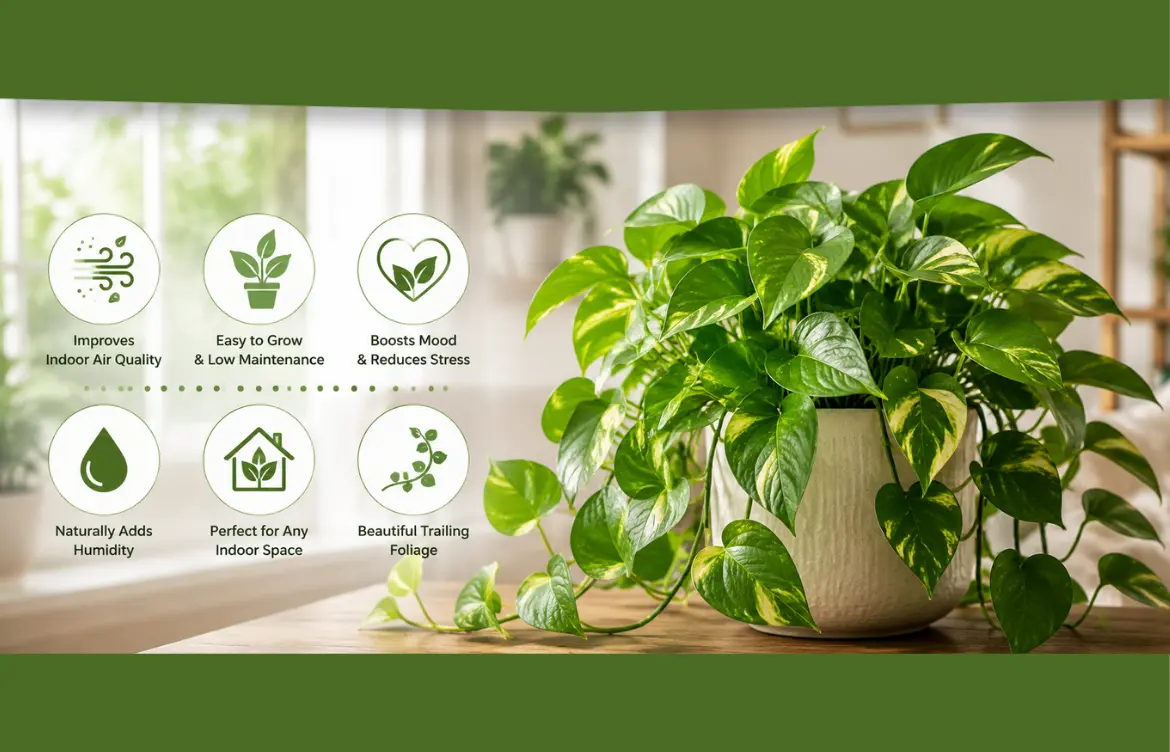
Benefits of Growing a Pothos Plant
Pothos shows up on nearly every “easy houseplant” list, but it’s worth being specific about what actually makes it worth growing, rather than repeating vague claims. Here’s a grounded look at its real, practical benefits, and how it differs from other easy low light plants like Snake Plant.
It Gives You Fast, Visible Results
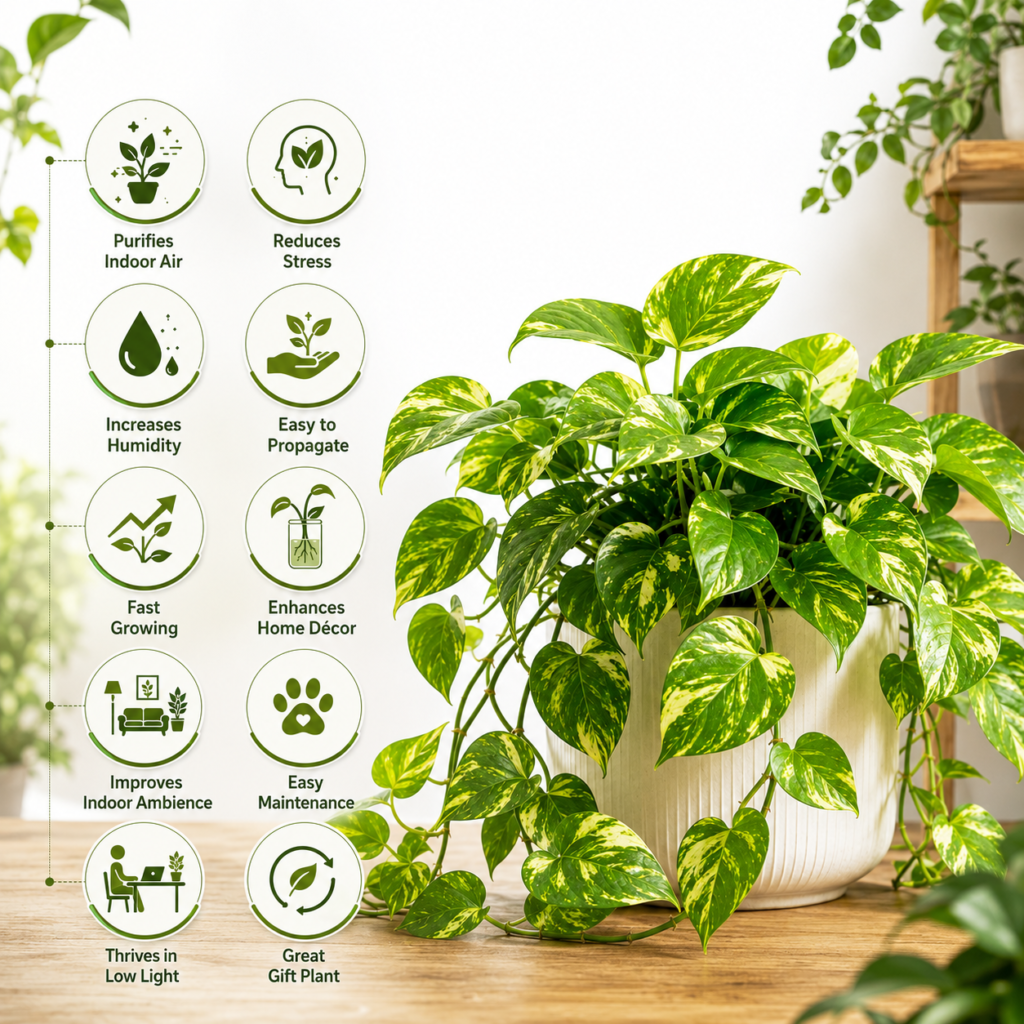
This is Pothos’s biggest point of difference from a plant like Snake Plant or Cast Iron Plant. Where those plants reward patience with a few new leaves a year, a healthy Pothos in decent light can put out several inches of new vine a month during spring and summer. For anyone who wants to actually see progress and feel like their care is having an effect, that visible feedback loop is a real, practical benefit, not just a nice-to-have.
It’s Inexpensive to Multiply Into More Plants
Because Pothos propagates so easily from a simple cutting, a single plant can become several more without spending anything extra. This makes it one of the most cost-effective ways to fill a home with greenery over time, and it also makes it a natural, low-cost gift rooted cuttings from an established plant are a common, genuinely appreciated gift among plant owners.
It Adapts to Several Different Styles of Display
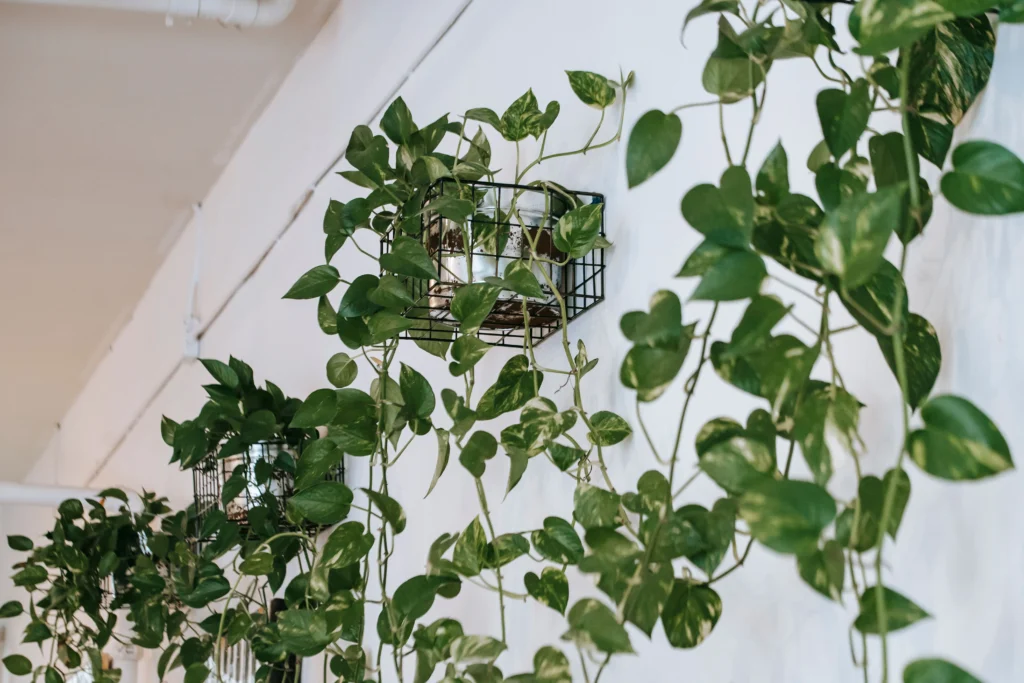
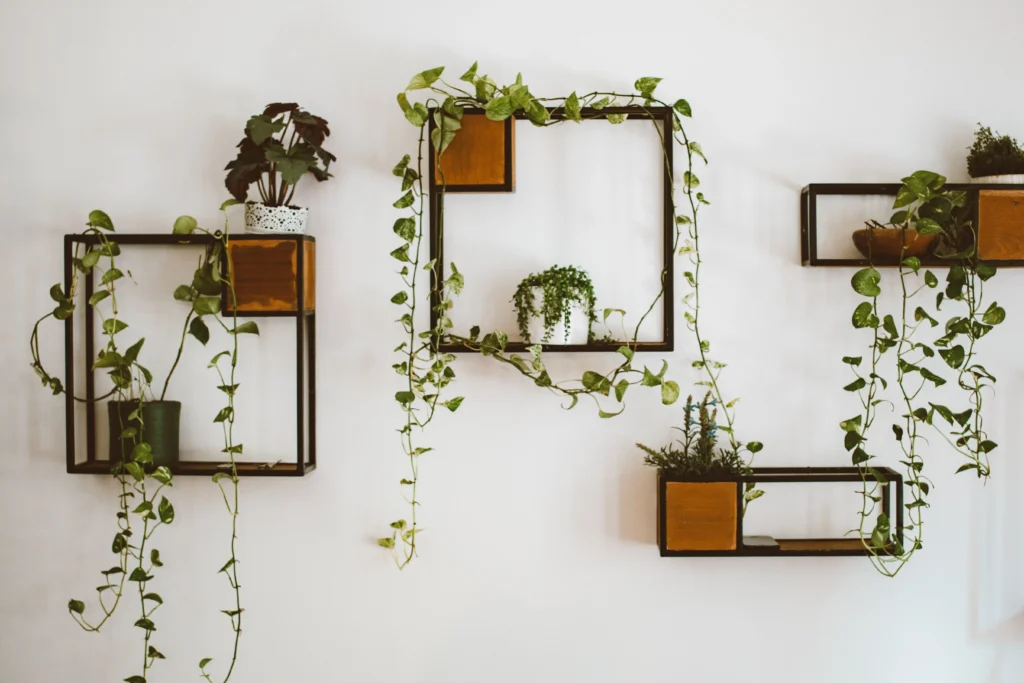
Few common houseplants are as flexible in how they can be displayed. A Pothos works trailing from a hanging basket, climbing a moss pole or trellis for a more upright, mature look, or simply sitting on a shelf with its vines draping down. This versatility means one plant can suit very different design goals depending on how it’s set up, without needing a different plant for each look. See the Hanging Indoor Plants guide for more on the trailing option specifically.
It Tolerates a Wide Range of Light
Pothos handles everything from low light to bright indirect light reasonably well, which makes it one of the more flexible options for someone who isn’t entirely sure how much light a given spot actually gets. Solid green varieties like Jade Pothos are especially tolerant of dim conditions, while variegated types do best with a bit more brightness.
It Contributes Modestly to Indoor Air Quality
Pothos is included in the well-known NASA study from the 1980s that looked at whether common houseplants could absorb airborne chemicals like formaldehyde. As with other plants from that research, it’s worth keeping the finding in proportion: the study used sealed test chambers, not an average room with normal air exchange, so a single Pothos won’t meaningfully purify the air in a real home on its own. It’s a legitimate but modest benefit, not a substitute for good ventilation.
It’s Widely Available and Affordable
Because it’s so easy to propagate at scale, Pothos plant is one of the most consistently affordable common houseplants, sold at general garden centers, home improvement stores, and grocery store plant sections alike. This makes it an easy plant to start with on a small budget, without needing to seek out a specialty retailer, and it means replacing or expanding a collection rarely requires a significant financial commitment.
Quick reference
| What it’s known for | Why it actually matters |
| Climbing/trailing growth | Can be trained up, along, or down depending on the space |
| Low-light tolerance | One of the few houseplants that survives dim rooms, not just bright ones |
| Water propagation | Cuttings root in a jar with no soil or tools |
| Air quality | Modest VOC absorption shown under lab conditions, not a room-scale fix |
| Pet toxicity | Contains calcium oxalate crystals, irritating if chewed by pets or people |
It Builds Confidence Through Quick Feedback, Not Just Tolerance
Snake Plant builds beginner confidence by being hard to damage even with real neglect. Pothos builds confidence differently: because it grows and changes quickly, a small mistake, like underwatering for a week, shows up fast as slightly drooping leaves, and recovers just as visibly once it’s corrected. That fast feedback loop teaches a new plant owner to read their plant’s signals more quickly than a slower-growing plant would, since cause and effect happen on a timescale you can actually observe within days rather than months.
It’s a Practical Way to Learn Propagation Without Much Risk
Because a Pothos cutting costs nothing beyond a snip of an existing plant, it’s a low-stakes way to practice propagation before trying it on a plant that’s harder to root or more expensive to replace. Someone who wants to build general plant skills, like taking cuttings, monitoring root development, and transplanting successfully, can practice the whole process repeatedly on Pothos without much financial risk if an early attempt doesn’t work out.
FAQs
Is Pothos a good plant for improving air quality specifically, more than other houseplants?
It performs similarly to several other common houseplants tested in the same research, including Snake Plant and Peace Lily, rather than standing out as meaningfully better. Its air quality contribution in a normal home is modest across the board, regardless of which of these commonly recommended plants you choose.
Does the fast growth of Pothos mean it needs more fertilizer than slower plants like Snake Plant?
Somewhat, yes. Because it’s actively producing new growth much faster, a light, regular fertilizing routine during spring and summer supports that growth better than the occasional, minimal feeding a slow-growing plant like Snake Plant needs.
Is Pothos a good plant to give as a gift?
Yes, particularly a rooted cutting from an established plant, since it’s inexpensive to produce, easy for the recipient to care for even as a beginner, and quick to show visible growth, which makes it a satisfying gift to receive and watch develop.
Does growing Pothos on a moss pole offer any real benefit beyond appearance?
Yes, beyond just looking more upright and full, letting a Pothos climb a support encourages it to mature faster and can lead to larger leaves than the same plant left to trail, since climbing triggers a different growth pattern in the plant compared to trailing along the ground or a shelf.
Is Pothos a practical choice for an office desk specifically?
Yes, for a few combined reasons: it tolerates the inconsistent light and watering typical of an office setting, its visible growth adds a satisfying sense of progress to a desk over time, and it’s inexpensive enough that replacing it isn’t a big loss if office conditions turn out to be tougher than expected.